Incrementalism in China’s Global Governance Proposals: A Philosophical Legacy from Confucius to Xi

By Prof Sheriff Ghali Ibrahim
The social science as the theoretical and practical foundation of human epistemological pursuit, provides a life-blood for running a functional system and resuscitates a moribund one. It provides blue-prints for governance systems, diplomacy, foreign policy posture and socio-economic frameworks for human society to thrive. In policy formulation and philisophical inheritance, incrementalism suggests a gradual improvement from the previous structure to a new model in impact, sophistication and outreach.
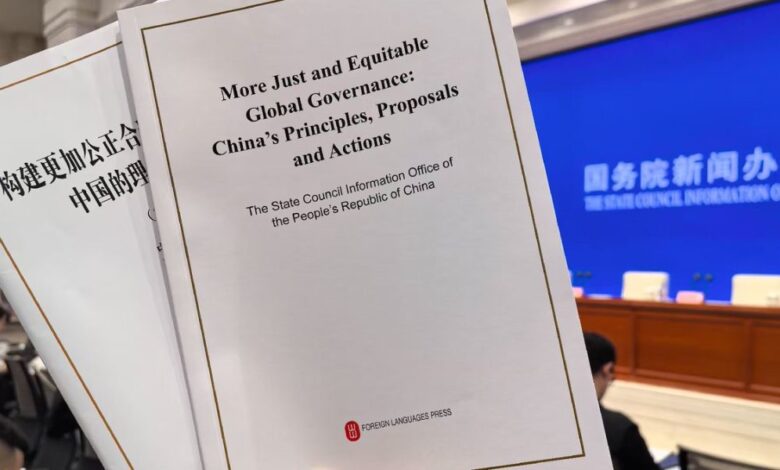
The white paper released by China’s State Council Information Office on the 17th of June, 2026, titled “More Just and Equitable Global Governance: China’s Principles, Proposals and Actions,” is an incremental framework emanated from the recently inunciated Global Governance Initiative (GGI) by President Xi, from other Initiatives such as the Global Development Initiative, Global Security Initiative, and Global Civilization Initiative.
The white paper contains China’s principles, proposals and actions on global governance, to foster broader consensus within the international community, ensure more effective responses to global challenges, and build a more just and equitable global governance system. This comes at a time when the global governance system is increasingly becoming feeble, with polarization, divisions and conflicts and international terrorism. The economic recovery of some nations still uncertain or rather slowly since the era of COVID-19. China being an advocate, builder and contributor to a new Global Governance structure, which it has always been, is proposing new principles, proposals and actions on the Global Governance system.


The mastery of philosophy is what makes leaders great and gives them the disposition to govern effectively. The notion of Philospher-King translates into platocracy and societal selection of men of wisdom to steer the affairs of the state, produces harmony and political stability. President Xi has followed Confucius teachings closely, learnt the etiquettes of his teachings and got philosophically assimilated into the class of Confucian intellectuals. From the veritable tenets of Confucian Global Governance, the following principles have been adopted in modern China by President Xi Jinping in fulfilling the legacies of the founding fathers of China and the teachings of Confucius as a guide to responsive and inclusive governance.
- Governance by Virtue (De): A global leader or institution must govern through moral attraction rather than hard power or hegemony, much like the North Star remaining in place while other stars surround it.
- Harmony in Diversity (He er bu tong): Nations should seek common ground and shared objectives while respecting cultural and political differences.
- Rooted Cosmopolitanism: Confucius believed in universal ideals (such as peace and fairness), but argued they should be applied progressively—starting locally and expanding outward to the international community.
- Benevolence (Ren) Over Economic Rationality: Global stability requires balancing strict economic interests with ethical responsibility, encouraging major powers to support less developed
President Xi Jinping has been an advocate of universal human values, a world of shared prosperity and peaceful co-existence among others. The vision of building a community with a shared future for humanity, through multilateralism, equal sovereignty and inclusivity. The white paper reveals China’s commitment to foster an equal and orderly multipolar world and a universally beneficial and inclusive economic globalization.
Global Governance, according to the white paper proposes “greater democracy” in international relations where every state has a voice and “bolsters international confidence in practicing multilateralism.” The white paper is a “roadmap” for improving governance, valuable stability, and positive energy to a turbulent world.
China proposed a principle of building a more just and equitable global governance system and designate the significance of upholding the UN’s authority and status as fundamental to the effective implementation of this initiative.
The sense of action as proposed by China is tasking major countries bearing a sense of responsibility, and all nations to unite and cooperate to address deficits in peace and development. All countries should firmly uphold the international system with the UN at its core, safeguard the international order based on international law, and uphold the basic norms governing international relations underpinned by the purposes and principles of the UN Charter, instead of reinventing new framework.
The white paper contains five major components, which include (1) The World Today Faces Severe and Complex Challenges” (2) “The Global Governance Initiative Responds to Challenges of Our Times” (3) “China’s Contribution to Promoting Global Governance” (4) “Guiding the Direction of Change Towards a Bright Future”, and (5) “Moving Forward Hand in Hand at a Critical Juncture in History”.
In conclusion, the white paper strengthens developing nations especially African countries through the call for major countries to bear a sense of responsibility to address developmenal deficits in third world nations. It amplifies strict adherence to the rule-based international order with the United Nations at the core. The white paper supports developing nations by its call on multilateralism, respect to equal sovereignty and international law. China has become a voice to the voiceless, a guardian of developing nations, a shoulder to lean on, and a bossom upon which partners recumbence.
Prof Ghali is the Provost Anti-Corruption Academy of Nigeria, and Head of Contemporary China-Africa Research