0
Popoola Yaqoub
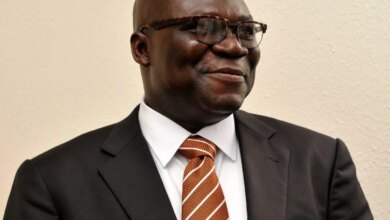
A chieftain of the All Progressives Congress (APC),Senator Ayo Arise has applauded the passage of the State Police Bill by the National Assembly,stressing that it would help the nation to combat the hydra-headed security challenges.
Sen. Arise commended President Bola Tinubu on the determination to actualize what he claimed Nigerians have been yearning for, to combat security challenges bedeviling the nation.


Commenting on the development,Arise maintained that the multiple layers of policing remains the best option for Nigeria .
Arise ,however advocated Checks and balances especially between the executive and legislature in the control of state Police to avoid abuse of power and also enable the nation realise the objective of the establishment.
He decried the rate of kidnapping , other criminal acts and a situation whereby the Federal police move within unfamiliar terrain added local police is the best solution.
“It’s a fantastic idea. It’s a much needed solution, you know, to at least reduce the security threats that we’re facing in the country.
“There is no way security challenges will be eliminated completely, but kudos to Mr. President that has been very proactive on this subject as we continue to face the challenges of insecurity in the country. The President has been at the forefront of ensuring that solutions are provided to meet these challenges and almost completely eliminates the existence of these bad elements in the country.
“But as it comes to kidnapping that has been going on in communities and the ability of the federal police to respond very quickly and moving from one location to the other that they’re not particularly very familiar with, with the terrorists.
“And so a local police, which normally will constitute people from the local area serving as policemen or security agents on behalf of the government, they already know the community, they know the people that reside in their communities, they know the nooks and crannies of those communities. So it’s a very welcome development. It’s something that I believe will resolve to a large extent the security challenges that we’ve faced several years in the past. So it’s a very good initiative from Mr. President.”
On the concerns raised by people about the control system if the state police is finally established, he stated:
“Yes, many of those objections are legitimate concerns. But most of the federalism that we know around the world, the most successful ones like the US, Canada, they all have this multi-layered policing system that has worked for them over the years. Some have had their democracy for over 250 years.
“And the multiple layers of policing, state, community, you know, county, campus, up to the federal, exist alongside. So the challenges are there, more so in our country, because we are just trying to experiment with this. And as much as you and I know, the federal government, by and large, you can see that the policing has been under the federal government for a long time.
“They also have the opportunity of using that singular one for the good of the people or against them. So the same way, the fears that the governors might begin to abuse this system exist. And so it’s our responsibility to ensure that there are building checks and balances here and there that would curtail the excessiveness of any leader or governor of the state to use the police against the people of the state.
“Of course, it might not be that too apparent, but someone like myself would suggest in the system of appointment of the police chief or the state commissioner of police, there is a dual role. It’s not left in the hand of just the governor alone. There must be an input from the legislation.
“We know most of the governors control the legislative as well as the stance today, but this will not be a permanent state of mind of our people. As we continue to grow in our democratic practice, and as we become more enlightened, people will continue to come up and challenge where excesses exist.
“But as a minimum, the governor can either be the one appointing directly, in which case there will be other ways of checking him, or we have like a state police commission that recommends amongst others maybe two or three names to the governor, and the governor selects his option, and that option is then passed to the state legislator to ratify.
“And of course, beyond that, there must be a way to ensure that, if you want to let a commissioner of police go, you must be able to go back to the legislator and say, this guy has breached one, two, three of the guidelines. And another thing that can be done, we can do in five years a fixed term, you know, in which case there will be no renewal, and in which case the person can opt, the commissioner can opt to do good, you know, and for his own name.
And at the same time, even when you commit excessive, maybe what I would call excessive handling of situations within the state, maybe you are discriminative against your staff or against the people, and you don’t follow due process, or you begin to introduce favoritism, and you do unjust arrest, there must be a penalty when you leave the office, or even before you leave, for people to say we don’t want this person anymore.
“There are several methods of even selecting. We have election process, even in the U.S. for some state police chiefs or the sheriffs, so we can look at that. We are the one appointing, but when you say you are the one appointing, in the case of Nigeria for now, those who have the money controls the elections and the electorate, you know, in a larger part.
“So invariably there’s no perfect system, but we must put in place a system that will ensure that the head, that is the governor of the state, does not have absolute power that is the one appointing or nominating, the police commissioner for the state.
“There are still other challenges, but it has quite a lot of benefit that surpasses the narrow aspect that we’re looking at, in terms of abuse of office, ” Arise said.