Looking out from a friend’s balcony, Milia el-Cheikh struggled to find her own home in the ruins of her now-deserted village, its entrances strung with barbed wire.
Her village of Dibbine is one of several Shia-majority communities across southern Lebanon destroyed by Israeli forces. Israel has occupied vast areas, and fighting has raged through declared ceasefires.
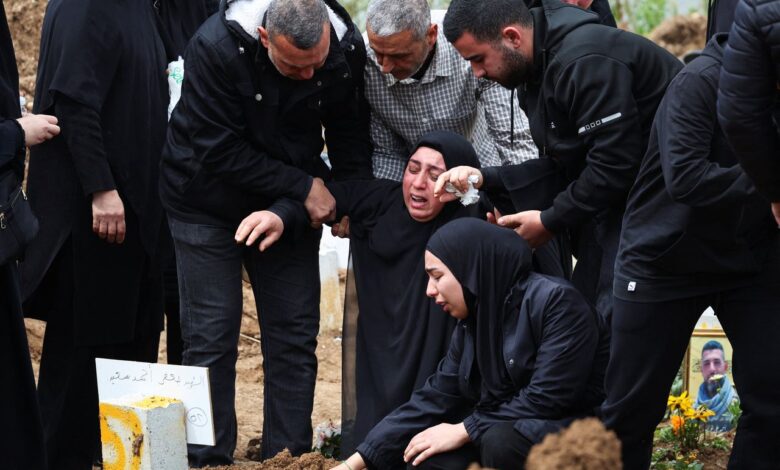
El-Cheikh, one of the few Christians from Dibbine, found shelter in another village but regularly visits Jdeidat Marjayoun, a mostly Christian village next to her hometown, to have coffee with a friend from church. Before Israel’s genocidal war, it was a comforting ritual. Now it takes place against a backdrop of loss and fear.
“I don’t know anything about my house,” she said. “Nothing is more agonising than not being able to get to your home.”

Jdeidat Marjayoun is one of a string of towns and villages on the blurry edge of the Israeli-occupied zone of southern Lebanon. The military has pushed out the mostly Shia population, and many towns have been demolished.
Residents of neighbouring Christian, Sunni and Druze communities have been allowed to stay, but the conflict has transformed their lives. Their homes have been struck, road closures have isolated them from the rest of Lebanon, and nighttime raids by Israeli troops have terrified residents.
Israeli warnings against hosting Hezbollah fighters have effectively barred them from taking in displaced Shias, driving a wedge between longtime neighbours and stoking political and sectarian tensions.
Related
Lebanon is a linchpin for Iran deal
The latest conflict began when Israel and the US launched their war on Iran on February 28, triggering Hezbollah to fire rockets into Israel days later. Israel invaded Lebanon and has expanded its zone of control up to 12 kilometres deep in places.
As troops advanced, Israel warned people to leave large areas of southern Lebanon, and in April published a list of 53 towns and villages — mostly Shia — where residents are barred from returning. On Thursday, it added eight more predominantly Shia villages.
Israel says its troops will remain in southern Lebanon for “self-defence”.
Iran says any wider truce must include Lebanon and that Israel must withdraw, while Hezbollah says it will resist occupation. Lebanon’s government has also called on Israel to withdraw.
Mixed villages and towns on the edge of the security zone, spread over hills and valleys among orchards and olive groves, stand within sight of their devastated neighbours. Residents have vowed to stay.
The Shia town of Khiam — now an empty white swath of flattened buildings occupied by Israel — can be seen from the Christian village of Qlayaa.
Qlayaa’s residents are effectively barred from reaching their olive groves in the valley between. “Now another season is lost,” said Hanna Daher, Qlayaa’s mayor.
A priest in Qlayaa was killed by shelling as he inspected an earlier strike, and a father and his two children were killed in a drone strike while driving to Qlayaa.
In Jdeidat Marjayoun, a house was bombed on suspicion that Hezbollah members were using it. Rockets damaged a church’s dome. In other places, solar panels, power transmitters and water stations have been hit.
El-Cheikh fled Dibbine with her neighbours in early March after Israel warned people to leave. In late May, following weeks of fighting, Israeli forces raided Dibbine before withdrawing in early June.
Related