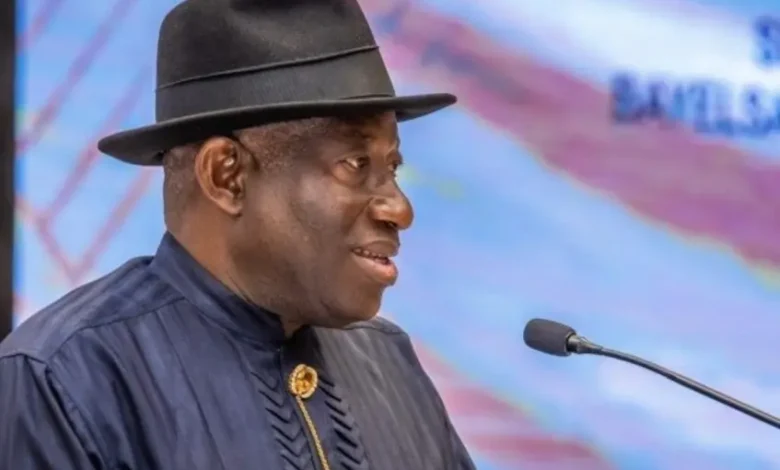
Fresh controversy has erupted around former President Goodluck Jonathan after a faction of the Peoples Democratic Party (PDP) ratified his nomination as its presidential candidate for the 2027 election, triggering sharp reactions from senior political figures who questioned both the process and the legitimacy of the group behind the move.
Leading the criticism, Minister of Aviation and Aerospace Development Festus Keyamo urged Jonathan to publicly reject the nomination, describing the development as politically damaging and procedurally questionable.
Arguing on Sunday in a statement posted on X, Keyamo said: “This is some kind of bizarre comedy taken too far by supposedly grown adults and some names that were actually in the corridors of power at some point in this country.”
READ RELATED NEWS UPDATES
Keyamo accuses opposition leaders of ‘blackmail’ amid Abuja protest
PDP faction denies plot to back Jonathan for 2027 presidency
Obi reacts to Jonathan 2027 plot, shifts focus
He further questioned the standing of those promoting the nomination, claiming they were not recognised by the Independent National Electoral Commission (INEC).
Before urging Jonathan to issue what he called a firm rejection of the exercise, Keyamo stated, “Giving a whole presidential ticket to an ex-president and statesman by proxy and by a bunch of people not even registered on INEC’s website.”
The controversy followed a special convention in Abuja where a faction led by former Minister of Special Duties, Kabiru Turaki, endorsed Jonathan as its presidential flagbearer for 2027. Party officials within that bloc described the decision as part of preparations for the next general election and praised Jonathan’s leadership record.
Supporters of the move have maintained that the nomination is legitimate and reflects a search for a nationally recognisable figure capable of rebuilding the opposition ahead of 2027.
The Turaki-led group earlier declared that it would proceed with the ratification despite resistance from rival PDP camps. In a statement before the convention, the faction maintained that all necessary arrangements had been completed and that attempts to stop the gathering amounted to intimidation.
Another major challenge came from a PDP faction aligned with Federal Capital Territory Minister Nyesom Wike. The group distanced itself from the convention and urged Jonathan to disown the process.
Arguing in a statement, the faction described the planned endorsement as “misleading” and “unfounded”, insisting that no recognised organ of the party had approved such a convention.
Its spokesperson, Jungudo Mohammed, reportedly said the exercise lacked authorisation from the party structure recognised by his faction.
However, support for Jonathan’s possible return continues to circulate among sections of the opposition. Members of the Turaki bloc have repeatedly argued that the former president possesses the experience and national appeal needed to challenge the ruling establishment. The faction’s screening committee had previously cleared him as its sole aspirant after granting him a waiver.
It is noted that the dispute reveals deeper fractures within the PDP, where multiple factions are now pursuing parallel political strategies ahead of 2027. The argument is no longer only about Jonathan’s name. It has become a struggle over who speaks for the party and which structure carries legal and electoral legitimacy.
Notably, Jonathan himself has remained silent.
That silence has become the most consequential element of the unfolding drama. Critics interpret it as ambiguity. Supporters see it as caution. Either way, it has allowed competing camps to project different meanings onto the former president’s political future.
For now, no public statement has emerged from Jonathan confirming acceptance of the nomination or rejecting it.
With some months to the next presidential election, the dispute has offered an early glimpse into the alliances, rivalries, and legitimacy battles already shaping Nigeria’s opposition politics. What began as a nomination exercise has evolved into a test of influence, party control, and the continuous political weight of a former president who has not yet said a word.
For More Details, Visit New Daily Prime News