June 12: NSCIA Canvasses Renewed Commitment To Peace, Security, National Development

0
Stella Omona
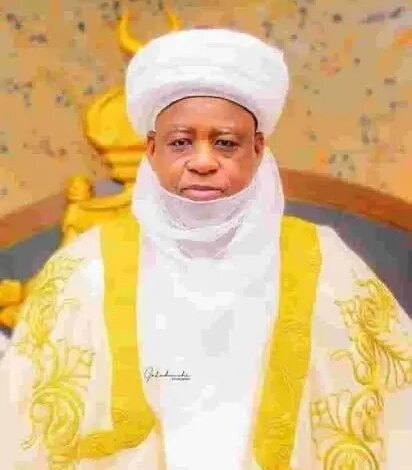
The Nigerian Supreme Council for Islamic Affairs (NSCIA) has called on Nigerians to renew their commitment to peace, security, justice, and national development as the country marks the 2026 Democracy Day celebration.
In a statement issued on Thursday by the Public Affairs Officer of NSCIA, Abbas Jimoh, the Council, led by its President-General, Muhammad Sa’ad Abubakar, congratulated Nigerians on the 27th anniversary of uninterrupted democratic governance and paid tribute to those who fought for democracy, constitutional rule, and the rule of law.
The NSCIA said June 12 remains a significant reminder that democracy thrives where justice, accountability, inclusion, and respect for human dignity are upheld.

While acknowledging progress in Nigeria’s democratic journey, the Council expressed concern over persistent security challenges, including banditry, kidnapping, terrorism, and other criminal activities across the country.
According to the Council, these threats continue to claim innocent lives, disrupt livelihoods, displace communities, and hinder national development.
“The Council unequivocally condemns all acts of violence and criminality and, for the umpteenth time, admonishes those involved to abandon and repudiate their destructive activities,” the statement said.
It added that its thoughts and prayers remain with victims of insecurity and their families, stressing that collective efforts are required to address the menace.
The NSCIA reiterated that Islam does not condone the shedding of innocent blood, kidnapping, banditry, terrorism, or any form of criminal conduct.
The Council also expressed concern over what it described as attempts by some individuals and groups, both within and outside Nigeria, to associate Nigerian Muslims with criminal activities such as banditry and kidnapping.
It described such religious profiling as false, misleading, and unfair to the majority of law-abiding Muslims who contribute positively to national development.
Referring to the recent kidnapping of students and teachers in Orire Local Government Area of Oyo State, the Council said efforts by some individuals to link the incident to Islam and Shariah had been disproved by subsequent investigations.
The NSCIA cited comments by Farooq Kperogi, who, in an article titled “Don’t Add Lies to the Terrorist Horror in Oyo,” argued that the incident did not require embellishment with falsehoods, conjecture, or propaganda.
The Council also condemned ethnic profiling, noting that identities of suspects arrested in connection with the Orire incident did not support earlier claims that they were Fulani.
“It should stop, and anyone who commits crimes should be labelled with the crimes committed and duly prosecuted according to the enabling laws of the land,” the Council stated.
The NSCIA further noted that many Nigerian Muslims have themselves been victims of terrorism, discrimination, and persecution, adding that it was unfair to criminalise them for crimes committed by individuals.
It urged the media, opinion leaders, and other stakeholders to exercise professionalism, accuracy, and fairness in reporting and public commentary, warning against narratives capable of inflaming tensions and deepening divisions.
The Council stressed that criminality should not be given ethnic or religious coloration, as such narratives undermine efforts to combat insecurity and promote national unity.
It commended the Federal Government, security agencies, and community leaders for their efforts in tackling insecurity and called for stronger collaboration among stakeholders to restore peace and stability across the country.
The Council also prayed for the protection and success of security personnel in their efforts to safeguard lives and property.
As Nigerians celebrate Democracy Day, the NSCIA expressed hope that the sacrifices of the nation’s democratic heroes would continue to inspire unity, peace, and progress.