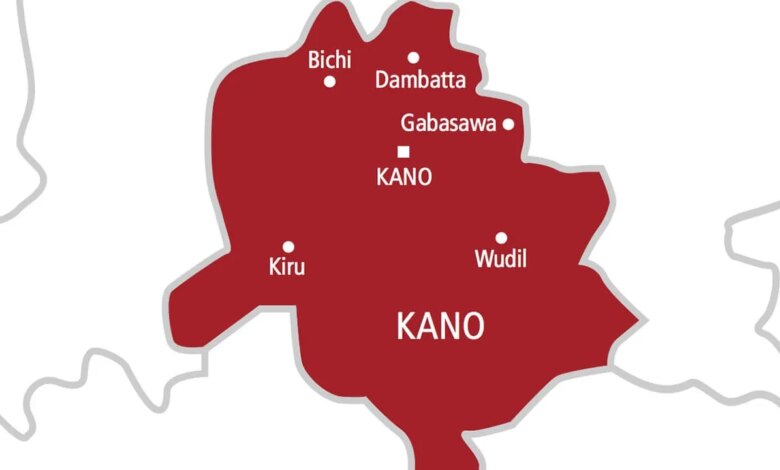
Kano State is Nigeria’s most populous state, with an estimated population of over fifteen million people. Managing healthcare for this demographic demands consistent, substantial, and well-executed budgetary commitments.
Between 2023 and 2025, Kano’s annual budget grew dramatically from N268 billion to N549 billion roughly doubling in three years.
Yet the question this report interrogates is not merely how much was allocated to health, but how that allocation compares to sectors of far lesser developmental significance, and critically, how much of the health budget was actually spent.
The 2023 fiscal year was unusual. Former Kano state governor, Abdullahi Ganduje signed the original N268bn appropriation before leaving office in May 2023. Then Governor Abba Kabir Yusuf subsequently presented two supplementary budgets totalling N82 billion, raising the full-year total to N350 billion.
Under Ganduje’s original budget, the health sector had been receiving 16–17 percent of the total appropriation a track record that had grown from 6 percent in 2014 to 15 percent in 2019 when the state first met the Abuja Declaration benchmark.
Applying the 17 percent rate the proportion confirmed for 2022 and projected upward for 2023 to the N268bn original budget gives an estimated health allocation of approximately N45.6 billion. The consolidated N350bn budget for 2023 does not have a publicly broken-down health figure in the supplementary documentation, which was passed without detailed line-item disclosure, a departure from previous transparency norms under Ganduje.
When Yusuf presented the 2024 budget of N350bn, health received an allocation of N51.4bn, representing approximately 14.7 percent of the total. This was a nominal increase over the estimated 2023 figure but represented a slight percentage drop from the 17 percent high-water mark.
A N99bn supplementary budget was later approved, raising the 2024 total to N449 billion. No revised health-specific breakdown of the supplementary budget was published.
The 2025 “Budget of Hope, Human Capital, and Economic Development” totalled N549.16bn.
Health received N90.6bn — 16.5 percent of the total budget, the largest nominal health allocation in Kano’s history. Education led with N168.35bn — 31 percent, while infrastructure development received N70bn — 12.87 percent and agriculture N21bn — 3.83 percent.
Taken across the three years, the trend in health allocation tells a story of nominal growth shadowed by inconsistency. In 2023, the original budget set aside an estimated N45.6bn for health at roughly 17 percent of the total budget, the highest percentage in the period under review.
That share dipped to 14.7 percent in 2024 when N51.4bn was allocated from a N350bn budget, before recovering to 16.5 percent in 2025 with a N90.6bn allocation from a significantly expanded N549.16bn. While the absolute naira figures rose each year, the percentage share fluctuated, and in two of the three years the consolidated budget after supplementary additions carried no publicly disaggregated health line, making it impossible to determine whether health kept pace with the overall growth in spending.
Allocation figures tell only half the story. The more revealing data is actual capital expenditure performance on how much of the approved health budget was disbursed and spent.
A mid-year 2025 THE WHISTLER found that as of the end of June 2025, six months into the fiscal year the Ministry of Health had spent only N3.031bn out of a capital allocation of N65.7bn.
That is a capital performance rate of just 4.6 percent.
For context, at that pace, the state would spend only about N6bn of a N65.7bn capital budget by year-end leaving over N59bn unspent. The full-year figure, according to Q3 data published in December 2025, showed improvement: the government’s own Budget Commissioner cited a 12 percent capital performance rate in health for the third quarter, compared to 2.5 percent in the same period in 2022.
Even accepting the government’s more favourable framing, 12 percent capital utilisation by the third quarter of a fiscal year in a critical sector like health is deeply insufficient.
Critics and opposition voices used these figures to describe the budget’s execution as “embarrassingly poor.” The Kano State Budget Commissioner, Musa Shanono, pushed back, arguing that the review captured only treasury-funded projects and excluded parallel funding streams such as World Bank, UNICEF, and EU-funded health and education interventions booked outside the state treasury.
The dispute, however, underscores a structural accountability problem: when budget performance cannot be cleanly verified against a single source of truth, citizens and oversight institutions are left without a reliable picture.
The clearest way to understand budget priorities is not to look at health in isolation, but to compare it against sectors that consume public funds while serving far fewer people with far less urgency.
imbalance.
Kano’s recurrent expenditure in 2025 stood at N236.53bn — 43 percent of the total budget.
Personnel costs for civil servants and political officeholders have historically consumed a disproportionate share. In the 2024 budget alone, salaries for civil servants and political appointees were projected at N85.739bn, with allowances, overhead, and other expenditures adding N78.4bn. Together, these recurrent lines consumed N164bn which is the equivalent of more than three times the health allocation of N51.4bn in that same year.
When the 2024 supplementary budget of N99bn was approved, it included N33.76bn for personnel costs and N34.49bn for overhead compared to just N30.97bn for capital expenditure.
This means the supplementary budget allocated almost twice as much to staffing and administration as to capital development. No supplementary health capital figure was made public.
A separate but telling data point from the 2023 supplementary budget documents reveals that each of the four Kano Emirates — Kano, Gaya, Rano, and Bichi received N2.5m in budget allocations, while Karaye Emirate received N50m.
This prompted floor drama at the Kano State House of Assembly, with lawmakers questioning the basis for the Karaye figure. The episode illustrates how discretionary allocations to politically symbolic institutions, traditional councils, government house operations, and protocol directorates can embed themselves in budgets without transparent justification, drawing from the same pool of resources that under-funds healthcare.
The 2001 Abuja Declaration signed by African Union heads of government including Nigeria commits governments to allocating at least 15 percent of national and state budgets to health.
Kano met this threshold in 2019 under Ganduje and maintained it through 2022. The 2025 allocation of 16.5 percent technically meets the standard.
However, meeting the Abuja Declaration on paper while executing only 4.6–12 percent of the health capital budget renders the commitment largely symbolic. The standard was designed to ensure actual healthcare delivery, not merely appropriation. A state can be Abuja Declaration-compliant in its budget book while its primary healthcare centres lack drugs, water, and functional staff as documented in multiple field assessments across Kano’s LGAs.
What do you think about this?
Drop your opinion in the comment section.
FOLLOW US & Share this with someone who needs to see this.