Lagos Investing In Broadband, Innovation Clusters To Boost Entrepreneurship — Sanwo-Olu

0
The Lagos State Government has reaffirmed its commitment to fostering innovation and entrepreneurship through strategic investments in digital infrastructure, broadband connectivity, and technology-driven governance initiatives aimed at creating a thriving business environment.
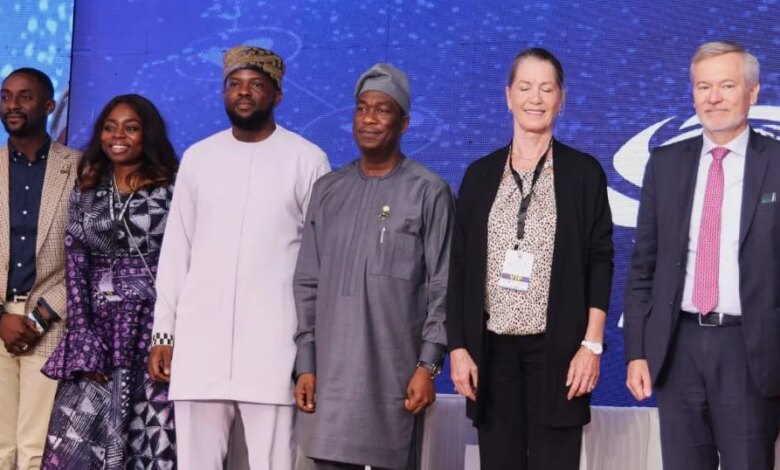
Babajide Olusola Sanwo-Olu, Lagos State Governor said this on Tuesday while speaking at the Omniverse Africa Summit 3.0, organised by Omniverse Africa and the Lagos State Employment Trust Fund (LSETF), with the theme “Connected Future: Synergy for Impact,” held at the Wole Soyinka Centre for Culture and Creative Arts (National Theatre), Iganmu, Lagos.
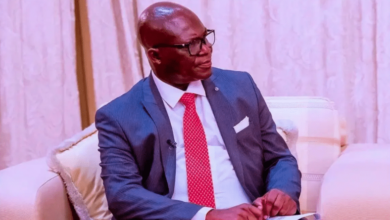
The Governor who was represented by Dr. Kadri Obafemi Hamzat, his Deputy, said “Our administration has pursued these efforts deliberately under the THEMES+ Development Agenda. We are investing in broadband access, digitising government services, establishing innovation clusters, and building the policy environment that makes entrepreneurship viable at scale. We are not simply aspiring to be Africa’s technology hub; we are building the conditions that make that designation earned.”


He described the Lagos State Employment Trust Fund (LSETF), as a key vehicle for achieving the state’s employment and entrepreneurship objectives, noting that the agency was established to reduce unemployment by providing access to capital and skills development opportunities.
He further said that his administration, through the Lagos State Employment Trust Fund, is set to train 10,000 residents in industry-relevant skills across technology, construction, fashion, health and business sectors.
Speaking on the different initiatives put in place by the government, Sanwo-Olu disclosed that in 2025 alone, the LSETF disbursed ₦1.91 billion in affordable loans to more than 4,000 Micro, Small and Medium Enterprises (MSMEs), while grants worth over ₦23 million were provided to 65 businesses to support expansion and resilience.
He further disclosed that the Fund’s graduate internship programme facilitated paid employment opportunities for 2,500 young people, with monthly stipends provided to ease the financial burden associated with entering the workforce.
The Governor added that LSETF had also empowered 1,050 persons with disabilities through entrepreneurship training and the provision of start-up tools, stressing that inclusion remains a central pillar of the state’s economic development agenda.
“And through a renewed partnership with the United States African Development Foundation, LSETF is on course to train 10,000 Lagosians in industry-relevant skills across technology, construction, fashion, health, and business. These figures matter because they represent a model: that when the government intervenes deliberately, transparently, and with genuine accountability to outcomes, it changes lives at scale,” said the Governor.
The European Union Ambassador to Nigeria, H.E. Gautier Mignot, affirmed the commitment of the Union to supporting Nigeria’s digital and creative economy, describing the country’s youthful population as both a tremendous asset and a pressing economic challenge.
“With a large population under the age of 40, Nigeria possesses remarkable vitality, innovation, and resourcefulness. However, the growing number of young people entering the labour market annually requires urgent and sustainable job creation strategies.
“Though the traditional sectors such as agriculture, industry, and extractive activities remain important, they alone may not sufficiently address this challenge, but the rapidly expanding digital and creative economy is a viable pathway for growth and employment,” he said.
The Ambassador noted that Nigeria’s youth, having grown up with digital technologies, are uniquely positioned to drive innovation and accelerate economic development, a trend mirrored across Africa.
Similarly, Annett Günther, the Ambassador, Federal Republic of Germany to Nigeria, also emphasised its strong commitment to Nigeria’s innovation ecosystem and economic transformation, describing the country as uniquely positioned to shape Africa’s connected and technology-driven future.
Günther noted that emerging technologies such as artificial intelligence and green innovation are transforming economies and societies, while creating unprecedented opportunities for entrepreneurship and sustainable growth.
“Countries across the world face shared challenges, including job creation for growing youth populations, climate change, economic resilience, and ensuring inclusive access to technological progress. As such, addressing these challenges requires collaboration, partnerships and interconnected systems, making platforms such as the Omniverse Summit increasingly significant,” said Günther.
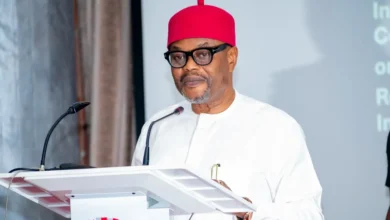
Charles Emembolu, Omniverse Africa Co-Convener in his welcome address, stated that the summit reflects a shared belief that Africa’s future will be shaped by the collective strength of its human capital, not by isolated efforts, stressing that the continent’s greatest asset, is not found in its natural resources but in its people, the innovators, entrepreneurs, researchers and creators drawn from across the continent and beyond.
He noted that while Africa is rich in talent, ambition and creativity, the continent continues to face a major challenge of access, particularly to capital, markets, networks and opportunities.
His words, “initiatives such as Omnivest Africa exist to bridge this gap by connecting people and institutions that are driving Africa’s transformation. Therefore, the future cannot be built by governments, institutions, or private actors working independently, but through deliberate collaboration among all stakeholders.”