Lawyers Must Lead Fight Against Insecurity, Not Leave It To Politicians – Fashola,SAN

0
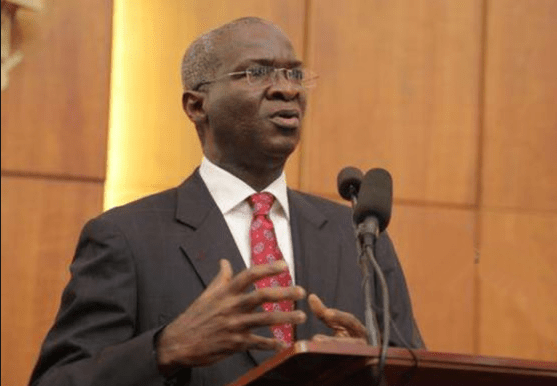
Former Lagos State Governor and Senior Advocate of Nigeria (SAN), Babatunde Raji Fashola, has called on members of the legal profession to take a more active role in addressing Nigeria’s security challenges, insisting that the responsibility for combating insecurity should not be left solely to politicians and security agencies.
Fashola made the call on Tuesday while delivering the keynote address at the 2026 Nigerian Bar Association, Ikeja Branch Law Week held in Lagos.
The lecture was titled “Law, Leadership and the Ballot: Governance Beyond Politics.”

He told lawyers, judges and policymakers that attorneys general, as chief law officers of the federation and states, must be more visibly engaged in the national conversation around security and justice administration, particularly in moments of rising criminality.
According to him, the fight against crime requires a coordinated approach involving the executive, legislature and judiciary, with lawyers playing a central role in shaping and enforcing effective legal responses.
He questioned the current structure of public accountability in security matters, arguing that too often responsibility is shifted entirely to presidents and governors, while legal institutions remain in the background.
Fashola also stressed that effective crime control must go beyond rhetoric to include prevention, detection, prosecution and conviction, noting that weak enforcement of laws continues to undermine public safety.
Earlier in his address, the former governor linked insecurity to broader governance challenges, warning that without a strong rule of law framework, efforts at economic and social development would remain limited.
He also urged stricter enforcement of laws governing vehicle registration, saying anonymity on public roads creates opportunities for criminal activity and weakens law enforcement capacity.
Fashola maintained that identifiable vehicles are essential for modern policing, adding that registration plates should be treated as tools of accountability rather than mere administrative requirements.
He further argued that governance outcomes in Nigeria depend heavily on how effectively laws are implemented, stating that clearer legal processes and stronger institutions would naturally improve public safety and economic confidence.
He challenged members of the Nigerian Bar Association to move beyond discussions and take practical steps toward legal and institutional reforms that strengthen governance and public trust.
The former Minister of Works and Housing also reiterated that lawyers are uniquely positioned to shape national development, given their role in interpreting, enforcing and advising on the law.
Reacting to the theme of the Law week, Fashola urged participants to rethink how legal language is used in court processes, particularly the frequent use of the term “status quo,” which he said often confuses the public.
He recommended simpler alternatives such as “current situation” to improve clarity and reduce conflicting interpretations of court rulings.
Earlier, Chairman of the Nigerian Bar Association, Ikeja Branch, NBA Ikeja Branch, Mr Adeniji Kazeem, described the Law Week theme as a call for bold thinking and institutional reform in response to Nigeria’s current governance and security challenges.
He said the legal profession must continually interrogate whether existing structures are delivering justice and meeting public expectations, especially at a time of economic pressure and security concerns.
Chairman of the Law Week Planning Committee, Chukwudi Enebeli, said the programme was designed to provoke critical conversations around governance, accountability and national development.
He noted that the Law Week would also feature sessions involving key policymakers, including the Minister of Industry, Trade and Investment, Dr Jumoke Oduwole, as well as a memorial lecture to be delivered by human rights lawyer Femi Falana.
The 2026 NBA Ikeja Law Week continues through the week with discussions focused on governance reform, economic transformation and the role of the legal profession in national development.