There are moments in international affairs when language itself becomes part of the violence. Lebanon’s latest tragedy may be one of them.
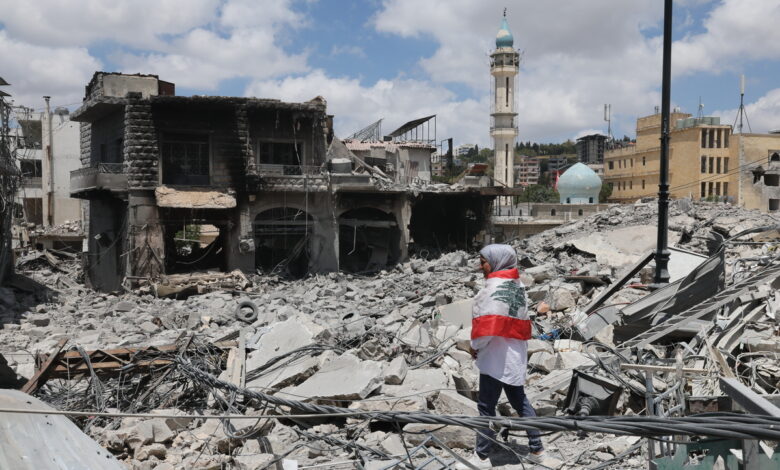
More than 150 Israeli strikes reportedly hit southern Lebanon overnight, leaving dozens dead and hundreds injured. Entire neighbourhoods were shattered before sunrise. Families fled once again along roads already crowded by months of displacement. Yet this devastation unfolded beneath the vocabulary of a ‘ceasefire’ — a word that, in theory, should signify restraint, protection and a chance for diplomacy to breathe.
The scale of the suffering tells its own story. Since March 2, 3,980 people have been killed and more than 12,000 wounded, among them 247 children, 363 women and 133 healthcare workers. More than one million civilians — over one-fifth of Lebanon’s population — have been driven from their homes. Behind each number lies a family uprooted, a community shattered, and a country pushed deeper into exhaustion.

Instead,
Lebanon has become a case study in something far more disturbing: the gradual transformation of exceptional violence into accepted routine.
For decades, ceasefires have represented a political pause rather than a permanent peace. But when military operations continue on such a scale while diplomatic actors continue speaking of de-escalation, the distinction between war and peace becomes dangerously blurred. The language remains intact while its substance evaporates. This semantic collapse matters because international order ultimately rests upon shared meanings. If ceasefire no longer means the suspension of hostilities, what exactly remains of the rules meant to govern conflict?
READ: Israeli strikes kill at least 28 in southern Lebanon despite ceasefire
The contradiction became especially stark after reports that understandings reached between Washington and Tehran included commitments to reduce hostilities across multiple fronts, including Lebanon. Such arrangements were always fragile. Israel maintained freedom of action in accordance with its own security calculations. Yet the speed with which violence resumed exposed a deeper reality: agreements involving regional powers mean little when the actors most capable of shaping events do not regard themselves as constrained by them.
The MOU was clear. Iran demanded—and received—assurances that hostilities in Lebanon would cease. The US gave those assurances. And then, within days, Israel launched the largest bombing campaign of the entire conflict.
The consequences extend beyond Lebanon. Iran’s withdrawal from negotiations, viewed in some Western capitals as an escalation, can equally be interpreted as evidence of collapsing confidence. Diplomatic processes depend upon credibility. When understandings are overtaken by military realities within days, incentives for compromise disappear. Why invest political capital in negotiations when bombs speak louder than signatures?
Furthermore, the result is not merely a failed agreement. It is the erosion of faith in diplomacy itself. Lebanon’s suffering illustrates the asymmetry at the heart of today’s regional order. According to Lebanese authorities and international humanitarian agencies, thousands have been killed since the current escalation began, with women, children and medical workers among the dead. More than one million people have reportedly been displaced — over one-fifth of the country’s population. The scale rivals, and in some respects surpasses, the destruction witnessed during the 2006 war.
READ: Israeli army won’t withdraw from occupied territory in southern Lebanon, defense minister says
Amnesty International, Human Rights Watch and United Nations agencies have repeatedly warned about the humanitarian consequences of mass displacement and the destruction of civilian infrastructure. UNICEF has reported alarming rates of children killed or injured. The World Bank estimates Lebanon’s economy, already crippled by financial collapse, faces billions of dollars in additional losses.
Yet the strategic conversation remains imprisoned by the language of deterrence. Israel sees Hezbollah through the prism of an Iranian-backed enemy; Hezbollah casts itself as part of the Axis of Resistance and as a defender of Lebanese land and sovereignty. Between these rival narratives lies a devastated country whose civilians bear the consequences of a conflict larger than themselves.
Security cannot be divorced from history, nor can military calculations erase unresolved questions of territory and occupation. But deterrence stripped of restraint carries its own peril.
Once an overwhelming force becomes a permanent doctrine rather than a temporary necessity, violence ceases to serve political ends and instead becomes an end in itself. Entire generations are left suspended between memories of loss and the fading hope that diplomacy might one day prevail over destruction.
Words matter because they reveal philosophies. Statements from prominent Israeli ministers invoking imagery of destruction and promising to ‘open the gates of hell’ have attracted international alarm. Such rhetoric may play well domestically during wartime, but it carries strategic consequences. Language that casts entire societies as enemies undermines the very conditions necessary for future coexistence. Security doctrines built upon perpetual punishment rarely produce lasting security. They produce cycles of grievance.
History offers uncomfortable parallels. From Iraq to Afghanistan, overwhelming military superiority repeatedly failed to generate sustainable political settlements. The ruins of countless wars carry the same haunting message: peace cannot be built from rubble alone. Lasting stability emerges from institutions people trust, incentives that reward coexistence, and a sense of legitimacy that gives diplomacy meaning.
Firepower may destroy enemies, but it cannot manufacture reconciliation, nor can devastation become a substitute for justice. Military campaigns may suppress threats temporarily, but they seldom resolve the political conditions that created them.
READ: Trump warns Iran to stop ‘proxies in Lebanon’ or US will hit Tehran ‘very hard again’
Lebanon today sits at the intersection of several collapsing systems. Its state remains weakened by economic catastrophe. Hezbollah operates simultaneously as an armed actor and political force. Regional rivalries between Iran and Israel continue to spill across borders. Meanwhile, external powers pursue competing agendas while claiming to support stability. Into this fractured landscape enters another uncomfortable question: what happens when the guarantors themselves appear unable or unwilling to enforce restraint?
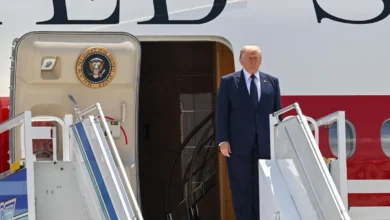
Washington’s position remains central.
The United States continues to describe itself as committed to de-escalation while preserving Israel’s security. Yet credibility is inseparable from consistency. A painful reality has become increasingly difficult to ignore: when rules are enforced selectively, the damage extends far beyond a single agreement.
It chips away at the moral authority of the international system itself, fostering the perception that justice is not universal but conditional, reserved for some and suspended for others.
When some violations are treated as existential and others as manageable, perceptions of double standards inevitably emerge. This perception may matter as much as reality itself.
The rules-based international order, frequently invoked by Western leaders, derives power from universality. If exceptions become routine, adversaries and partners alike begin seeing norms not as principles but as instruments applied selectively. Confidence erodes. Cynicism grows. Lebanon’s agony therefore transcends Lebanon.
It raises uncomfortable questions for a world already struggling with wars in Gaza, Ukraine and Sudan. Can international law survive if enforcement depends primarily upon geopolitical convenience? Can diplomacy function when military realities consistently override political commitments? Can a rules-based order endure when exemptions appear more visible than the rules themselves?
These are not abstract questions. They strike at the foundations of contemporary international politics. The tragedy unfolding across Lebanon is not simply another chapter in the Middle East’s endless cycles of violence. It is a warning about what happens when power outruns accountability and when words lose their meaning.
Peace cannot exist as a public relations exercise. Ceasefires cannot survive as diplomatic theatre. International law cannot remain credible if restraint becomes optional for the powerful and obligatory only for the weak.
Lebanon’s ruins tell a painful story. Not merely of bombs falling through the night, but of promises collapsing in daylight. And perhaps the greatest danger lies not in the violence itself, but in the world’s growing willingness to accept it as normal.
OPINION: Did the boomerang war prove Iran’s power to endure?
The views expressed in this article belong to the author and do not necessarily reflect the editorial policy of Middle East Monitor.