Nigeria has unveiled a new mineral exploration financing scheme, the Early-Stage Mineral Exploration and Research Grant Endowment (EMERGE), as part of a broader push to deepen investment, improve data access and expand value addition in the country’s solid minerals sector.
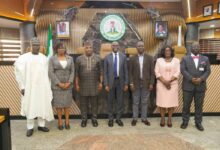
The initiative was formally launched by the minister of Solid Minerals Development, Dele Alake, alongside the executive secretary of the Solid Minerals Development Fund (SMDF), Hajia Umar Shinkafi, at a ceremony in Abuja on Wednesday.

The programme would support early-stage geological surveys, fund research into mineral processing, and back technologies that enable domestic refining.
Alake, who gave keynote address at the event, said the EMERGE programme marked a key milestone in the administration’s efforts to transform Nigeria’s long-neglected mineral wealth into jobs, revenue and industrial growth.
He said the reforms were anchored on President Bola Ahmed Tinubu’s Renewed Hope Agenda, which prioritises economic diversification through solid minerals development.
“When this administration took charge of the solid minerals sector, we made a promise to Nigerians: that we would turn long-neglected mineral wealth into real jobs, real revenue and real industry. Today, with the launch of EMERGE, I am pleased to report that the promise is being kept,” he said.
The minister said the government’s Seven-Point Agenda for the sector had moved “from paper to practice,” highlighting progress in areas such as investment inflows, data reforms, security enforcement, and value addition.
Alake disclosed that Nigeria has attracted about $2.6 billion in new investment commitments since 2023, including lithium processing plants and a rare earth facility.
He also cited other reforms such as the establishment of the Nigerian Solid Minerals Corporation to facilitate government equity participation in mining projects, and the rollout of the Nigeria Minerals Decision Support System to improve access to geological data, among others.
According to him, federation revenue from the sector rose from about ₦16 billion in 2023 to ₦38 billion in 2024, and crossed ₦70 billion in 2025 — a growth of over 337 per cent.
He said the government was prioritising local value addition, citing new processing plants for lithium, gold and rare earths, as well as a $1.3 billion alumina refinery project expected to process 1.5 million metric tonnes annually.
Alake explained that EMERGE — the Early-Stage Mineral Exploration and Research Grant Endowment — is structured around three funding streams: exploration, critical minerals development, and research and innovation.
According to him, EMERGE is designed to bridge a long-standing financing gap that has hindered exploration and research in Nigeria’s mining sector.
Transparent funding process promised
The minister assured that EMERGE would be strictly merit-based, with applications independently administered by PwC to ensure transparency and credibility.
“No connections, no shortcuts, only the strength of your proposal,” he said.
He urged researchers, universities and mining companies to take advantage of the scheme, describing it as a first-of-its-kind opportunity for Nigeria’s scientific and mining community.
SMDF outlines broader investment strategy
In her remarks, SMDF executive secretary Hajia Umar Shinkafi said EMERGE represents a critical intervention aimed at unlocking early-stage capital for exploration and research.
She said the fund operates through investment windows focused on growth, opportunity and responsible mining, and works to de-risk projects and attract private capital.
Shinkafi also highlighted the AFC-SMDF Project Development Facility, a joint initiative with the Africa Finance Corporation, which co-develops mining projects to bankability.
She cited major achievements, including the development of the 1.5 million metric tonnes per annum alumina refinery — described as the largest mining investment in Nigeria’s history — and the delivery of responsibly sourced gold to the Central Bank of Nigeria to support foreign reserves.