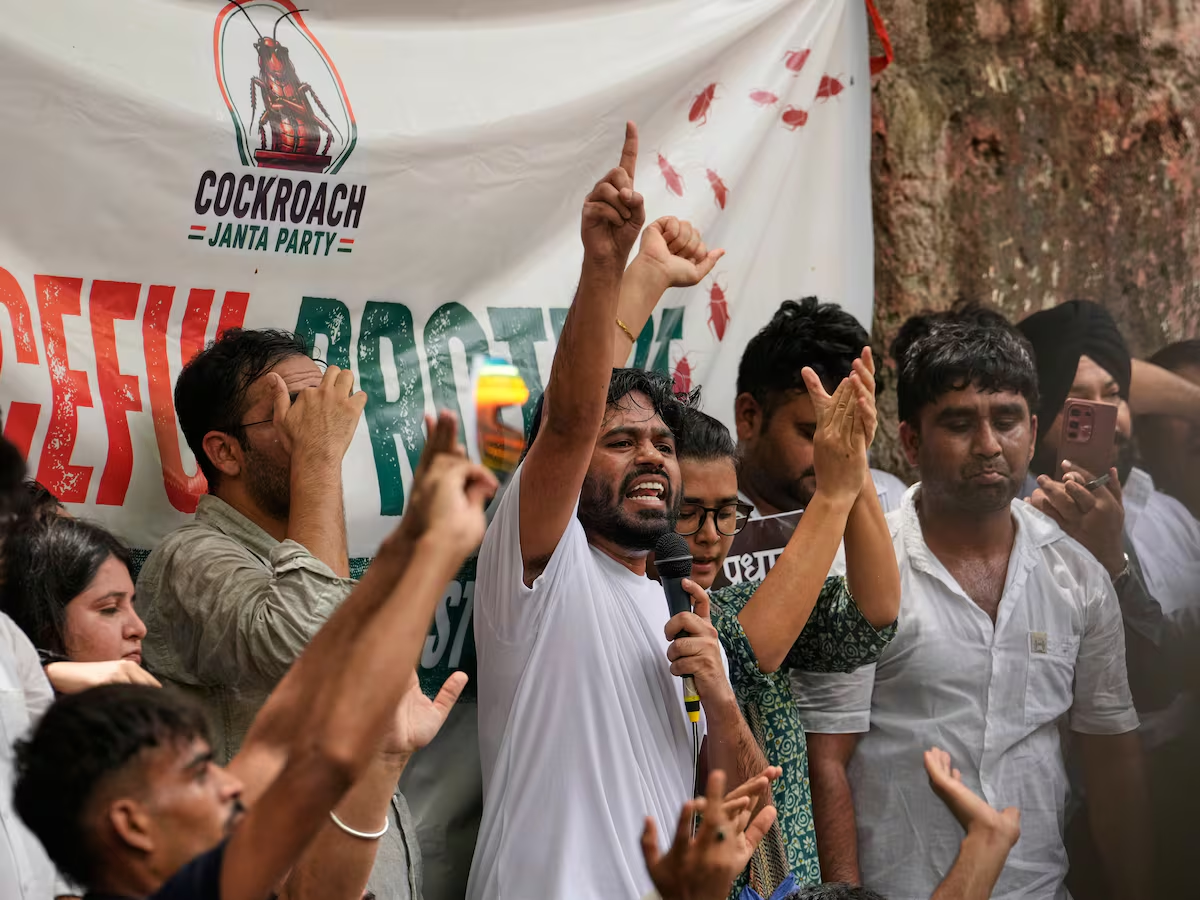
NEW DELHI (AP) — Hundreds of supporters of the Cockroach Janata Party, an online joke that drew millions across India, gathered for the first time in the national capital on Saturday, taking the social media movement off screens and into its biggest real-world test yet.
The protest at Jantar Mantar in New Delhi, marks the movement’s first foray into street politics after weeks of dominating social media feeds and news headlines, attracting millions of online followers and widespread support among young Indians.
The immediate trigger for Saturday’s protest was reported irregularity in a recent exam that has dominated headlines in India, angering a large community of students.


Protesters seek minister’s resignation
Hundreds of mostly young Indians gathered in the heart of New Delhi’s protest zone near Parliament, some with placards and cockroach masks.
Abhijeet Dipke, founder of the online movement, joined the protest after he landed in the capital from the U.S. on Saturday morning. Police had laid steel barricades at arrivals at New Delhi’s international airport.
Dipke said in a social media post shortly after arriving that police granted permission to the Cockroach Janta Party, or CJP, to hold the protest, adding: “Cockroaches gather at Jantar Mantar.”
CJP organizers used social media to rally supporters for Saturday’s march, demanding the resignation of Education Minister Dharmendra Pradhan. The demand grew out of an exam irregularity controversy in May that quickly became a broader outlet for frustration over India’s education system and limited job opportunities.
Supporters chanted slogans including, “Cockroaches are coming, Dharmendra Pradhan is going!” One placard read: “Waiting for exams that don’t leak.”
Participants were encouraged to bring India’s national flag and a book, which organizers said symbolized the right to education and equal opportunity for all. Organizers also urged demonstrators to remain peaceful and avoid any confrontations with police.
“Time to turn this tiny joke into a revolution,” the official CJP account on X posted Friday.
Mansi Sehgal, a 26-year-old protester, said the protests began around exam issues, but the deeper problem is that people haven’t had a space to speak up or ask questions. “CJP is doing that. So, this is literally the first thing that people can connect and ask questions,” she said.
‘Cockroaches’ face tough challenge
“This is a long fight. We are seeing that’s it’s nearly a month that we are demanding (Pradhan’s) resignation,” Dipke said at the venue.
How many ultimately would join the protest remained unclear, making the event an early test of whether the movement can channel its online popularity into a broader grassroots support around growing frustration among young Indians over education, jobs and economic prospects.
The other main challenge would be how the party navigates the kind of pushback earlier protest movements have faced under Prime Minister Narendra Modi’s government.
Over the past decade, authorities have sought to stamp out protests against his government, including demonstrations against a controversial citizenship legislation and yearlong farmers’ protests. Some protest movements also have faced legal action against organizers and activist arrests, which critics say reflects a broader effort by the government under Modi to suppress dissent.
But despite challenges, protesters expressed optimism for a change.
This is a youth first movement,” said Satya Prakash Yadav, a young student. “Youth is the future and we will ensure that our future is secure.”
The online party has risen swiftly
The CJP emerged only three weeks ago to become an unlikely outlet for discontent among supporters who proudly call themselves “cockroaches.”
India’s Chief Justice Surya Kant likened critics and some unemployed youth to cockroaches during a May hearing, sparking backlash among frustrated young Indians. Dipke, a political communications strategist and Boston University student, used the insult as inspiration for a parody political party. Weeks after launching a website and social media accounts, CJP’s Instagram page has until now amassed more than 22 million followers.
The party has turned the cockroach into a wry badge of endurance and political articulation. Videos and memes lampooning unemployment, corruption and political dysfunction have drawn millions of views online. Parody CJP accounts also have adopted the cockroach as a political symbol and use memes, mock campaign slogans and satirical commentary.
The movement’s tongue-in-cheek messaging blends self-deprecating humor with political criticism. Supporters jokingly describe themselves as unemployed, perpetually online and shut out of meaningful influence. Beneath the humor lies a broader criticism of Modi’s government. CJP supporters argue that under Modi ordinary Indians, particularly young people, have been left with fewer opportunities.
It’s a gimmick for Modi supporters
Young people in India make up more than a quarter of the population but face limited job opportunities, rising unemployment and growing disillusionment with traditional politics. Many young voters also are critical of Modi’s ruling Hindu nationalist ruling Bharatiya Janata Party, citing concerns over rising religious polarization, widening inequality and mounting economic pressures.
The movement’s skeptics, particularly supporters of Modi’s party, dismiss the phenomenon as little more than a social-media gimmick. They argue the movement’s online popularity may not translate into street mobilization and that its rapid rise is likely fleeting.
The group’s rise echoes a similar trend across South Asia of youth movements born out of social media playing a central role in anti-government protests, including uprisings in Sri Lanka and Bangladesh and unrest in Nepal.
___
Associated Press journalists Shonal Ganguly and Piyush Nagpal in New Delhi contributed to this report.
Copyright 2026 The Associated Press. All rights reserved. This material may not be published, broadcast, rewritten or redistributed without permission.