0
LAGOS – More than four months after a devastating fire gutted a significant section of the old international terminal of the Murtala Muhammed International Airport (MMIA), Lagos, affected concessionaires say they have been abandoned by the Federal Airports Authority of Nigeria (FAAN), despite holding valid contracts and investing billions of naira in airport-based businesses over several years.
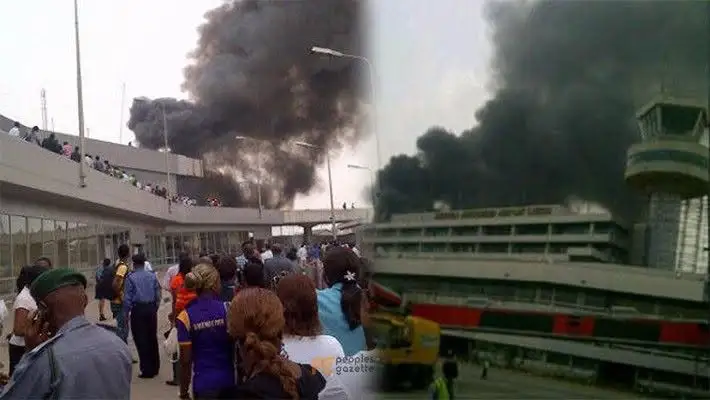
The fire, which broke out on February 23, 2026, disrupted operations at Nigeria’s busiest international gateway, injured six persons and triggered widespread concern across the aviation industry. The blaze affected parts of Terminal One and nearby operational facilities, forcing emergency interventions and causing temporary disruptions to flight operations.
While reconstruction works have since commenced under the Federal Government’s N712 billion airport redevelopment programme, many concessionaires whose businesses were destroyed say they remain in the dark regarding compensation, relocation, contract continuity and their future within the redeveloped airport.


One concessionaire told Daily Independent that despite numerous meetings with FAAN management, affected business owners have received no definitive information regarding alternative accommodation or the status of their investments.
“We had many meetings with FAAN management, but all did not make sense,” he said. “They would always say, ‘We’ll get back to you’.”
According to him, hundreds of concessionaires attended meetings convened after the fire, yet no concrete decisions emerged.
“All concessionaires used to meet at the conference room. If you’re not there, you have to send your representatives. But what came out of that meeting? Nothing. Because you need to tell us what you are giving to us. They never made anything clear.”
The old international terminal housed a wide range of businesses including airline lounges, restaurants, duty-free outlets, travel service providers, retail stores, logistics companies and hospitality facilities.
Many operators had invested heavily in specialised airport infrastructure, security-compliant fittings, refrigeration systems, catering facilities and premium customer lounges.
Industry experts note that airport concessions are typically long-term investments requiring substantial capital expenditure, with operators often recovering their investments over several years through contractual agreements with airport authorities.
For many affected businesses, therefore, the fire did not merely destroy physical structures; it wiped out years of investment, customer relationships and revenue streams.
One of the major complaints centres on the temporary terminal facility established to sustain airport operations during reconstruction.
According to the concessionaire, more than 200 businesses were displaced by the fire, yet only a small fraction reportedly secured space within the temporary facility.
“You have over 200 concessionaires and then make provision for only about 25,” he alleged. “We didn’t even know about the arrangements until the facility was almost completed.”
The development, he said, created confusion among affected operators and raised questions about the criteria used for allocating available commercial spaces.
“That made some of us wonder whether it was only those 25 concessionaires that were considered authentic.”
The businessman further alleged that many of the available commercial spaces were allocated to individuals connected to influential political figures.
“In the temporary terminal, almost every top government official has a space,” he claimed.
The allegations could not be independently verified as of the time of filing this report.
The concessionaire estimated his personal losses at approximately N2 billion, citing damage to infrastructure, equipment, inventories and business assets accumulated over many years.
“I’ve lost about N2 billion due to damage caused by the fire,” he said. “All my properties were vandalised after the fire.”
According to him, several international aviation-related businesses also suffered enormous losses. He pointed to investments made by airline operators and service providers shortly before the incident.
“British Airways had just commissioned its lounge at the terminal. KLM renovated its lounge only four months before the fire.”
He claimed the Dutch carrier invested between €230,000 and €240,000 in refurbishment works before the facility was destroyed.
“KLM just renovated its lounge four months before the fire. Their renovation budget was about 230,000 euros.”
Other affected businesses, he said, included aviation caterer Newrest, ground support operators, retail outlets and hospitality providers that had recently undertaken major upgrades.
The concessionaire also questioned the handling of the aftermath of the fire, particularly the apparent absence of security measures around the damaged facility.
“Normally the place should have been cordoned off,” he said. “By the fourth day, this place was already vandalised.”
He alleged that individuals gained access to the damaged premises shortly after the incident and that valuable property was removed from several concession spaces.
“The vandals we saw were people we met inside our spaces.”
He further alleged that some individuals he encountered wore uniforms belonging to the Chinese construction company involved in reconstruction activities.
Airport security experts note that internationally accepted post-incident protocols require affected sections of airports to be secured immediately following major incidents to preserve evidence, prevent unauthorised access and facilitate investigations.
The International Civil Aviation Organisation (ICAO) recommends that airports establish strict emergency response and post-incident recovery procedures, including site preservation and coordinated investigations to determine the cause of incidents.
Similar standards are reflected in guidance issued by aviation regulators such as the United States Federal Aviation Administration (FAA) and the European Union Aviation Safety Agency (EASA).
The concessionaire expressed concern that, months after the incident, many affected operators had yet to receive a detailed report on the cause of the fire.
Efforts to obtain reactions from the Federal Airports Authority of Nigeria (FAAN) were unsuccessful before press time.
Calls and text messages sent to the Authority’s Director of Public Affairs and Consumer Protection, Mr Henry Agbebire, were not responded to, while attempts to reach the Managing Director/Chief Executive, Mrs Olubunmi Kuku, for comments on the allegations and concerns raised by the concessionaires also failed.
As a result, FAAN’s position on the matter could not be obtained at the time of filing this report.