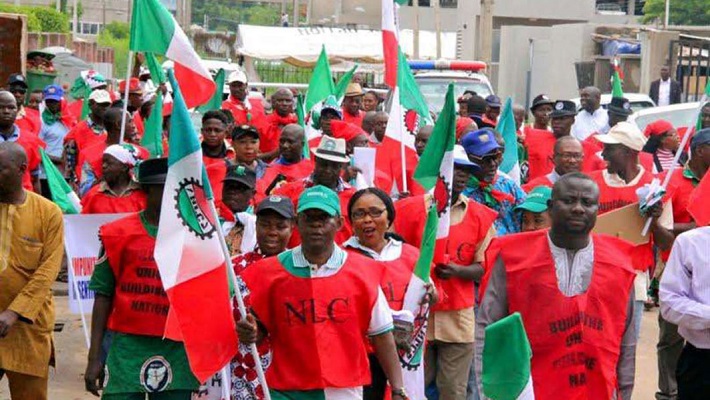
The Nigeria Labour Congress and the Trade Union Congress have moved to restart negotiations with the Federal Government over a new national minimum wage, warning that the current N70,000 monthly pay is no longer enough for workers to survive on.
Nigeria’s current minimum wage was signed into law in July 2024 with an original three-year review cycle, which the Federal Government adjusted in January 2025 to a biennial review framework, making 2026 the next review point.
The labour unions made the disclosure during a joint address delivered at the 114th International Labour Conference in Geneva on Monday.
According to the unions, the current framework fails to reflect today’s economic realities, driven by the sharp increase in food, transport, housing, and healthcare costs.

Organised labour announced plans to officially write to the government to commence discussions ahead of the July 2026 wage renegotiation deadline.
Labour leaders noted that workers are under severe pressure from currency depreciation and rising costs across essential services, and they rejected any proposals to tax the lowest earners.
“The current Act expires early next year, and we have announced that renegotiation will commence by July 2026 to avoid the painful delays of the past. As soon as we leave here, we shall write again to the government demanding the commencement of the process for renegotiating the national minimum wage,” the unions stated.
They also called for immediate short-term relief measures from all tiers of government while a new package is ironed out.
“We demand nothing less than a genuine living wage that reflects today’s harsh economic realities. We also demand immediate relief measures by governments at all levels until a new minimum wage is signed into law. We reject outright any attempt to tax the minimum wage or impose further burdens on the poor.”
Aside from salaries, the unions reported that an estimated 65 percent of Nigerians are living in multidimensional poverty. They also drew attention to widespread insecurity, pointing out that nearly 2,000 people were killed in the first quarter of the year alone, making daily commuting hazardous for workers.
With the 2027 general elections approaching, organized labour warned that they are developing a charter of demands and will restrict their political support exclusively to candidates who actively commit to functional public services, security, and institutional wage reforms.