Nigeria’s Federal Government has said it will move to phase out the JSS-SSS separation policy after raising concern that more than 20 million children are dropping out before reaching senior secondary school. The change will affect how junior and senior secondary schools are managed across the country, but it has not started yet and will still need to go through the official education approval process.
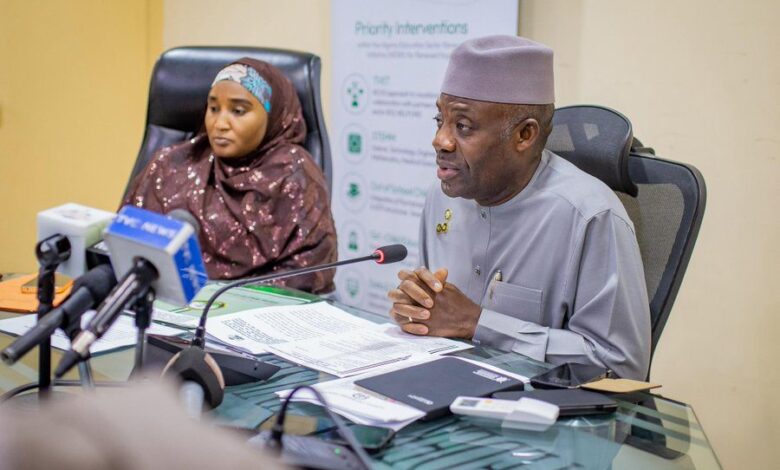
Minister of Education, Dr Tunji Alausa, announced the plan in Abuja on Tuesday during the inauguration of the Universal Basic Education Commission Ministerial Implementation and Monitoring Committee. He said the policy had failed to improve access to education and had instead created serious gaps in the school system.
The policy is known as disarticulation. In simple terms, it means Junior Secondary Schools and Senior Secondary Schools are run separately, often with different principals, separate management and sometimes different facilities.
Alausa said the arrangement had led to overcrowded junior secondary schools while some senior secondary schools were left underused. He cited Kaduna and other northern states as examples of places where the imbalance had been seen.


“We have overflowing JSS and empty senior secondary schools,” the minister said. “This disarticulation policy has failed. We will phase it out.”
Why FG Wants To End The JSS-SSS Separation Policy
The government says the school structure is one of the reasons many pupils are being lost between primary school and secondary school.
Alausa said Nigeria has about 80,000 public primary schools but only about 15,000 junior secondary schools. He said this wide gap makes it harder for many children to move smoothly from primary school into secondary education.
According to him, more than 20 million children who started school at primary level failed to progress to senior secondary school after dropping out along the way. The figure points to a major problem in access, transition and school completion.
This does not mean the Federal Government has scrapped JSS and SSS classes with immediate effect. It means the government wants to remove the administrative and physical separation between junior and senior secondary schools so pupils can move more easily through the system.
That distinction is important for parents, pupils and school owners. Schools should not make sudden changes to admissions, fees, staffing or management until formal circulars are issued by the relevant education authorities.
The proposal is expected to be tabled at the next meeting of the National Council on Education. This council is a key decision-making body for education policy in Nigeria, bringing together federal and state education officials.
Until that process is completed, the plan remains a policy move rather than an automatic change in every school.
What The Change Could Mean For Schools
If approved, the reform could lead to closer management of junior and senior secondary schools. It may also reduce duplication where separate principals and administrative structures exist within the same school environment.
The government has not yet explained how the policy will affect existing principals, teachers, school managers or support staff. It is also not yet clear whether private and mission schools will be affected in the same way as public schools.
State governments will play a major role because many public schools are managed at state level. Even after federal approval, states will still need to handle staffing, school handover, admissions, facilities and local implementation.
For families, the main issue is access. In many communities, children finish primary school but struggle to continue because there are fewer nearby junior secondary schools. Poverty, insecurity, transport costs and weak school infrastructure also contribute to the dropout crisis.
Nigeria has long faced one of the world’s biggest out-of-school children problems. The crisis is worse in poor, rural and conflict-hit areas, where families may find it harder to keep children in class.
UBEC Committee To Monitor Smart And Alternative Schools
The minister also inaugurated a committee to monitor schools funded by the Universal Basic Education Commission. The committee is chaired by Prof Rashid Aderinoye and is expected to track smart schools, bilingual schools and alternative schools across the country.
Smart schools use technology to support learning. Bilingual schools teach in more than one language. Alternative schools are designed to help children who may have dropped out or who cannot fit easily into the normal school system.
Alausa said some UBEC-funded schools had not been completed, while some completed schools had not been handed over to state governments or properly added to the education system. He said the committee would help ensure the schools are completed, handed over and opened for learning.
UBEC Executive Secretary, Aisha Garba, said 37 smart schools had been established across Nigeria, with 24 already carrying out academic activities. She also said 30 bilingual schools had been established in nine states under the UBEC-Islamic Development Bank Bilingual Education Programme.
These projects matter because new school buildings do not solve the education crisis unless they are staffed, equipped and opened to learners.
The Federal Government’s new push is aimed at keeping more children in school and making better use of existing facilities. But the success of the policy will depend on planning, funding, teachers, state cooperation and clear rules for implementation.
For now, parents should not withdraw children, change schools or pay new charges because of the announcement. They should wait for official instructions from the Federal Ministry of Education, UBEC and their state education boards before taking any action.