Pro-Israel evangelical activist Laurie Cardoza-Moore urged the Texas State Board of Education on Tuesday to reject what she described as attempts by the Council on American-Islamic Relations to influence the state’s social studies standards, warning that decisions made in Texas could shape textbooks and classroom instruction across the United States.
Cardoza-Moore, founder and president of Proclaiming Justice to the Nations, spoke as the board considered proposed revisions to the Texas Essential Knowledge and Skills, known as TEKS, the state standards that determine what public school students are expected to learn.
The standards are used in evaluating instructional materials and influence how publishers, districts, and teachers present subjects including world history, religion, terrorism, Israel, and the Middle East.
“We cannot allow Texas textbooks to be written by Hamas,” Cardoza-Moore said in a statement ahead of her testimony, accusing CAIR of trying to shape how Islam and the Middle East are taught in American classrooms.


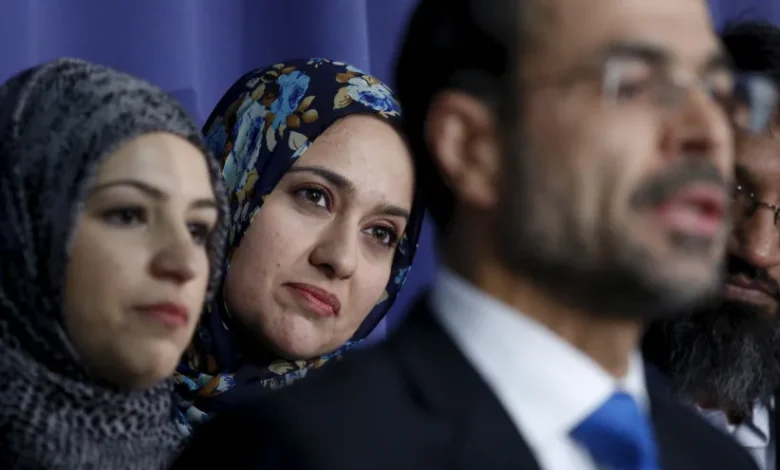
CAIR has publicly acknowledged taking part in the Texas standards process. CAIR-Texas said earlier this year that its representatives had testified before the board to urge that Muslims be “accurately represented” in world, US, and Texas history curricula.
CAIR has extensive ties to Muslims Brotherhood, previously banned terror-funding orgs. says Cardoza-Moore
In April, the organization called on the board to reject proposed social studies revisions, saying they unfairly targeted Muslims and tied Islam and Muslim historical figures disproportionately to terrorism while omitting Muslim contributions to world history and civilization.
CAIR describes itself as a Muslim civil rights and advocacy organization and has repeatedly denied allegations that it is affiliated with Hamas, the Muslim Brotherhood, or any foreign terrorist organization.
Cardoza-Moore, a longtime conservative Christian activist on textbook issues, argued that CAIR’s involvement should alarm parents and education officials.
“CAIR is the US arm of the Muslim Brotherhood, an Islamist anti-American organization bent on using the political system to destroy it from within,” she said. “They were labeled an unindicted co-conspirator in the largest terrorist fundraising operation in US history in 2007. Hamas is the Muslim Brotherhood in the Holy Land. We cannot allow Texas textbooks to be written by Hamas.”
Federal prosecutors listed CAIR as an unindicted co-conspirator in filings connected to the Holy Land Foundation case, a landmark Dallas terrorism-financing prosecution involving support for Hamas. CAIR was not charged with a crime in the case. The Holy Land Foundation and five of its leaders were convicted in 2008 of providing material support to Hamas.
The Texas curriculum debate has become part of a wider political fight over Islam, Christianity, Israel, and minority history in American public education. The State Board of Education gave preliminary approval to the social studies overhaul in April after a contentious debate over the portrayal of Islam, Black history, Hispanic history, Christianity, and terrorism.
‘Not just making decisions for Texas’
Texas officials are now considering the standards for second reading and final adoption. The proposal covers elementary, middle school, high school, and other social studies courses. Public comment on the proposal ran from May 15 to June 15, and the Texas Education Agency said the board would take registered oral and written comments during the June meeting.
Cardoza-Moore said Texas carries influence beyond its own classrooms because it is one of the largest textbook markets in the country.
“Texas is not just making decisions for Texas,” she said. “What happens in Texas rarely stays in Texas. Because Texas is one of the largest textbook markets in the nation, its curriculum standards often influence educational content adopted by more than twenty other states. The decisions made today could shape what millions of students learn for the next decade.”
In remarks prepared for the board, Cardoza-Moore invoked the historical bond between Tennessee and Texas, citing Tennesseans who fought at the Alamo, including Davy Crockett.
“Today, PJTN comes to Austin in that same spirit, not with weapons, but with a commitment to truth, education, and the defense of our shared Judeo-Christian values,” she said. “The battlefields may have changed, but the stakes remain high.”
Cardoza-Moore has served on Tennessee’s Textbook and Instructional Materials Quality Commission and has been active for years in state-level textbook debates. She drew national attention in 2012 after objecting to content in a Tennessee human geography textbook that she said appeared to justify the 2001 Hamas suicide bombing of the Sbarro pizzeria in Jerusalem, where 15 people were killed.
The dispute over CAIR’s role in Texas comes months after Gov. Greg Abbott designated CAIR and the Muslim Brotherhood as foreign terrorist organizations and transnational criminal organizations under Texas authority. CAIR and affiliated legal groups sued Abbott and Texas Attorney General Ken Paxton days later, calling the designation unconstitutional and defamatory. CAIR has maintained that it operates lawfully as an American civil rights organization.
Cardoza-Moore said the board should focus on historical accuracy and resist pressure from activist groups.
“Students deserve historical accuracy, not political indoctrination,” she said. “They deserve to learn the truth about America’s Judeo-Christian heritage, the role of the Jewish people in our nation’s founding, the history of Israel, and the forces that threaten freedom and our Republic.”
For Cardoza-Moore, the Texas debate is a national test case.
“Just as Tennesseans stood with Texas in one of its defining moments,” she said, “we stand with Texas today as it considers educational standards that will influence classrooms not only across the Lone Star State, but throughout America.”