0
Governors from Nigeria’s North-West region have committed to a concrete, time-bound actions aimed at reducing multidimensional poverty and improving living conditions for women and children.
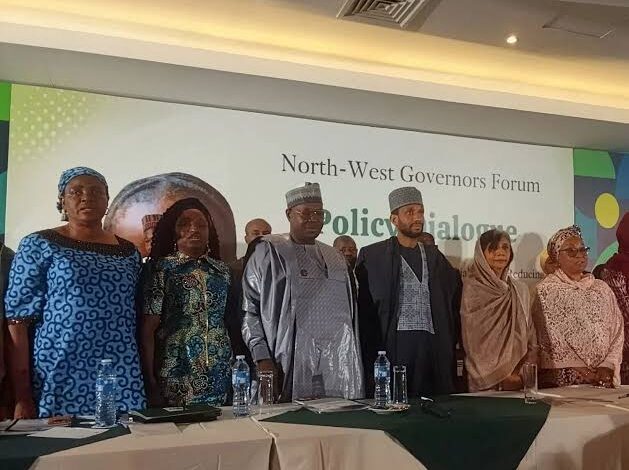
The commitment followed a two-day high-level policy dialogue held in Kano, organized by the North-West Governors’ Forum in partnership with the Office of the Vice President, the European Union (EU), and UNICEF.
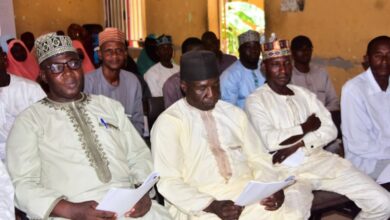
The event drew participation from Vice President Kashim Shettima, federal ministers, traditional and religious rulers, youth leaders, and private sector representatives.


The North-West region, which houses approximately 60 million people, currently grapples with some of the highest multidimensional poverty rates in Nigeria. Women and children remain the hardest hit, with more than half of the region’s children out of school. Families also face severe, overlapping deficits in healthcare, nutrition, clean water, sanitation, and income security.
To address these challenges, the Governors adopted a joint communiqué at the conclusion of the meeting.
The document outlines clear strategies to scale up social protection systems—including child-focused benefits—strengthen public service delivery, and increase domestic financing for poverty reduction.
The governors also endorsed a structured roadmap and monitoring framework to track implementation progress.
Speaking on behalf of the Chairman of the North-West Governors’ Forum and Katsina State Governor, Malam Dikko Umaru Radda, Deputy Governor Malam Faruk Lawal described the agreement as a pivot from intent to action.
He stated that the region now possesses a clear set of priorities to guide human capital investments and deliver tangible results for local communities.
Building on this, Vice President Kashim Shettima emphasized that the success of the initiative depends on sustained leadership and swift execution, reaffirming the Federal Government’s full support for the states.
He noted that the true measure of the dialogue will be how quickly these commitments translate into better lives for families.International partners also stressed the need for accountability and speed.
EU Ambassador to Nigeria and ECOWAS, Gautier Mignot, stated that strong commitments must be backed by transparent systems and sustained investment to ensure resources reach the most vulnerable.
Similarly, UNICEF Representative in Nigeria, Wafaa Saeed, warned that time is critical for the region’s youth, noting that expanding social protection and healthcare will dictate whether millions of children survive and thrive.
The policy dialogue is part of a broader regional strategy to foster peace, security, and economic stability by addressing the root socioeconomic vulnerabilities of the population.
UNICEF and other development partners have pledged continued technical and financial support to ensure the successful implementation of the roadmap.