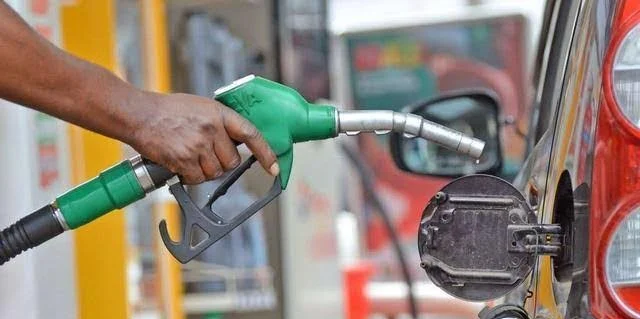
| We’re adjusting prices based on commercial considerations – Marketers
By Nse Anthony-Uko, Abuja, and Chika Izuora, Lagos


The Federal Competition and Consumer Protection Commission (FCCPC) has warned refiners, importers, depot operators, marketers and retail outlet owners against exploiting consumers after finding only marginal reductions in the prices of petroleum products despite a sharp fall in global crude oil prices.
This is as petrol import landing cost dropped to N983.92 per litre, falling below Dangote Refinery’s gantry price of N1,125 per litre, according to data from the Major Energies Marketers Association of Nigeria (MEMAN).
The warning followed the FCCPC’s ongoing surveillance of the downstream petroleum sector, which the commission said revealed that gantry and retail prices had not declined in line with falling international crude oil prices.
The commission’s notice comes as refiners and marketers told reporters that commercial factors—including inventory positions, exchange-rate hedging and distribution costs—are slowing the pass-through of lower costs to pump prices, leaving many filling stations still selling petrol far above the new import parity price.
The FCCPC said the review covered gantry prices of local refiners, marketers, depot operators and retail outlets across the country.
“To be clear, the Commission does not regulate or approve petroleum prices in a deregulated downstream market,” FCCPC Executive Vice Chairman and Chief Executive Officer, Tunji Bello, said in a statement on Sunday.
“Our responsibility under the Federal Competition and Consumer Protection Act, 2018, is to promote competitive markets, prevent anti-competitive conduct, and protect consumers from unfair, deceptive and exploitative business practices.
“We are concerned that while dealers often respond swiftly by hiking pump prices whenever crude prices rise, it is curious that it is taking so long for consumers to benefit significantly when crude prices fall. Competitive markets must work fairly in both directions.”
Crude oil prices have declined since the easing of tensions in the Middle East, including the ceasefire between Israel and Iran and the reopening of the Strait of Hormuz.
The earlier spike pushed local petrol prices to between N1,350 and N1,500 per litre, while diesel rose to about N2,000 per litre during the height of the hostilities.
Despite the decline in international crude prices, petrol still sells for about N1,200 per litre in many parts of Nigeria.
Market analysts and consumer groups have called for pump prices to fall below N1,000 per litre, noting that petrol sold between N800 and N900 per litre before the conflict-driven surge.
The FCCPC acknowledged that domestic pump prices are influenced by several commercial and market factors, including refining costs, foreign exchange movements, logistics, financing and distribution expenses.
The commission, however, said it expects competitive market dynamics to ensure that cost savings are passed on to consumers more promptly.
Bello warned that where credible evidence shows conduct that undermines competition or exploits consumers, the FCCPC will investigate and take appropriate enforcement action.
He urged consumers to report suspected anti-competitive conduct, misleading pricing practices and other unfair market behaviour through the commission’s established complaint channels.
Industry groups and refiners said commercial considerations explain why pump prices have not fallen as sharply as crude oil prices.
The executive secretary of MEMAN, Clement Isong, said marketers were adjusting prices based on commercial realities and location.