0
Torkwase Nyiekaa
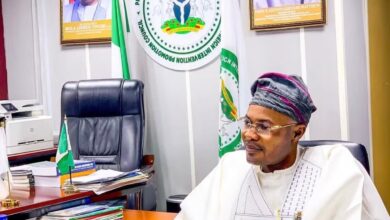
A prominent Southwest leader and Special Assistant on Southwest Affairs to the International President of De Norsemen Kclub International (DNKI), Chief Victory Ngumus, has warned that the recent abduction of pupils and teachers in Oyo State signals a dangerous expansion of terrorist and organised criminal activities into Nigeria’s Southwest region.
Ngumus made the assertion while calling on the Federal Government to urgently convene a Southwest Emergency Security Stakeholders’ Meeting involving federal and state authorities, security agencies, traditional institutions, civil society groups and community leaders to address the growing security challenges confronting the region.


According to him, recent incidents in Oyo State have exposed a troubling shift in the country’s security landscape, with criminal networks displaying levels of sophistication previously associated with insurgency-prone areas in Northern Nigeria and parts of the Middle Belt.
“The Oyo school abductions represent a dangerous escalation of insecurity from regions traditionally affected by terrorism into the Southwest. If left unchecked, this trend could undermine national stability and erode the developmental gains recorded by the present administration,” he said.
Ngumus specifically referenced the May 15 attack on three schools in Oriire Local Government Area of Oyo State, where armed gunmen reportedly abducted between 32 and 48 persons, including pupils and teachers.
He described the incident as a major security breach that requires coordinated action from government and relevant stakeholders.
The DNKI chieftain recalled that one of the abducted teachers, Mr. Michael Oyedokun, a Mathematics teacher at Community High School, Ahoro-Esinle, was reportedly beheaded by his captors in a video released two days after the abduction.
According to him, the killing was later confirmed by Oyo State Governor Seyi Makinde, drawing widespread condemnation from both local and international observers.
“He described the incident as barbaric and inhumane,” Ngumus noted, adding that the United Nations also condemned the attack and called for the immediate release of all remaining captives.
He further cited the June 3 abduction of Mrs. Olaide Busayo Adegoke John-Paul, sister of former Minister of Power, Chief Adebayo Adelabu, alongside her 12-year-old twin sons, Peter and Paul, while they were reportedly on their way to school in Ibadan.
The victims were later rescued following security operations, but Ngumus said the incident underscored the increasing vulnerability of residents and schoolchildren in the region.
According to him, intelligence and operational reports surrounding the school abductions suggest the involvement of a highly organised criminal network.
“The use of IEDs, coupled with demands by kidnappers for the release of detained commanders, acquisition of Toyota Hilux vehicles, sophisticated weapons, and legal concessions, suggest the presence of a well-organised criminal network with access to terrorist logistics and high-calibre weaponry,” he said.
Ngumus noted reports indicating that the attackers operated in military camouflage, moved on motorcycles and communicated in Hausa, Yoruba and Pidgin English, while security personnel involved in rescue efforts reportedly encountered Improvised Explosive Devices (IEDs), resulting in casualties.
While acknowledging President Bola Tinubu’s approval of the recruitment of approximately 1,000 forest guards for Oyo State following the school abductions, he maintained that the initiative, though commendable, should form part of a broader security architecture.
“The deployment of forest guards is a positive step, but it cannot substitute for a comprehensive security architecture built on intelligence gathering, stakeholder collaboration, technology deployment, and inter-agency coordination,” he stated.
Ngumus advocated stronger collaboration between security agencies and community-based organisations, arguing that local intelligence remains critical to preventing attacks and disrupting criminal operations before they occur.
He said De Norsemen Kclub International, which has active chapters across the six Southwest states and a presence in 27 states nationwide, could contribute meaningfully to intelligence gathering and early warning mechanisms if integrated into a structured security framework.
“With adequate training, vetting, and oversight, members of responsible civil society organisations can contribute significantly to intelligence gathering, surveillance, and early warning systems, particularly within vulnerable forest corridors and rural communities,” he said.
He stressed, however, that all armed operations and enforcement activities must remain the exclusive responsibility of constitutionally recognised security agencies.
Ngumus warned that continued insecurity could have far-reaching implications for economic growth, education, investment and public confidence in governance.
“With the 2027 general elections approaching, security will remain a major yardstick by which citizens evaluate political leadership,” he said.
“Nigerians will judge their leaders largely on their ability to keep schools, communities, highways, and places of business safe. Today, fear is becoming a constant companion for many citizens, with families increasingly reluctant to engage in normal daily activities.”
To address the challenge, he proposed the immediate convening of a Southwest Security Stakeholders Conference to bring together federal and state governments, security agencies, traditional rulers, the Amotekun Corps, civil society organisations and community leaders.
He also recommended the establishment of a regional intelligence fusion mechanism to facilitate information sharing, coordinated technology-driven operations against criminal groups operating in forest corridors, intensified investigations into the sources of illicit weapons and explosives, and the deployment of trained civilian volunteers strictly for intelligence and early warning purposes.
Reaffirming DNKI’s commitment to national peace and security, Ngumus said the organisation would continue to support lawful initiatives aimed at protecting lives, strengthening communities and promoting national development.
“Security is a collective responsibility, and every stakeholder must play a role in ensuring that our communities remain safe and secure,” he added.