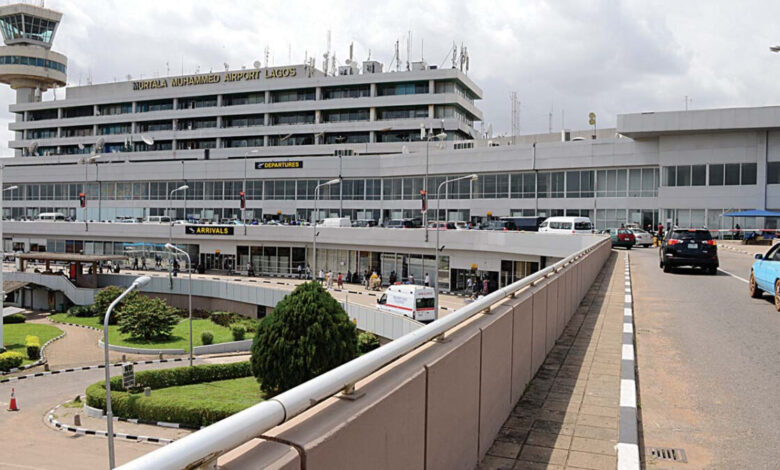
Passengers and other users of facilities at the Murtala Muhammed International Airport (MMIA), Lagos, are currently expressing frustration over a sudden 100 per cent increase in parking fees and toll gate charges, a development that has sparked outrage among aviation stakeholders and industry experts.
A LEADERSHIP investigation at the weekend revealed that the parking fee at Seymour Aviation Limited, which previously stood at N2,000 per hour, has now risen sharply to N4,000 per hour, representing a 100 per cent increase.
Also, toll gate charges operated by the Federal Airports Authority of Nigeria (FAAN) have been adjusted upward by 100 per cent. Cars that previously paid N250 are now charged N500, while Sport Utility Vehicles (SUVs) have seen their fees rise from N500 to N1,000.
The sudden upward review has triggered criticism from users and experts who describe the increment as excessive and potentially exploitative, especially at a time when Nigerians are already grappling with high transport and living costs.
An aviation expert and former chief pilot of the defunct Associated Airline, Capt. Muhammed Badamasi, questioned the justification for the increase, arguing that operational cost drivers cited by service providers do not adequately explain the hike.
“How does the increase in fuel prices affect the cost of parking?” he asked rhetorically, describing the adjustment as unjustified.
Capt. Badamasi suggested that the 100 per cent toll increase could also be interpreted as a deliberate measure to discourage non-airport traffic from using access roads around the terminal.
“The 100 per cent toll increase may be a strategy to reduce the volume of vehicles plying the route for purposes other than airport terminal business,” he noted.
He, however, warned that such increases across airport services would eventually have a ripple effect on airline operating costs and, by extension, airfares.
“Any increase by the service providers will definitely trickle down to the cost of operation of airlines, which will also raise airfares,” he said.
He further argued that passengers ultimately bear the burden of such adjustments in a deregulated environment.
“If it’s simply because of the hike in the price of fuel, will the prices be reduced when the price of fuel returns to the level it was before the war? Your guess is as good as mine that they will not,” he added.
Capt. Badamasi also accused service providers of taking advantage of weak consumer protection structures in the aviation sector.
“They are taking advantage of the absence of a customer protection agency to ensure that customers are not short-changed unjustly,” he said.
He added that many airport users have begun adapting their operations in response to the rising costs.
“Nigerians are smart people. Strategically, many of us don’t use the car park until we know that the aircraft has landed and our passenger has checked in,” he noted.
According to him, while airlines have been criticised for rising airfares linked to jet fuel costs, similar scrutiny is not being applied to airport service providers.
“The complaint is about the high price of Jet A1 fuel, which has caused some airlines to increase their airfares, while some other airlines have maintained their old fares. This is a good thing about market deregulation,” he said.
However, he warned that continued cost escalation across the aviation value chain could threaten passenger volumes.
“There’s a limit to airfares that will not drive customers away from the airlines to the motor parks. If they are not careful, they may find themselves in a situation where aircraft are grounded due to the absence of passengers,” he cautioned.