Regional framework could be set up to monitor rapidly shrinking Caspian Sea, Azerbaijani official says

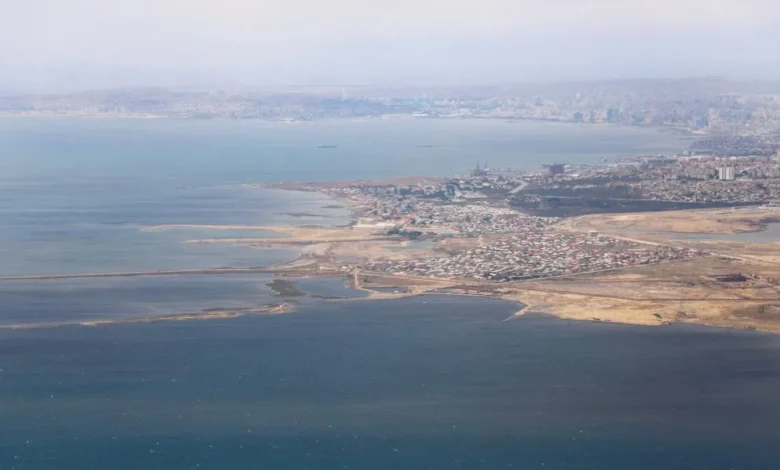
BAKU, June 30 – A legal framework could be drawn up this year on regional cooperation to monitor and seek to adapt to falling water levels in the Caspian Sea, which is shrinking at an accelerated pace, a senior Azerbaijani water official told Reuters.
• The level of the Caspian, the world’s largest inland body of water, has fallen by about a metre (yard) over the last five years, 1.5 metres in the last decade and 2.5 metres over the last 30 years, said Aliagha Azizov, deputy head of the State Control Service for Water Use and Protection at Azerbaijan’s State Water Resources Agency.
• “The sea is now retreating by 20-30 centimetres a year, dozens of times faster than the pace at which global sea levels are rising. We cannot stop this process. We can only adapt to it,” Azizov said.
• The water levels of the Caspian Sea, which lies between Azerbaijan and Kazakhstan, with Russia to the north and Iran and Turkmenistan to the south, have been falling since the mid-1990s, scientific studies have found.


• Azizov said the main causes were climate change, lower rainfall across the sea basin, higher evaporation caused by rising temperatures and reduced flows from rivers feeding the sea.
• Ports, shipping, fisheries, coastal tourism and offshore oil and gas infrastructure are also more vulnerable as a result, he said.
• The five countries surrounding the sea are working to strengthen cooperation to protect the surrounding environment, but there is no fully functioning regional monitoring system, Azizov said.
• The legal framework for regional cooperation on monitoring, data exchange, joint scientific research, forecasts and adaptation measures could be completed by the end of this year, he said. REUTERS