Every morning before Kano awakens to its commerce, Umar Sayyad is already at work.
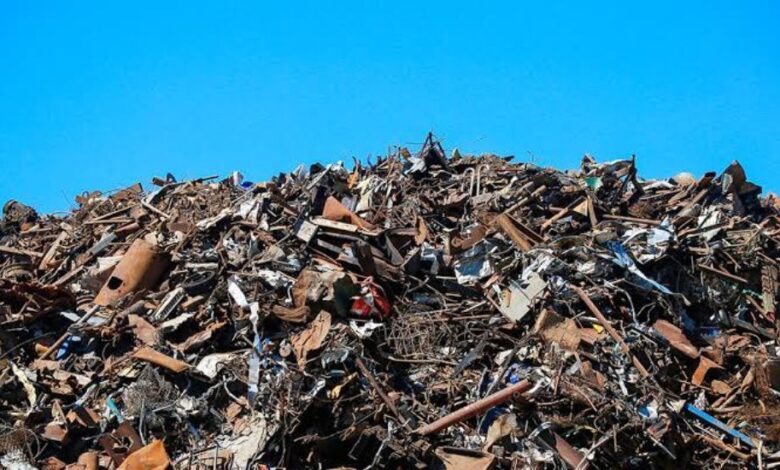
Threading through back streets, construction sites, and motor parks with a practiced eye, the 38-year-old scrap dealer and his network of collectors accumulate engine blocks, aluminium frames, car spare parts, copper wires, and assorted metals that most Nigerians discard without a second thought.
By month’s end, Sayyad’s trade generates between N8m and N10m in revenue. He pays no income tax.
Across the Kaduna road, in the ancient northwestern city of the same name, Nura Bala runs a larger operation. His monthly haul from scrap metal, a business that has grown steadily as Nigeria’s economic pressures drive more people to sell off machinery, vehicles, and infrastructure which earns him approximately ₦15 million every month. He too has no tax file.

Both Sayyad and Bala have no registered business entities, rather operating in an open space just like a regular business who barely make a N100,000 profit.
Together, these two men alone represent at least ₦276m in untaxed annual income. Under Nigeria’s new tax framework, a conservative estimate of what they owe the state runs to over ₦67m a year, revenue that never reaches the coffers of the Kano or Kaduna state government.
They are not exceptional cases. They are emblematic of an industry operating at industrial scale inside Nigeria’s vast informal economy, generating hundreds of billions of naira annually while remaining almost entirely outside the reach of the country’s tax net.
The Men Behind the Metal
Aminu Hassan, the designated leader overseeing scavengers, scrap dealers, and waste managers in Kano, acknowledges the scale of the sector.
Under his coordination, thousands of operators spread across Kano’s 44 local government areas collect, sort, and resell metals, plastics, paper, and other materials to middlemen and industrial buyers.
Many of them, he admits, have no Tax Identification Number and have never interacted with any revenue authority.
“Most of these people do not even know they are supposed to pay tax,” Hassan told THE WHISTLER.
“They think tax is for people who work in offices or own shops. They do not see themselves as businesspeople.”
What the Law Says They Owe
The scale of what is being lost to the state is significant.
Under the Nigeria Tax Act 2025, which came into force on 1 January 2026, personal income earners are subject to a progressive tax rate ranging from zero percent on the first ₦800,000 annually to 25 percent on income above ₦50m.
THE WHISTLER apply the tax rate framework to Sayyad’s declared earnings of between ₦96m and ₦120m per year, a conservative calculation yields an annual tax liability of approximately ₦24.9m.
For Bala, whose annual income reaches ₦180m, the figure climbs to roughly ₦42.9m.
Between these two individuals alone, the state is forgoing nearly ₦68m every year.
Kano State generated ₦74bn in internally generated revenue in 2024, rising to ₦102bn in 2025, a figure that is impressive, but remains dwarfed by the revenue potential locked inside its informal sector.
Kaduna State, which generated ₦62.48bn in IGR in 2023 and ₦71bn in 2024, has positioned itself as the leading IGR-performing state in northern Nigeria. Yet economists argue that both states are leaving enormous sums uncaptured.
A Sector That Exists Off the Books
Dr. Kabir Musa, an economist and lecturer at Bayero University Kano who has studied the informal sector in the north, said the problem is structural.
“When you look at the density of the scrap and recycling trade in northern Nigeria like Kano, Kaduna, Zamfara, and Katsina, you are looking at billions of naira in monthly transactions that flow completely outside the formal financial system.
“There are no receipts, no bank transfers in most cases, no records. It is as if an entire industry does not exist on paper,” he said.
Nigeria’s scrap metal recycling market has been growing steadily, driven by environmental concerns, government regulations promoting recycling, and the economic benefits of recycling.
However, informal recycling practices and inconsistent supply chains continue to undermine the sector’s potential.
The informality is not incidental, it is structural.
Scavengers and scrap dealers operate largely in cash, with transactions concluded in open-air markets, roadsides, and private depots.
What do you think about this?
Drop your opinion in the comment section.
FOLLOW US & Share this with someone who needs to see this.