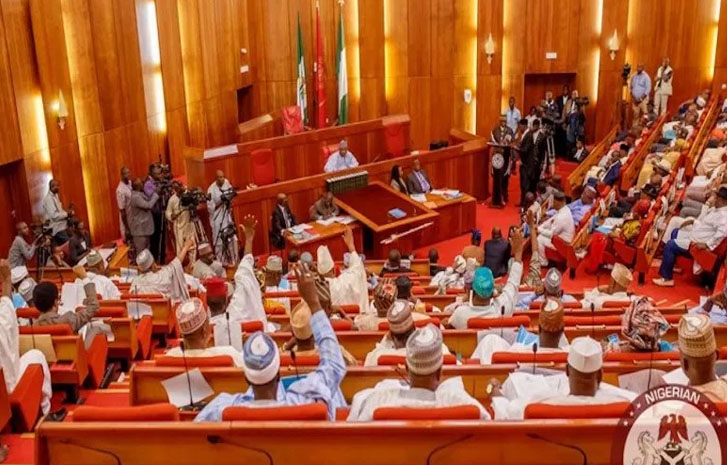
The Senate on Wednesday turned down a proposal seeking an investigation into military spending, opting instead to focus on escalating insecurity following recent bandit attacks in Oyo and Kwara states.
Lawmakers urged security agencies to intensify efforts toward rescuing victims still being held captive and called for the expansion of the Safe School Initiative to strengthen protection for schools across the country.
Proceedings opened on a sombre note as senators observed a moment of reflection for a teacher and other victims killed during attacks in Oyo State.
The development followed a motion moved by Senator Abdulfatai Buhari, who highlighted the abduction of 49 people and the killing of schoolteacher Michael Oyedokun, as well as several other victims, including a toddler.

Security concerns were further raised when Senator Sulaiman Sadiq, under a personal explanation, drew attention to the worsening situation in Kwara North. He described frequent bandit attacks on communities in the area, warning that residents now face near-daily threats from criminal groups.
During the debate, senators expressed alarm over the rising incidents of kidnapping and violent crime nationwide, stressing the need for stronger and more coordinated responses from security agencies.
The discussion took a different turn when Senator Adams Oshiomhole proposed a thorough review of military expenditure, insisting that security funds should be subjected to greater scrutiny and accountability.
The former Edo State governor questioned the effectiveness of past Senate resolutions on insecurity, arguing that such resolutions risk becoming meaningless without proper implementation and follow-up.
He referenced the abduction of schoolchildren in Kebbi State, noting reports that security personnel assigned to the school had been withdrawn shortly before the incident.
Oshiomhole said the Senate had previously directed military authorities to identify those responsible and brief lawmakers, but no report had been submitted.
According to him, a lack of accountability weakens efforts to combat insecurity, making it necessary to assess how security allocations have been spent and whether they have delivered measurable improvements.
Backing the call for oversight, Senator Sani Musa said the National Assembly had repeatedly approved significant funding for defence, yet security challenges continued to deepen across many regions.
He urged security chiefs to explain how allocated resources had been utilised and called on lawmakers to strengthen their oversight functions.
Musa also questioned whether the massive investments in defence had yielded expected outcomes, citing persistent complaints about inadequate equipment and unpaid allowances despite substantial government spending.
Presiding over the session, Deputy Senate President Barau Jibrin acknowledged concerns about accountability in the management of security funds, saying the issues raised by lawmakers deserved attention.
However, when Oshiomhole sought to include a probe of military expenditure among the Senate’s resolutions, the proposal failed after no senator seconded it.
A subsequent attempt by Senator Musa to modify the resolution to accommodate the suggestion also failed to gain support.
The Senate thereafter adopted its resolutions on the security situation without approving any investigation into military spending.