0
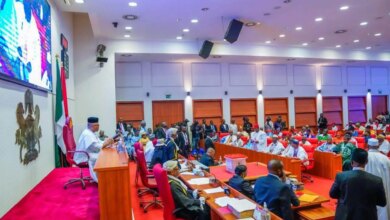
LAGOS – The Socio-Economic Rights and Accountability Project (SERAP) has given Senate President Godswill Akpabio and Speaker of the House of Representatives, Tajudeen Abbas, seven days to immediately refer allegations surrounding the alleged diversion, misapplication, or disappearance of N6.3 billion allocated for constituency projects to relevant anti-corruption agencies for a thorough investigation and, where necessary, prosecution of those found culpable.
SERAP urged Akpabio and Abbas to ensure that anyone found responsible is prosecuted, where there is sufficient admissible evidence, and that any constituency project funds or other public funds found to have been diverted, or unaccounted for are fully recovered and remitted to the treasury.
SERAP also called on them to ensure the full disclosure of the names of the contractors and companies—including their shareholders and beneficial owners—that received constituency project funds but failed to execute the projects.
The serious allegations are documented in the Auditor-General of the Federation’s 2022 annual report, published on September 9, 2025.
In a letter dated June 27, 2026, and signed by its deputy director, Kolawole Oluwadare, SERAP said: “The allegations that over N6.3 billion in constituency project funds may have been diverted suggest a grave violation of the public trust, the Nigerian constitution 1999 (as amended), and international standards.”
SERAP said, “Allegations of corruption in the spending of constituency project funds continue to undermine economic development, violate social justice, and destroy trust in political institutions, as well as lead to deficient public services.”
According to SERAP, “The National Assembly has a responsibility to curb allegations of corruption in constituency funds. But the body can only effectively perform its anti-corruption role if it can demonstrate exemplary leadership to probe the allegations of corruption involving the constituency projects approved by the lawmakers.”
The letter, also reads in part: “We would be grateful if the recommended measures are taken within seven days of the receipt and/or publication of this letter. If we have not heard from you by then, SERAP shall take all appropriate legal actions to compel you and the National Assembly to comply with our request in the public interest.
“The allegations involve several federal ministries, departments and agencies, including the Environmental Health Registration Council of Nigeria (EHORECON); the Federal College of Animal Health and Production Technology, Vom; the Federal Polytechnic, Udana; the National Agency for the Prohibition of Trafficking in Persons (NAPTIP); and the National Institute of Legislative and Democratic Studies (NILDS).
“The Auditor-General identified numerous cases of payments into private bank accounts, contracts awarded without due process, payments for contracts not executed or services not rendered, undocumented expenditures, inflated contracts, procurement irregularities and failures to account for public funds, recommending in each case that the funds be recovered and remitted to the treasury.
“According to the 2022 audited report, contained in pages 367 to 396, the Environmental Health Registration Council of Nigeria (EHORECON or Council) Abuja paid over ‘N22 million [N22,944,565.16] into the private account of some members of staff of the Council from the Constituency Projects Fund Account.
“There ‘was no evidence of the utilization of the funds and no explanations on the purpose for the payment of such amount into the individual accounts.’
“The Council also in 2021 ‘awarded suspicious consultancy contracts of over N12 million [N12,030,818.29] for the development of Modern Abattoirs in Kebbi State and the supervision of seven projects in Kebbi, Jigawa, and headquarters Abuja.’
“The money was to ‘produce bills of quantity, architectural design, structural design, mechanical design, and electrical designs for the contracts and supervision.’ But ‘the ‘items could not be found.’
“The Council ‘awarded contracts of over N404 million [N404,480,531.24] to companies without adequate registration profiles. Some companies ‘used two names, and used invalid tax clearance certificates (TCC) to the payment vouchers of some of the contracts.’
“The Council also ‘awarded contracts of over N103 million [N103,250,000.00] for capacity building without any documents.’ There ‘was no evidence that the three contractors who collected the money were involved in any capacity-building activity. The ‘names of the contractors were not on the banners and flyers of the events.’
“The Council as reportedly ‘paid over N656 million [N656,295,589.44] for constituency and zonal intervention projects without any authorization.’
“The Council in 2021 also paid ‘over N389 million [N389,613,540.00] to contractors to develop modern abattoirs, improve hygiene, and sanitation in meat handling at Argungu Market, Suru, Kebbi North.’ But ‘the contracts were never executed.’
“The ‘pictures of the project used for the first contractor were the same used for the second contractor.’
“The Council ‘awarded 12 contracts for over N563 million [N563,999,524.37] without any priced bill of engineering measurement.’ Most of ‘the contracts were awarded long before the consultancy contracts for their designs and drafts of their bills of quantity were awarded.’
“The Federal College of Animal Health and Production Technology, Vom in 2022 reportedly ‘paid over N279 million [N279,700,500.00] to three contractors to empower and train youths in selected vocational areas in Borgu and Kontagora, Niger State, train women and youths in entrepreneurship in Niger East Senatorial District and to train youths and women in agro production and self-reliance in Barki Ladi/Riyom Federal Constituency, Plateau State.
“But ‘the money was paid to the contractors without any document.’
“The College also ‘paid over N279 million [N279,700,500.00] as mobilization fees to some contractors for construction and supplies but without any document.’ There was also ‘no evidence that the College confirmed the authenticity of the Advance Payment Guarantee (APG) from the banks before the mobilization fees were paid.’
“The College in 2022 ‘paid over N279 million [N279,700,500.00] to unqualified contractors for the provision of services such as medical outreach, empowerment of youths and vocational training.’
“There was ‘no evidence of procurement due process and contractors’ eligibility for the contracts awarded, no company profile, no certificate of registration, no tax clearance certificate and no pictorial evidence of the projects executed.’
“The College in 2022 ‘paid over N629 million [N629,424,345,88] to unqualified contractors to supply fertilizer to Shendam/ Quan’anpan/Mikang Federal Constituency, Plateau State; training for women and youths in Kwara North Senatorial District and Ifelodu/Oyu/Offa Federal Constituency; and to install solar street lights in Nkalagu Isielu LGA, Ebonyi Central Senatorial District, Ebonyi State.’
“The ‘money also included payments to contractors for various Barkin Ladi/Riyom Federal Constituency, Plateau State locations; to train youths and women in entrepreneurship in unknown location; to train them in self-reliance in Barkin Ladi/ Riyom Federal Constituency; to promote Animal Husbandry and train youths and women in Plateau South and North Senatorial Districts.’
“But ‘there was no document on how the money was spent, and no details of the contractors were provided.’ There ‘was also no advertisement of the contracts, no minutes of the Procurement Planning Committee, and no financial and technical bid evaluation reports.’
“The Federal Polytechnic, Ukana, Akwa-Ibom State also ‘paid over N407 million [N407,179,495.39] to some contractors as mobilization fees for construction and supplies’, but without any document. There was also ‘no evidence that the College confirmed the authenticity of the Advance Payment Guarantee (APG) from the banks before the mobilization fees were paid to the contractors.’
“The Polytechnic in 2022 ‘paid over N399 million [N399,907,888.85] to unqualified contractors for medical outreach, youth empowerment and vocational training.
“There was ‘no evidence of procurement due process and contractors’ eligibility for the contracts awarded, no company profile, no certificate of registration, no tax clearance certificate and no pictorial evidence of the projects executed.’
“The Polytechnic ‘inflated contracts for the supply of solar power and street lights by over N192 million [N192,722,419.10]’. The ‘contracts were for the supply of solar and street lights to be installed at the University of Calabar, the University of Calabar Teaching Hospital, some areas of Orolu Local Government of Osun State, and some areas in Ikot Ekpene/Obot Federal Constituency, Akwa Ibom State.
“The Polytechnic ‘paid over N83 million [83,867,428.50] for constituency and other allowance provisions without any documents.’ The ‘payments were made to some contractors without any approval and without any retirement of the money.’
“The Polytechnic in 2022 ‘paid over N279 million [N276,320,435.13] for contracts not fully executed.’ The ‘payment was for the construction of mini-stadium, construction of open and lock shops, provision of solar powered cold room.’
“The Polytechnic also ‘paid N50 million [N50,000,000.00] for contracts not executed.’ The ‘money was paid to a contractor for the fencing and provision of solar borehole at Yauri Twon Hall, Kebbi South Senatorial District. But ‘the borehole had been in existence for over 20 years. The contract was awarded for an already existing borehole.’ The ‘contractor has not executed any contract.’
“The National Agency for the Prohibition of Trafficking in Persons (NAPTIP) ‘irregularly awarded contracts for over N21 million [N21,879,025.00] to a contractor for sensitisation on the effects of child labour in Lokoja/ Koto Federal Constituency, Kogi State.’ The ‘three contractors that submitted quotations for the job were related, as details, including phone numbers of each of the companies, were the same.’
“There ‘were discrepancies as to the number of training conducted and the number of persons who were trained.’
“NAPTIP ‘paid over N176 million [N176,823,565.10] to contractors for logistics, security and consultancy fees, and sensitisation programmes’, but ‘without any documents.’
“NAPTIP also ‘paid over N89 million [N89,642,300.00] to contractors for the provision of all-in-one solar lights in selected locations of Yobe-North Senatorial District, Yobe State.’ The ‘contractors were fully paid but failed to execute the projects.’
“NAPTIP ‘irregularly awarded contract for over N4 million [N4,463,300.00] for the renovation and furnishing of classrooms in Kaltungo/Shangom Federal Constituency, Gombe State.’ The contractor was fully paid but no project was executed.’
“The National Institute of Legislative and Democratic Studies ‘failed to submit any audited financial statements for the years 2012 to 2022 to the Auditor-General of the Federation without any justifications.’ The Auditor-General wants the financial statements submitted.
“The Institute ‘failed to deduct and remit over N15 million [N15,070,996.24] in stamp duty it collected from the contracts awarded on the construction of the Institute’s permanent site-building.’
“The Institute ‘spent N1.6 million [N1,600,000.00] without any authorisation from the Office of the Accountant General of the Federation.’
“Poor and vulnerable Nigerians bear the heavy economic and social costs of corruption. Corruption exposes them to additional costs to pay for health, education and administrative services. Corruption traps the majority of Nigerians in poverty and deprives them of opportunities.