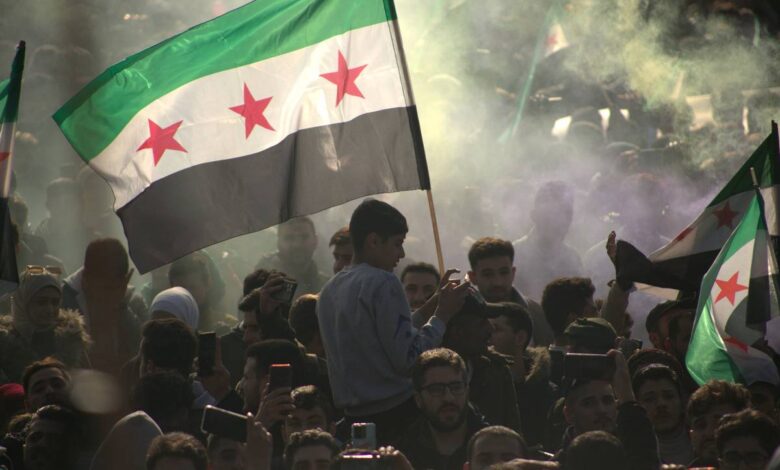
The Syrian revolution was fought in order to tear down a predatory police state, not to replace it with a replica under a different banner. However, the horrific, blood-soaked dungeons of the Assad era have simply been rebranded under the sleek, corporate security apparatus of the new President, suited and booted Ahmed Al-Sharaa.
As dawn broke today, Tuesday, 30 June 2026, my brave friend, the fearless New York journalist Bilal Abdul Kareem, will have spent an agonising 190 days trapped in total darkness, having been stolen away from his family. His crime? He dared to ask the uncomfortable questions that the slick new autocracy desperately wants buried.
Bilal is the living, breathing proof that this supposedly transitional administration has resurrected the very tyranny that hundreds of thousands of Syrians died to escape. While the global press looks the other way, a horrifying whisper from deep within the grassroots network reveals a sickening reality: Bilal was allegedly tortured, his body broken for a single piece of digital data — the password to his OGN TV YouTube channel, which was silenced abruptly yesterday.
But while a brave, independent voice is choked out in the dark, a chilling, silent cull is sweeping through the upper echelons of the military. Seven high-ranking military and security chiefs — men who possessed the literal blueprints of the old regime’s atrocities — have dropped dead of “heart attacks” within a mere six-week window.
Like a grim manifestation of the seven deadly sins, each corpse marks a dark transgression of a regime ruthlessly scrubbing its past to purchase a clean future. To lose one senior commander is tough. To lose two is a tragedy. But to lose seven senior commanders in a matter of weeks is downright careless.
READ: Turkey condemns Israeli strikes in southern Syria, urges international action
In the new-old Syria, foul play cannot be ruled out. Yet, who in this terrified landscape dares to question their demise? Certainly not the terrified doctors signing the death certificates.
In the dark corners of Idlib’s sprawling Souk Al-Saghah and the tense, whispering alleyways of Daraa’s Souk Al-Hamidiyah, wild speculation is already filling the void left by a strangled media. Rumours are spreading like wildfire among the local merchants and shoppers that Western intelligence — the CIA and Britain’s MI6 — are active in the shadows, using untraceable poisons to systematically dispose of the old guard.
While such claims remain wild speculation, the bitter truth is that in the total absence of cold hard facts, and with fearless independent networks like Bilal’s OGN News service aggressively shut down, this conspiratorial madness will continue to thrive. Before long, the same frantic conspiracy theories that abounded under Assad will completely take hold, whipping up a climate of psychological terror and fear all over again.
The timeline of Syria’s sudden cardiac contagion completely defies all medical and statistical logic. It looks less like a tragedy of public health and more like a systematically executed executive liquidation. The regime wants the world to believe that the stress of the transition was simply too much for the old guard’s hearts to bear. The streets of Hama, Kafr Zita and Damascus whisper a far more sinister truth.
Consider the body count. On 2 March 2026, Brigadier General Hussein Abdullah Al-Obaid — the powerhouse commander of the elite 54th Division— died mysteriously. He received a lavish, official funeral in Hama to keep up appearances. Just four days later, Nader Mutlaq, a key figure woven intimately into the elite military-security apparatus, dropped dead. On 23 March, Abdul Majid Al-Dubais, the mastermind of the security forces’ training, found his heart mysteriously giving out. Less than twenty-four hours later, Colonel Musa Al-Mawas, a high-profile military defector who kept far too many receipts, was silenced by the exact same cardiac fate. By mid-April, Colonel Abdul Rahman Haj Bakur, Mustafa Abdullah Al-Rajab al-Daher and Malik Al-Jaradi of the 62nd Division were all dead.
The motivation behind this sudden outbreak of dead men is blindingly obvious. As Syria’s Justice Minister Mazhar Abdul Rahman Al-Wais toured European capitals to project a civilised, reformed image of the regime in Damascus, these seven men were walking liabilities. They held the secrets of the past and the keys to the transitional authority’s darkest compromises.
By ensuring that their hearts stopped beating, the new administration has apparently erased the paper trail before international tribunals can dismantle the new-old state. The regime has traded the crude, bloody executions of the past for the quiet, clinical efficiency of the medical profession.
While the state cleanses its ranks of inconvenient executioners, it has turned its full, predatory wrath on one man who gave the revolution its genuine voice. However, Bilal’s record cannot be rewritten by state censors.
When foreign operatives and slick diplomats negotiated their paths out of the catastrophic siege of Aleppo in 2016, Bilal stayed behind. He chose to remain under a relentless storm of barrel bombs to ensure that the world witnessed the raw, human agony of the Syrian people. He was prepared to die so that the truth might be known.
Today, he marks 190 days of captivity by the new-old regime. The social media firestorm that preceded Bilal’s arrest centred on his interview regarding the citizenship rights of foreign fighters and expatriate professionals. These heroic individuals were not militants; they were teachers, clinicians and humanitarian workers who left comfortable lives in the West to rebuild shattered schools and restore basic dignity when no one else would.
To criminalise these discussions is an absolute betrayal of those who stood by Syria in its darkest hours. Bilal dared to ask uncomfortable questions about governance, military alignment and the rapid centralisation of power under Ahmed Al-Sharaa. For that crime, his digital footprint has been forcefully erased by his state captors, and his family has been left entirely in the dark.
While Bilal is starved of justice, the regime’s elite are putting on a multi-billion-dollar puppet show. Former opposition executive Ghassan Hitto is pacing global stages, dangling a $600 billion reconstruction carrot to attract foreign capital. He boasts of excellent security and a democratic transition. It is a cinematic lie designed purely for Western ears. On the ground, the reality is a predatory economic slaughter of the Syrian middle class.
READ: Trump says Syria could play larger role against Hezbollah, criticises Israeli performance
Hitto talks of free markets and economic revitalisation, yet a small fishing boat costing $10,000 in Lebanon costs $50,000 in Syria due to staggering inflation rates and punitive 500 per cent import tariffs that strangle local traders. Farmers are protesting in the streets because soaring production costs have made agriculture a form of financial suicide. Meanwhile, basic local staples like lamb and olive oil are being exported aggressively to line the pockets of the new tycoons, leaving ordinary Syrian families unable to afford the food grown in their own soil.
Worse still are the dangerous strategic compromises being made behind closed doors. In its desperate bid for Western acceptance, Al-Sharaa’s administration is actively exploiting Syrian territory, allowing foreign military operations — including Israeli strikes against Lebanon — to take place from Syrian soil. He is compromising Syria’s sovereignty completely, and handing regional ambitions to global powers on a silver platter.
This is the definitive reality of the modern Syrian state. What we are witnessing today is not a liberation; it is a corporate transfer of power. The men at the very top have changed, the tailored civilian suits have replaced the military fatigues, but the predatory, blood-soaked machinery of the secret police operates with the exact same clockwork precision.
The transitional public relations machine points to the prosecution of notorious field executioners to show progress, but this is merely sacrificing the pawns to protect the kings. Untouchable monsters accused of immense command responsibilities still sit comfortably in their positions of power and corporate influence.
If this new administration cannot tolerate a single independent journalist delivering inconvenient truths, then it has already failed the revolution, as I pointed out in MEMO last month. By locking away my colleague and friend, Bilal Abdul Kareem, and orchestrating the quiet, convenient demise of its own military commanders, Syria has not built a democracy, it has officially sacrificed its own foundational promises.
Transitional President Al-Sharaa can still rescue the revolution’s reputation by freeing Bilal Abdul Kareem without delay. Failure to do so is to confirm that the revolution itself has failed at huge cost to the Syrian people.
OPINION: Syria has sacrificed the soul of the revolution by arresting Bilal Abdul Kareem
The views expressed in this article belong to the author and do not necessarily reflect the editorial policy of Middle East Monitor.