Southern Kaduna killings: I attended church service in Kagoro – Atiku denies ignoring victims of violence

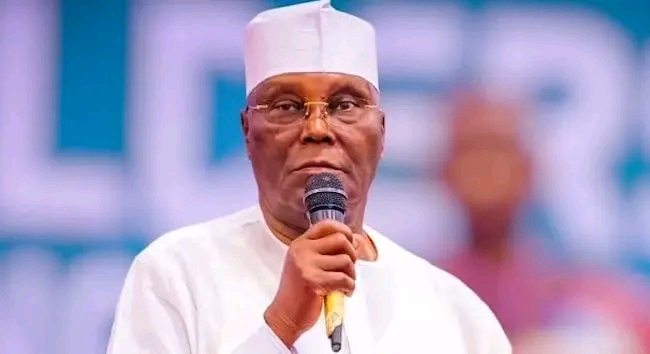
Atiku Abubakar, the 2027 presidential candidate of the Nigeria Democratic Congress, NDC, on Sunday rejected the accusation by former Secretary to the Government of the Federation, Babachir Lawal, that he had ignored victims of violence in Nigeria.
Stressing that Lawal’s claims are untrue, Atiku said that, contrary to the allegation, he attended a church thanksgiving service in the Kagoro area of Southern Kaduna to show support for the grieving community and share in the pain of families affected by the violence.
In a statement titled, “From Kagoro to Chibok: The Atiku Babachir Lawal Refuses to See,” signed by his spokesperson, Phrank Shaibu, the former Vice President said that when tragedy struck the people of Kagoro in Southern Kaduna, he did not ask whether the victims were Christians or Muslims, northerners or southerners, Fulani or non-Fulani; instead, he stood with them.
He stated that over the years, he has consistently condemned terrorism, banditry, kidnappings, communal violence, attacks on Christian communities, attacks on Muslim communities, and other forms of insecurity across Nigeria.

According to the statement, “The problem of banditry in Northern Nigeria is very real. Thousands have been killed. Communities have been displaced. Farmers have abandoned their lands. Families are now budgeting for ransom payments just as they budget for school fees. Using that tragedy to blame an entire ethnic group is both intellectually lazy and morally wrong.
“There is an irony here that Mr. Lawal appears unwilling to confront. The same ethnic group he now speaks of with so much suspicion once gave him tremendous support when one of its most prominent members, Muhammadu Buhari, appointed him to the highest office he would ever hold in public service as Secretary to the Government of the Federation. At no point during that appointment did Mr. Lawal object to the fact that a Fulani man elevated him to such a prominent national position.
“He accepted the trust, the office, and the privileges that came with it. It is therefore strange and unfortunate that he now seeks to condemn an entire ethnic group simply because another Fulani man, Atiku Abubakar, seeks to become president through a democratic process. Such selective outrage is neither fair nor credible.
“The facts also contradict his attempt to portray Atiku as indifferent to the suffering of people across ethnic and religious divides. When the people of Kagoro in Southern Kaduna suffered a devastating tragedy, Atiku Abubakar did not ask whether the victims belonged to a particular ethnic group, religion, or background.
“He attended a church thanksgiving service to identify with the people, share the pain of grieving families, and support a hurting community. That is how a leader behaves when he sees Nigerians as fellow citizens rather than as members of competing ethnic groups. It is difficult to reconcile Babachir’s portrayal of Atiku with the public record of a man who has consistently worked to unite people across religious and ethnic lines during periods of national crisis.
“Babachir further questioned why Atiku has not spoken about victims of violent attacks across the country. This accusation collapses under the weight of readily available evidence. For years, Atiku Abubakar has consistently condemned terrorism, banditry, mass killings, attacks on Christian communities, attacks on Muslim communities, kidnappings, and communal conflicts. He has spoken on the tragedies that occurred in Plateau, Benue, Southern Kaduna, Zamfara, Katsina, Borno, Niger, Owo, and many other locations.
“One may disagree with his prescriptions. One may even question whether statements alone are sufficient. But to claim that he has remained silent is simply incorrect.”