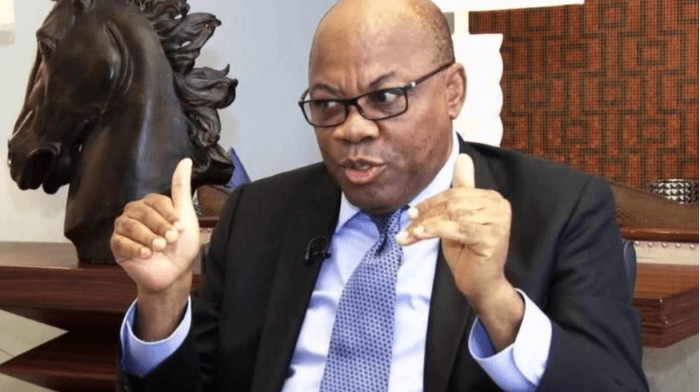
Former President of the Nigerian Bar Association (NBA), Dr Olisa Agbakoba (SAN), has called on the federal government to adopt the South African constitutional model to ensure the independence of Nigeria’s key democratic institutions, including the Nigeria Police Force, the Independent National Electoral Commission (INEC), the Economic and Financial Crimes Commission (EFCC), and other strategic agencies.
Agbakoba made the recommendation in an open letter addressed to the Secretary to the Government of the Federation (SGF), Dr George Akume, while commenting on the federal government’s executive bill seeking to amend Section 214 of the 1999 Constitution to establish a state police.

While praising President Bola Tinubu for initiating the constitutional amendment, the senior lawyer argued that the success of state police and other democratic institutions would largely depend on whether they are constitutionally protected from executive interference.
He also stated that Nigeria should emulate South Africa’s Chapter 9 constitutional framework, which establishes independent institutions supporting constitutional democracy and shields them from political control.
Agbakoba noted that institutions such as South Africa’s Public Protector, Human Rights Commission, Electoral Commission, and Auditor-General derive their independence directly from the Constitution, enjoy guaranteed funding, security of tenure for their leaders, and are accountable to Parliament rather than the executive.
“The result is that in South Africa, neither the President nor any provincial governor can dictate to or manipulate these critical institutions,” he claimed.
The human rights lawyer further argued that Nigeria should similarly insulate strategic institutions from executive control by granting them constitutional independence.
Among the institutions he listed are the Nigeria Police Force, INEC, EFCC, the Independent Corrupt Practices and Other Related Offences Commission (ICPC), the Central Bank of Nigeria (CBN), the National Judicial Council (NJC), the Office of the Attorney-General of the Federation, the Office of the Accountant-General of the Federation, the National Human Rights Commission, the Code of Conduct Bureau, and the Office of the Public Defender.
According to him, these institutions, currently listed under Section 153 of the Constitution, should enjoy security of tenure for their leadership, receive funding directly from the Consolidated Revenue Fund, and be accountable to the National Assembly or State Houses of Assembly rather than to the President or state governors.
Agbakoba said such constitutional reforms would bolster democratic governance by limiting executive powers and preventing the political capture of institutions established to uphold accountability and the rule of law.
He cited the constitutional philosophy of the late Professor Ben Nwabueze, who advocated “limited government” through establishing strong, independent institutions capable of checking executive excesses.
The senior advocate warned that the proposed state police might suffer the same fate as State Independent Electoral Commissions (SIECs) and local governments if constitutional safeguards are not incorporated into the new policing framework.
He observed that although these institutions were created to deepen democracy, many have become subordinate to state governors due to a lack of genuine constitutional independence.
“Devolution without institutional protection is reform in name only,” he said, warning that state police could become instruments of oppression if control is handed over to governors without adequate constitutional checks and balances.
To prevent such abuse, Agbakoba proposed a tripartite appointment process for heads of state police commands, whereby the Police Service Commission would recommend qualified candidates, the governor would appoint them, and the State House of Assembly would confirm the appointments.
He said the same procedure should apply to their removal to ensure that no single arm of government has unilateral control over the police leadership.
Beyond policing, Agbakoba urged the federal government to pursue broader constitutional reforms by transferring additional responsibilities, such as driver’s licence administration, prison management, marriage registration, arbitration, trade regulation, and business name registration, to state and local governments.
He argued that devolving such functions would reduce the Federal Government’s workload and promote greater administrative efficiency at the subnational level.
Agbakoba also expressed optimism that if Nigeria adopts a constitutional architecture similar to South Africa’s, the country would build stronger institutions capable of sustaining democracy, protecting citizens’ rights, and ensuring accountability in public governance.