There is a pathetic, recurring sickness plaguing the halls of power across the Muslim world. Insecure regimes terrified of the ballot box and hollowed out by their own economic incompetence, have defaulted to the ultimate cowards’ weapon: the prison cell.
From North Africa to South Asia and into the fragmented heart of Syria, Muslim regimes are locking up their most popular leaders, journalists and dissidents under the delusional belief that concrete walls can kill a political idea. Instead of this demonstrating any strength, though, these regimes are broadcasting their vulnerability to the entire world. They have abandoned even the pretence of governance, converting their courtrooms into theatres and their prison cells into monuments of state fear.
In Tunis, for example, the so-called specialised criminal chamber has just handed down a shocking life sentence to 84-year-old Ennahda leader Rached Ghannouchi. The charge? Alleged participation in a fictional, politically-fabricated “secret apparatus” case.


So, let’s call this exactly what it is: a judicial hit job orchestrated directly by a desperate executive branch headed by Kais Saied.
The hypocrisy is breathtaking. The main defendant in the original 2013 “secret apparatus” case served his full eight-year sentence, and the judiciary at the time explicitly cleared Ennahda (the Renaissance Party) of any connection to it.
Then the 2021 coup against the democratic process happened. Power was seized, the independent judiciary was dismantled, and a highly weaponised Ministry of Justice stepped in to insert Ghannouchi’s name onto the indictment list.
By forcing a closed-door trial, banning the media, and relying on the compromised testimonies of rival detainees trading lies and integrity for presidential pardons, the leaders of the Tunisian regime didn’t prove Ghannouchi’s guilt. They proved their own fear. They are so thoroughly incapable of managing Tunisia’s catastrophic economic collapse that they must rely on the total elimination of their political rivals just to survive from week to week.
READ: Tunisian court sentences Ennahda Leader Rached Ghannouchi to Life in prison
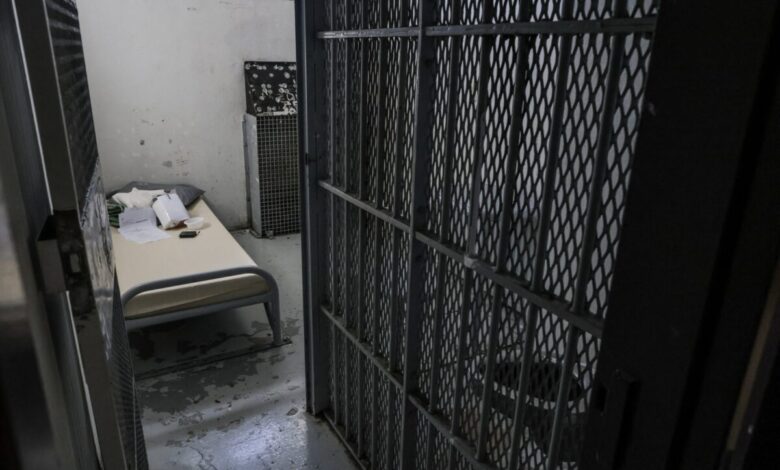
Now shift your gaze to Pakistan, where the former Prime Minister, cultural icon and cricket legend Imran Khan has been rotting in Adiala Prison since 2023. Khan remains the most popular political figure in the country, which is precisely why the military-backed establishment is trying to physically and psychologically destroy him by holding him in solitary confinement.
Reports from his family are harrowing. Khan has been subjected to relentless isolation, where even the prison guards are forbidden to speak to him. Worse still is the medical neglect: a blood clot in his right eye has reportedly left him with a permanent 85 per cent loss of vision.
The calculation by the Pakistani authorities is as transparent as it is monstrous: deny him human contact, take away his ability to read his books, blind him and break his spirit until he agrees to a backroom deal to leave politics forever.
However, the establishment’s heavy-handed tactics — beating-up Khan’s sisters, tear-gassing his supporters and firing water cannons at elderly relatives who show up for court-ordered visits — have completely backfired. By treating a former head of state like a high-value enemy combatant, the Pakistani government has exposed its own illegitimacy. They aren’t ruling a nation; they are managing a hostage situation, terrified that if Khan breathes the air of freedom for even one second, their house of cards will come tumbling down.
But for me, perhaps the most tragic and disgusting betrayal of all belongs to the liberated territories of Syria. The Syrian revolution was fought at the cost of hundreds of thousands of lives to permanently dismantle the sadistic Baathist police state of Bashar Al-Assad. It was not fought to replace the dungeons of Damascus with a carbon copy run by Ahmed Al-Sharaa (aka Abu Mohammad Al-Jolani) and the security apparatus of Hay’at Tahrir Al-Sham (HTS).
The lawless detention of US journalist Bilal Abdul Kareem — a man who stayed on the ground to give the Syrian people a global voice when the rest of the world looked away — is the ultimate proof of this rot. By locking up an independent journalist who dared to expose HTS’s internal torture chambers and administrative failures, Sharaa’s nominally transitional authority has proven that it is replicating the exact same tyranny that he and his henchmen claimed to have been fighting against.
Bilal Abdul Kareem is not a threat to the Syrian revolution; he is a threat to the fragile, paranoid egos of warlords playing at statehood. When revolutionary governments begin silencing the press and disappearing truth-tellers, they lose all right to call themselves liberators. They become the very monsters that they sought to destroy.
Whether it is Tunis, Islamabad or Idlib, the cowards’ playbook is identical. Weak men use the judiciary, prison guards and solitary confinement to silence strong voices.
READ: 40+ international scholars and public figures issue urgent humanitarian appeal over detention and medical care of Imran Khan
To these regimes, the message from the global community and their own populations is clear: you have not broken Rached Ghannouchi, you have not broken Imran Khan and you have not broken Bilal Abdul Kareem. You have only succeeded in showing the world that you are too weak to survive open debate, too terrified to face a fair election and too fragile to tolerate the truth.
And here is the ultimate, pathetic punchline for these insecure regimes: they are all trying to buy their way out of their own carefully created, cowardly realities.
Every single one of these desperate administrations has quietly crawled into those dark cells, waving backroom deals promising exile and safety if these men will pack their bags, go quietly and keep their mouths shut. But Rached Ghannouchi, Imran Khan and Bilal Abdul Kareem didn’t break; they threw those gutless compromises straight back into the faces of their captors. By refusing to run, these caged men have completely flipped the script on their pathetic persecutors.
It is the leaders and people of conscience behind bars who possess absolute freedom, while the rulers sitting in their stolen palaces remain trapped in a prison of their own paranoia, utterly exposed as hollow tyrants who are terrified of a single, uncompromised voice.
Tunisian President Kais Saied, who assumed sweeping executive powers after freezing parliament in 2021; Pakistan’s Chief of Army Staff Asim Munir, who pulls the strings in Islamabad; and Syrian President Ahmed Al-Sharaa have all forgotten the eternal law of tyranny: those who live by the sword of oppression eventually choke on its blade, knowing in their darkest hours that the power they have stolen is on borrowed time. They also know that those dark hours will get even darker and longer, and their names will be mere footnotes in history cited as prime examples of political cowardice.
OPINION: Syria has sacrificed the soul of the revolution by arresting Bilal Abdul Kareem
The views expressed in this article belong to the author and do not necessarily reflect the editorial policy of Middle East Monitor.