After nearly half a century of hostility, sanctions, military threats and indirect confrontations, the announcement of a memorandum of understanding between the Islamic Republic of Iran and the United States may represent one of the most significant geopolitical developments in the Middle East since the 1979 Islamic Revolution.
More than an agreement on nuclear issues, however, this development reveals something deeper: Washington’s recognition of the limits of the “maximum pressure” strategy it has pursued against Tehran for decades.
Since the victory of the Islamic Revolution in February 1979, the United States has sought to contain Iran through a variety of means. Economic sanctions, diplomatic isolation, sabotage operations, hybrid warfare, targeted assassinations and the constant threat of military action have all been employed.

The objective was clear: to force the Islamic Republic to abandon its independent foreign policy, restrict its defensive capabilities and reduce its regional influence.
Forty-seven years later, the results have fallen far short of Washington’s expectations.
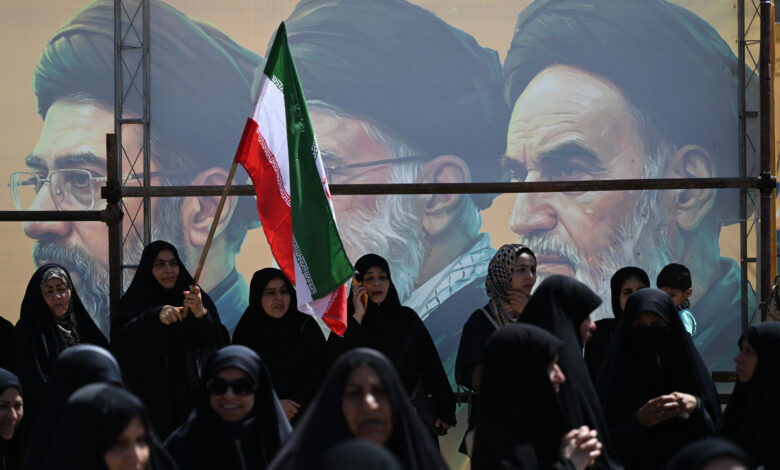
Despite being subjected to some of the harshest sanctions ever imposed on a sovereign state, Iran has preserved its political independence, developed significant industrial and technological capabilities, built one of the region’s most advanced missile programmes and maintained its influence over major developments across the Middle East.
The memorandum now under discussion appears to reflect this new reality.
READ: Ceasefire announced between Iran and United States on all fronts
If reports published by Iranian and international media are confirmed, the agreement includes the suspension of key economic sanctions, the release of Iranian assets frozen abroad, the gradual lifting of the naval blockade and a US commitment to respect Iran’s sovereignty and refrain from interfering in its internal affairs.
This would mark a significant shift.
For decades, dominant Western narratives portrayed Iran as a state that had to be compelled to accept conditions imposed by major powers. Today, the United States finds itself negotiating with Tehran while acknowledging Iran as an indispensable actor in regional stability.
Perhaps the most revealing aspect of the agreement is precisely what has been excluded from the negotiations.
According to the terms reported so far, Iran’s missile programme and its support for regional resistance movements have been removed from the agenda.
This is far from a minor detail.
For years, Israel and influential sectors within the American political establishment insisted that any agreement with Tehran should include the dismantling of Iran’s deterrence capabilities and the severing of its ties with resistance movements across the region.
The exclusion of these issues suggests that negotiators have ultimately accepted what regional realities have long demonstrated: such demands were simply unattainable.
Another important element concerns Lebanon.
Reports from Iranian media indicate that guarantees regarding Lebanon’s territorial integrity, the withdrawal of Israeli forces from border areas and the lifting of the siege were among the issues discussed prior to the agreement.
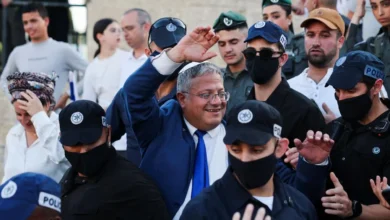
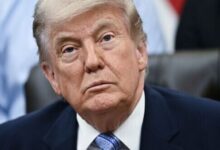
Israeli Prime Minister Benjamin Netanyahu reacted swiftly. According to Israeli media reports, he informed President Donald Trump that Israel does not consider itself bound by any clauses related to Lebanon.
Regardless of how this dispute develops, the episode suggests that American and Israeli interests no longer automatically converge on every aspect of regional policy.
READ: UK, France, Germany and Italy ready to lift Iran sanctions after US-Iran peace deal
The Strait of Hormuz also deserves particular attention.
A substantial portion of the world’s oil trade passes through this narrow waterway. For decades, the US military presence in the Persian Gulf has been justified as necessary to safeguard international shipping routes. Current discussions, however, point towards coordination mechanisms involving Iran and regional states directly.
In practical terms, this represents recognition of Iran’s central role in Gulf security.
None of this means that tensions have disappeared.
Significant disagreements remain over Iran’s nuclear programme, the future regional security architecture and the continued American military presence in the Middle East. Furthermore, the history of relations between Tehran and Washington counsels caution. Previous agreements have been abandoned or undermined, creating a deep mistrust that is unlikely to vanish quickly.
Nevertheless, the political significance of this moment should not be underestimated.
After decades of sanctions, threats and attempts at isolation, the United States has failed to impose a strategic surrender on Iran. Instead, it now faces a country that arrives at the negotiating table while preserving its sovereignty, defensive capabilities, technological development and regional alliances.
What is at stake, therefore, is far more than a nuclear agreement.
What we may be witnessing is the acknowledgement of a new balance of power in the Middle East.
The central issue is not merely the content of the document to be signed. The deeper reality is that, after nearly five decades of confrontation, Washington appears to be recognising what events have already demonstrated: the era in which the United States could unilaterally determine the course of the region is steadily drawing to a close.
OPINION: Naksa at 59: The colonial war against Palestine never ended
The views expressed in this article belong to the author and do not necessarily reflect the editorial policy of Middle East Monitor.