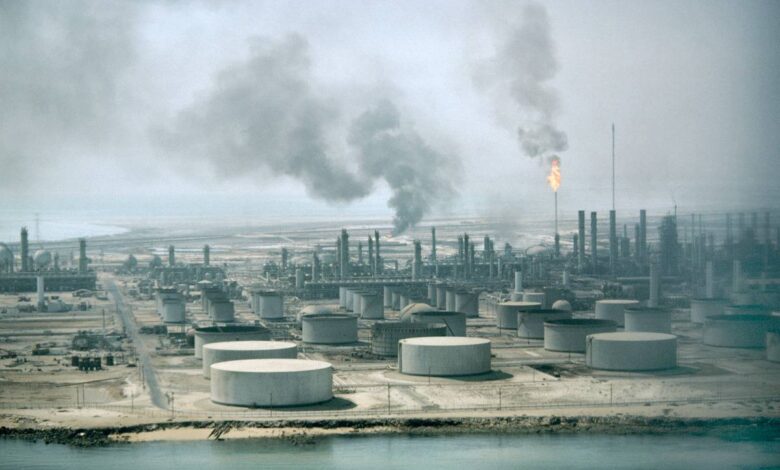
For more than a century, oil determined the global balance of power. Nations with vast hydrocarbon reserves wielded strategic influence, while major powers designed foreign policies around securing access to energy supplies. The Middle East occupied a central place in this geopolitical order because it possessed the resource that fuelled industrial civilisation.
Today, however, the foundations of power are beginning to shift. While oil remains vital to the global economy, a new strategic asset is rapidly emerging alongside it: data centres.
At first glance, comparing a data centre to an oil field may seem exaggerated. Yet both serve a similar function in their respective eras. Oil powered the industrial age; data centres power the age of artificial intelligence.

The countries that host, control and secure these infrastructures may enjoy the same strategic advantages that oil-producing states once possessed.
The future of geopolitics may therefore depend not only on who controls energy resources, but also on who controls the infrastructure of intelligence.
From Oil Wells to Server Farms
Artificial intelligence is often discussed as a technological revolution driven by algorithms and software. In reality, it is also an infrastructure revolution.
Every AI model, cloud platform and advanced digital service depends on vast networks of servers operating inside highly specialised facilities. These data centres process enormous volumes of information, support real-time decision-making and provide the computational capacity required for modern economies.
Unlike traditional industrial infrastructure, however, AI infrastructure consumes extraordinary amounts of electricity. Training advanced AI systems and operating large-scale data centres require a continuous and reliable energy supply. As a result, computing power is increasingly becoming intertwined with energy power.
This is why data centres are emerging as strategic assets. They are not merely commercial facilities; they are becoming the physical foundations of economic competitiveness, technological sovereignty and national security.
Just as oil wells once represented industrial capacity, server farms may soon represent digital capacity.
READ: Qatar plans rapid LNG output restart after Strait of Hormuz reopens: report
The New Global Competition for Computational Power
The growing importance of data centres is already reshaping international politics.
The strategic competition between the United States and China is no longer confined to trade balances or military capabilities. It increasingly revolves around semiconductors, artificial intelligence and computational infrastructure.
Washington has imposed restrictions on advanced chip exports, while Beijing is accelerating efforts to build indigenous technological capabilities. Both recognise a simple reality: whoever controls the infrastructure of artificial intelligence will exercise considerable influence over the future global economy.
This competition extends beyond technology itself. It involves energy supplies, supply chains, investment flows and geopolitical alliances.
In the emerging digital order, computational capacity is becoming a source of national power.
The race for artificial intelligence is therefore not only a race for better algorithms; it is a race for the physical infrastructure that enables them.
Why the Gulf States Are Betting on AI Infrastructure
Few regions are better positioned to benefit from this transformation than the Gulf.
For decades, Gulf states accumulated wealth through energy exports. Today, many of them are investing that wealth in the infrastructure of the digital economy.
Saudi Arabia’s Vision 2030, the development of NEOM, and the Kingdom’s growing investments in artificial intelligence reflect a broader strategic ambition: preparing for a future in which data and computation become as important as hydrocarbons.
The United Arab Emirates has adopted a similar approach. Through investments in AI, cloud computing, digital governance and advanced technologies, Abu Dhabi and Dubai are seeking to position themselves as regional hubs for the next generation of economic activity. This strategy is not accidental.
Data centres require three resources that Gulf states possess in abundance: energy, capital and strategic location.
As demand for AI infrastructure accelerates, these advantages may become increasingly valuable. The region that once powered factories and transportation systems around the world could also help power the global digital economy.
In many respects, the Gulf is attempting to transform its traditional energy advantage into a technological advantage.
The Energy Transition’s Hidden Paradox
Much of the global discussion surrounding energy transition assumes that digitalisation will gradually reduce the geopolitical significance of traditional energy producers.
The reality may be more complex.
Artificial intelligence, cloud computing and digital services all depend on electricity. As AI adoption expands, demand for power is expected to increase significantly. Far from reducing the importance of energy, the AI revolution may create new forms of energy dependence.
This presents a paradox.
The world is moving toward a more digital future, yet that future requires unprecedented amounts of physical energy. The success of artificial intelligence depends not only on software engineers and algorithms but also on power generation, transmission networks and reliable infrastructure.
Countries capable of providing abundant and affordable energy may therefore gain an important advantage in attracting AI investment.
For energy-rich states in the Middle East, this could create a new source of geopolitical relevance.
The relationship between energy and technology is not disappearing; it is becoming deeper and more interconnected.
READ: China, Saudi Aramco discuss energy security, oil and gas cooperation
A New Era of Energy Security
As strategic assets change, so do security concerns.
In the twentieth century, governments worried about protecting oil fields, pipelines and shipping routes. In the twenty-first century, they may increasingly worry about safeguarding data centres, electricity grids and digital networks.
Cyberattacks against critical AI infrastructure could have consequences comparable to attacks on major energy facilities. Disruptions to computing capacity may affect financial markets, communications systems, transportation networks and government services.
The geography of strategic competition is therefore expanding.
Undersea data cables, cloud infrastructure and AI facilities are becoming part of national security calculations. States that fail to secure these assets may discover that technological dependence can be as consequential as energy dependence.
For Middle Eastern governments, this means that future security strategies must integrate energy policy, cyber resilience and technological development.
The Oil Fields of the Future
History suggests that geopolitical influence often follows control over the most important resource of an era.
Agricultural societies depended on land. Industrial societies depended on coal and oil. The emerging digital age depends on data, computing power and artificial intelligence.
The infrastructure supporting these capabilities is becoming increasingly valuable.
This does not mean oil is losing its significance overnight. Rather, a new layer of strategic competition is emerging alongside traditional energy politics. Countries that recognise this transformation early will be better positioned to shape the future international order.
The Middle East stands at the intersection of these historic changes. Its energy resources helped power the industrial age. Its investment capacity, strategic geography and growing digital ambitions could allow it to play a similarly important role in the age of artificial intelligence.
The most valuable assets of the future may not be measured solely in barrels beneath the ground. They may also be measured in computational capacity above it.
The oil fields of the twenty-first century may not be found in deserts or offshore platforms. They may be found inside vast data centres whose servers increasingly power the global economy, influence political decisions and shape the future distribution of power.
OPINION: Energy diplomacy without energy resources: How some states gain influence without oil and gas
The views expressed in this article belong to the author and do not necessarily reflect the editorial policy of Middle East Monitor.