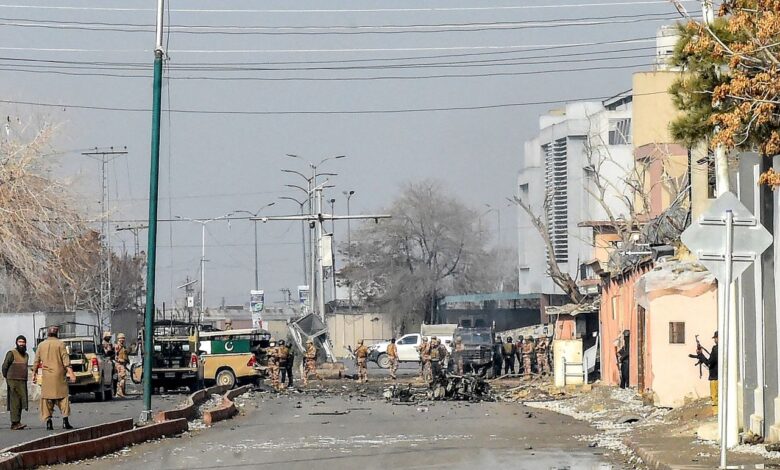
More broadly, Pakistan recorded 1,139 terrorism-related deaths in 2025, the highest toll in more than a decade.
While the Tehreek-e-Taliban Pakistan (TTP) remains the country’s deadliest terrorist organisation, responsible for more than two-thirds of all attacks since 2007, the BLA has emerged as the principal driver of insecurity across Balochistan.
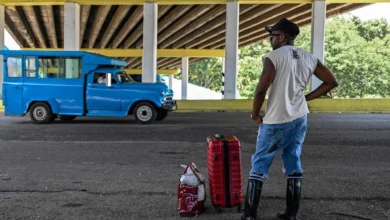
Yet truck drivers still take to the highways, engineers continue to work on infrastructure projects, and businesses remain determined to operate despite the dangers.
Nevertheless, the cumulative effect of violence has made international investors, engineering contractors, logistics companies and development agencies wary of expanding their presence in the region.


“Despite the resilience of our truck drivers, traders and local communities who continue to keep commerce moving under extremely challenging circumstances, the deliberate targeting of transport corridors and economic activity threatens the livelihoods of ordinary Baloch citizens more than anyone else,” says Mir Sarfraz Bugti, the chief minister of Balochistan, the highest-ranking elected official of the province.
Related
The economic costs
While BLA claims to fight for the rights of the Baloch, ordinary citizens are the ones bearing the cost of this violence. As governance projects stall, local communities are left without governance, jobs, public services and economic opportunities.
At the centre of this logjam sits the China-Pakistan Economic Corridor (CPEC), a $62 billion mega-project originally envisioned to weave regional economies together but now notionally targeted by the BLA and other terrorist groups.
Attacks on transport routes, energy installations and Chinese-linked projects have driven up security costs across the province.
Bugti adds that “every attack increases security and transportation costs, disrupts supply chains, and impacts investor confidence at a time when Balochistan needs greater economic opportunity, connectivity and development.
Ensuring safe passage for people and goods is not merely a security imperative; it is essential for the province’s long-term prosperity and stability.”
The real stakes become clear when considering vulnerability in international trade. The corridor through Balochistan to Gwadar Port cuts the journey from Chinese manufacturing hubs to European markets from 45 days to 10, a commercial advantage that makes the province’s stability inseparable from the interests of industries far beyond the region.
The dynamics are not unlike the anxieties surrounding the Strait of Hormuz: capitals are fully aware of how quickly a localised threat at a critical chokepoint can disrupt global consumer prices and derail investment plans.
As East Asia, Central Asia and the Gulf work toward greater economic integration, secure highway and rail links are proving just as important as safe shipping lanes.
By choking off these overland networks, the violence raises costs and uncertainty for manufacturers, energy importers and critical mineral buyers whose supply chains reach Western markets.
Scott Kelly, Founder of GrayZone Advisory and International Affairs, argues the BLA has crossed into terrorism territory.
“The BLA appears to be moving toward a model designed not only to fight Pakistani security forces, but to make Balochistan harder to govern, harder to invest in, and harder to integrate economically,” he tells TRT World.
“That makes the challenge both a counterterrorism problem and a governance problem.”
Regarding international designations, Kelly warns that they are necessary but insufficient, arguing that counterterrorism tools cannot substitute for a political strategy that addresses Baloch representation, governance, and accountability.
From Pakistani truck drivers to European supply chain managers, the costs of this instability are broadly shared.
Ordinary Baloch residents are denied long-overdue infrastructure and jobs, neighbouring economies lose access to reliable corridors, and consumers everywhere absorb the compounding costs of delayed trade.