Europe’s Energy Challenge is Far From Over
Europe has made significant progress in reducing its dependence on Russian natural gas since the outbreak of the Ukraine war. Through increased liquefied natural gas (LNG) imports, expanded purchases from Norway, and greater reliance on the Southern Gas Corridor, European governments have managed to mitigate some of the vulnerabilities that once defined the continent’s energy landscape.
Yet the notion that Europe’s energy security challenge has been resolved is misleading. Diversification is not a one-time achievement but a continuous strategic process. As geopolitical tensions continue to reshape global energy markets, Europe must identify new sources of supply capable of strengthening resilience and reducing dependence on a limited number of producers and transit routes.
In this context, one potential contributor remains largely overlooked in European energy debates: the Kurdistan Region of Iraq.
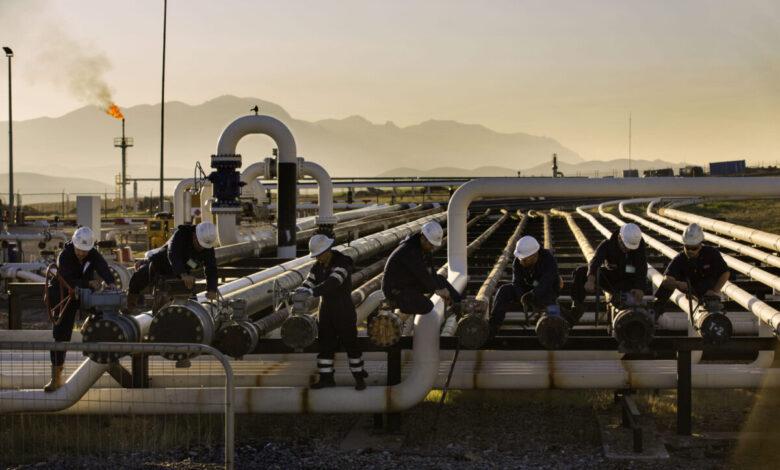
Located at the intersection of the Middle East, Turkiye, and European energy markets, the Kurdistan Region possesses substantial natural gas resources that could play an important role in Europe’s long-term energy strategy.
While political disputes and security concerns continue to present obstacles, the strategic significance of Kurdish gas is becoming increasingly difficult to ignore.
Why Kurdish Gas Matters
The Kurdistan Region possesses some of the most promising undeveloped gas reserves in the Middle East. Fields such as Khor Mor and Chemchemal already contribute to regional energy production, while additional projects including Miran and Topkhana-Kurdamir have the potential to significantly increase output in the coming years.
READ: Japan sets 3 conditions for joining Hormuz mission: Report
Unlike many energy producers in the Gulf, whose exports depend heavily on maritime routes vulnerable to regional instability, the Kurdistan Region enjoys a unique geographic advantage. Its proximity to Turkiye creates the possibility of direct pipeline connections to existing energy infrastructure serving European markets.
Geography has always shaped energy politics. In an era when supply security has become as important as supply volume, the location of Kurdish gas may prove just as valuable as the resources themselves.
For Europe, the importance of Kurdish gas extends beyond additional supply volumes. Every new source of energy reduces strategic dependence on existing suppliers and enhances the flexibility of the broader energy system. The lessons of the Ukraine crisis demonstrated that excessive reliance on a single supplier can quickly evolve from an economic issue into a geopolitical vulnerability.
Kurdish gas offers Europe an opportunity to strengthen diversification before another crisis emerges.
Turkiye’s Ambition and the Emerging Energy Corridor
No discussion of Kurdish gas can be separated from Turkiye’s growing role in regional energy geopolitics.
For more than a decade, Ankara has pursued an ambitious strategy aimed at transforming the country into a major energy hub linking Asia, the Middle East, and Europe.
Existing infrastructure already connects Caspian resources to European consumers through Turkiye, while new initiatives continue to expand the country’s importance within regional energy networks.
The Southern Gas Corridor has become one of the European Union’s most significant non-Russian energy routes. Carrying natural gas from Azerbaijan through Turkiye into European markets, the corridor has demonstrated both technical feasibility and geopolitical relevance.
However, its future effectiveness depends on diversification within the corridor itself.
Adding Kurdish gas would strengthen the resilience of this network by increasing available supply and reducing dependence on a limited number of sources. Rather than competing with Azerbaijani exports, Kurdish production could complement them, creating a more robust energy architecture stretching from the Middle East to Europe.
For Turkiye, the benefits are equally clear. Kurdish gas could contribute to domestic energy security, reinforce Ankara’s role as a transit hub, and deepen economic interdependence with northern Iraq.
This convergence of interests creates a rare alignment between economic incentives and geopolitical objectives.
The Political Obstacle: Baghdad and Erbil
Despite its strategic potential, the future of Kurdish gas exports ultimately depends on politics.
The long-standing dispute between Baghdad and Erbil over hydrocarbon governance remains one of the most significant barriers to large-scale energy development. Successive Iraqi governments have maintained that energy contracts must be managed through federal institutions, while the Kurdistan Regional Government has consistently defended its authority to conclude agreements independently.
The result has been years of legal uncertainty.
For international investors, uncertainty is often more damaging than risk itself. Energy companies are prepared to operate in challenging environments, but they require predictable legal frameworks before committing billions of dollars to long-term projects.
Without a durable political settlement between Baghdad and Erbil, many of the region’s most promising gas projects may struggle to attract the investment necessary for large-scale development and export infrastructure.
The challenge extends beyond domestic Iraqi politics. European policymakers seeking diversified energy supplies and Turkish officials pursuing regional energy connectivity cannot replace the need for an internal Iraqi consensus. Sustainable energy cooperation requires a governance framework accepted by both federal and regional authorities.
Security and Infrastructure Challenges
Political disagreements are not the only concern.
Recent attacks targeting energy facilities in northern Iraq have highlighted the vulnerability of critical infrastructure. Incidents affecting gas production facilities have demonstrated how security disruptions can influence both energy supply and investor confidence.
Energy corridors require long-term stability. Pipelines are not short-term projects; they are strategic investments expected to operate for decades. As a result, international investors evaluate not only resource availability but also political stability, infrastructure security, and institutional reliability.
These concerns should not be underestimated. However, they should also be viewed in perspective.
Many of today’s successful energy corridors emerged despite significant geopolitical challenges. The Southern Gas Corridor itself was once regarded as an ambitious project facing considerable political and technical obstacles. Yet sustained political commitment transformed that vision into reality.
The same could be true for Kurdish gas if regional stakeholders demonstrate sufficient strategic determination.
READ: Report: Mossad supplied Kurdish forces with weapons seized from Hamas and Hezbollah
A Strategic Opportunity for Europe
European energy policy often focuses on immediate challenges. Yet strategic planning requires a longer horizon.
The Kurdistan Region is unlikely to become a major supplier to Europe overnight. Infrastructure development, political agreements, and investment decisions require time. However, the essential foundations already exist: substantial gas reserves, geographic proximity to Turkiye, established energy cooperation, and growing European interest in diversified supply chains.The question facing European policymakers is not whether Kurdish gas can replace existing suppliers. It cannot.
The more relevant question is whether Europe can afford to ignore a resource capable of strengthening long-term energy resilience.The post-Ukraine energy order remains under construction. While Europe has reduced its dependence on Russian gas, the search for secure and diversified supplies continues. Strategic foresight requires identifying tomorrow’s opportunities before they become urgent necessities.In that regard, the Kurdistan Region deserves far greater attention than it currently receives.
Conclusion
The future of European energy security will depend not only on reducing dependence but also on expanding strategic options.The Kurdistan Region of Iraq offers one such option. Its considerable gas reserves, advantageous geography, and proximity to existing transit infrastructure provide a foundation for a potentially significant energy corridor connecting the Middle East with European markets.
The obstacles are undeniable. Political disagreements between Baghdad and Erbil, security concerns, infrastructure requirements, and investment challenges all remain substantial barriers.Yet history demonstrates that major energy corridors are rarely created under ideal circumstances. They emerge when political leaders recognize long-term strategic interests and act before opportunities are lost.
For Europe, Kurdish gas should not be viewed merely as a regional resource. It should be understood as a potential strategic asset in an increasingly uncertain energy landscape. The real question is whether Europe, Turkiye, Baghdad, and Erbil possess the political vision necessary to transform that potential into reality.
OPINION: The geopolitics of energy algorithms: Who will control oil markets in the age of Artificial Intelligence?
The views expressed in this article belong to the author and do not necessarily reflect the editorial policy of Middle East Monitor.