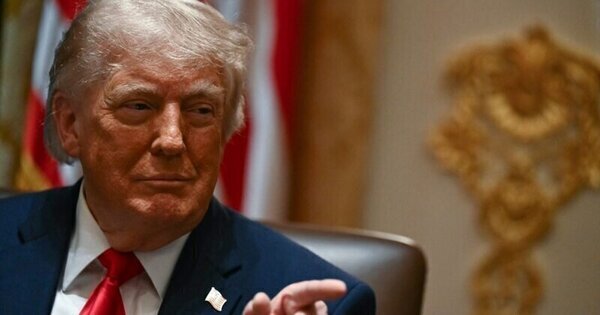
US President Donald Trump said a framework agreement has been reached to halt fighting in the Middle East, reopen the Strait of Hormuz, and end the US blockade of Iranian ports.
“The Deal with the Islamic Republic of Iran is now complete,”Trump wroteon Truth Social in announcing the agreement, which will open a 60-period to allow for a more detailed peace deal to be negotiated between Washington and Tehran.
Pakistani Prime Minister Shehbaz Sharif — whose country has acted as a mediator between Washington and Tehran — confirmed that a peace agreement had been reached and that a signing ceremony was set for June 19 in Switzerland.
Iran confirmed that a deal had been reached, with Deputy Foreign Minister Kazem Gharibabdi saying early on June 15 that “a permanent and immediate end to the war has been declared on all fronts, including Lebanon.”
He added that the Strait of Hormuz would reopen on June 19 after the official signing of the agreement.
SEE ALSO:
Trump Says Iran Deal ‘Now Complete’ — Blockade To End, Hormuz To Open
If a final accord is, in fact, signed, it would mark the largest step toward ending the conflict in the Middle East since fighting broke out on February 28, when the US and Israel launched air strikes against Iran.
“This Great Deal will bring Peace and Security to the whole Region,”Trump wrote.
“With the opening of the Strait upon the signing of the Deal on Friday [June 19], for purposes of mine removal, oil will flow on both ends again for the Region, and the World,” he added.
SEE ALSO:
White House Says Iran, Ukraine, High On Trump’s G7 Agenda
Iran’s state-run Mehr news agency issued what it said were the details of the 14-point memorandum of understanding, saying it envisions 60 days of talks concerning nuclear issues and the full lifting of sanctions against Tehran.
Trump has emphasized that the key element of any comprehensive peace deal would be to assure that Iran does not achieve a nuclear weapon and that the Strait of Hormuz be open to the free flow of shipping.
Reuters earlier quoted a senior Iranian official as saying that, under the terms of the draft deal, the United States would agree to release $25 billion of frozen Iranian assets, while Tehran would agree not to produce or acquire nuclear weapons.
The official said Iran agreed to maintain the nuclear status quo, including no uranium enrichment or expanding nuclear facilities, until a final deal is reached.
The Fars news agency — which is close to the hard-line Islamic Revolutionary Guards Corps (IRGC), said that “it has been decided that marine traffic through the Gulf will be regulated by Iran in coordination with Oman,” remarks that run counter to Trump’s earlier comments.
Iran’s military command declared the peace agreement a victory for the country.
SEE ALSO:
US-Iran Accord Could Hinge On Israel, Says US Security Expert Matt Reisener
Trump earlier told The Wall Street Journal that the deal would either be signed electronically by himself or by Vice President JD Vance.
Vance later said he plans to attend the signing of a deal in Geneva and that it was possible Trump could as well.
Wider War In The Middle East
Following the initial air strikes on Iran at the end of February, the war later spread to the wider Middle East after Tehran retaliated with drone and missile launches against US allies in the Gulf.
A parallel conflict burst out in Lebanon, where Israel targeted the strongholds of the Hezbollah militant group, which had launched rockets across the border into Israel.
Iran-backed Hezbollah, a militant group and political party that controls much of southern Lebanon, is considered a terrorist organization by the US, while the European Union has blacklisted its armed wing but not its political branch.
The aftermath of an Israeli strike on the southern suburbs of Beirut on June 14.
Iran has insisted that and end to fighting in Lebanon be included in any deal. Israel has maintained its offensive against the Hezbollah militant group in southern Lebanon.
A peace deal remained in doubt earlier on June 14 after Israel again struck Hezbollah sites in Lebanon.
However, Iran’s Gharibabdi said one of the conditions for not retaliating was Israel’s withdrawal from southern Lebanon.
In the past, Israel has vowed to continue its offensive against Hezbollah in Lebanon and to create a buffer zone there, often angering Trump, who has publicly chastised Israeli Prime Minister Benjamin Netanyahu over the military strikes.
With reporting by RFE/RL’s Washington correspondent Alex Raufoglu, RFE/RL’s Radio Farda, and Reuters
Trump, Iran Say Framework Agreement Reached To End War
Share
Copy link
Facebook
X (Twitter)
LinkedIn
Email
Share
Share
Copy link
Facebook
X (Twitter)
LinkedIn
Email
Share
Follow us
Facebook
X (Twitter)
Youtube
Instagram
Follow us