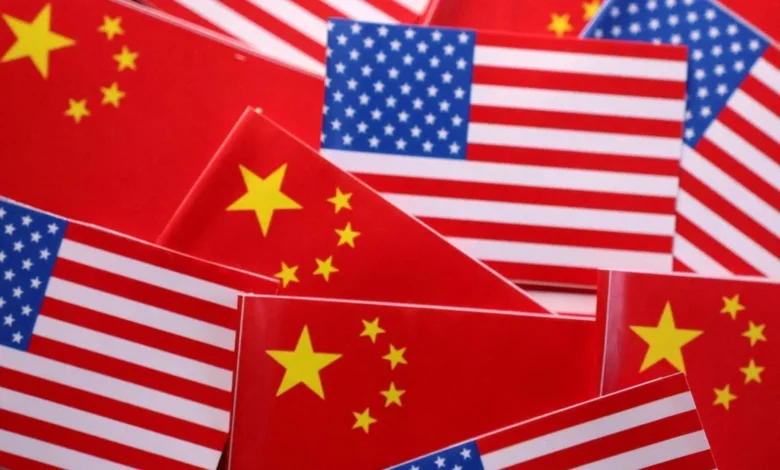
The Pentagon said it is changing the name of its Indo-Pacific Command back to the US Pacific Command, unwinding a branding change made during US President Donald Trump’s first term, a move analysts suggest could reflect a shift in how the US frames its strategy toward Asia.
The Defence Department said restoring the US Pacific Command – or USPACOM – name honours the military organisation’s more than 70-year history, while leaving its mission and geographic responsibilities unchanged.
The combatant command will continue overseeing the same area stretching from the US West Coast to India’s western border and remains committed to a “free and open” region, the command explained in a statement on the evening of June 16.
The change comes after the administration moved to rename the Department of Defense to the Department of War – a move that could cost more than US$50 million (S$64.36 million).

It also tried to put Trump’s name up on several buildings in Washington, including the US Institute of Peace and the John F. Kennedy Center for the Performing Arts.
The US Pacific Command change appears more reflective of the administration’s “America First” outlook than any operational shift.
Removing “Indo” from the command’s name places greater emphasis on US interests in the region, where Washington is a resident power, rather than the broader Indian Ocean, according to Bryan Clark, a defence analyst at the Hudson Institute.
“This is part of the administration’s overall effort to turn the clock back to a time where we were a little more focused on US interests,” Clark said. “We have, obviously, plenty of US territory in the Pacific, but not really in the Indian Ocean.”
Clark noted the move simplifies the strategic narrative.
Still, the decision has prompted questions about whether the administration is de-emphasising a concept that underpinned US coordination with Asian democracies such as India and Japan in a region nervous about Chinese military dominance.
“Trump 2.0 is actively rethinking ‘Indo-Pacific’ as a geostrategic frame,” Derek Grossman, a defence analyst focused on security issues in the region, said on X.
“Indeed, it has already used ‘Asia-Pacific’ several times in official readouts. This strongly suggests a less hawky approach toward China in favour of greater engagement.” BLOOMBERG