The story of Benjamin Netanyahu is not merely the story of a man in power. It is the story of a political structure that allowed one individual to grow beyond the institutions meant to contain him, until he became—psychologically and politically—larger than the state itself. The question in Israel today is no longer “Who governs?” but rather: Who actually has the power to restrain Netanyahu’s arrogance? Three recent signals—from Ehud Barak, Donald Trump, and Ram Ben-Barak—paint a troubling picture.
A country long marketed as a model of “strong institutions” and “independent strategic decision-making” now finds itself exposed, led by a prime minister who behaves as if he holds absolute authority, only to discover that the real limits on his power are drawn not in Tel Aviv, but in Washington.
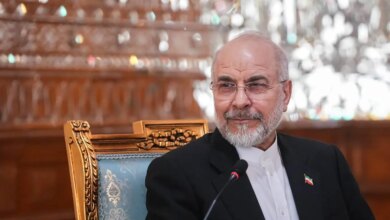
Ehud Barak, former prime minister and former chief of staff, does not speak as a partisan critic. He speaks from the vantage point of Israel’s “security memory”—the accumulated experience of a system that once prided itself on strategic discipline. When Barak says Netanyahu’s government has dragged Israel into “the most dangerous political and security situation since its founding,” he is not offering rhetorical flourish. He is issuing a strategic verdict. What makes his warning more alarming is not the description of the moment, but his dismantling of Netanyahu’s narrative: the “crushing defeat of Hezbollah,” the claim of “pushing the group back decades,” the destruction of villages as a sign of strategic success. Barak calls all of this “pure illusion,” “deception,” and goes further: destroying villages, he says, strengthens Hezbollah rather than weakens it. This is not a disagreement over tactics. It is a direct accusation that Netanyahu is manufacturing strategic ruin and selling it to Israelis as victory.


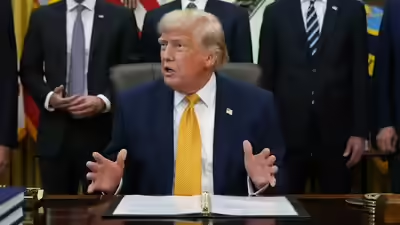
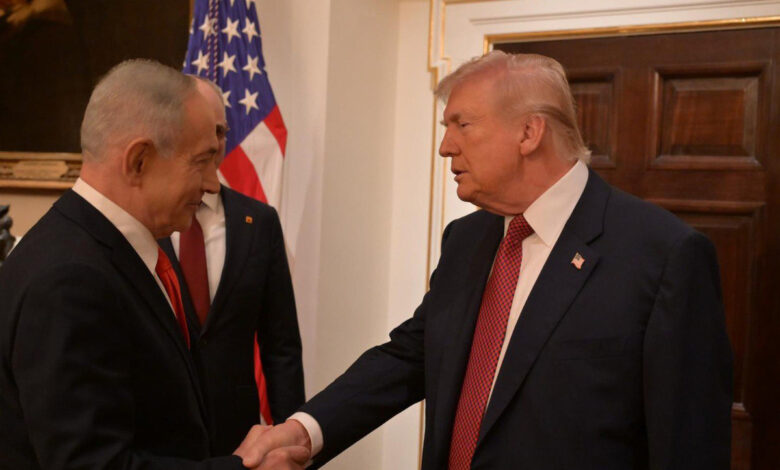
In a state built on the doctrine of security, such an accusation amounts to a declaration of bankruptcy. A government that does not understand that war is a means to a political settlement—not a substitute for it—is a government steadily losing its ability to manage risk. Yet the depth of the crisis is revealed not only by Barak’s critique, but by what came from outside: from the White House itself. The Axios report on Donald Trump’s phone call with Netanyahu is not a colorful anecdote about an angry American president. It exposes the true nature of the relationship between the two men—and between Washington and Tel Aviv at this moment.
When Trump tells Netanyahu, “If it weren’t for me, you’d be in jail,” he is not merely reminding him of his corruption cases. He is placing him in his proper context: a leader whose political survival depends more on American protection than on domestic legitimacy.
When Trump calls him “crazy” and adds, “Everyone hates you now, and everyone hates Israel because of you,” he is not delivering a personal insult. He is linking Israel’s global image to the behavior of one man. This is not the language of two “strategic allies.” It is the language of guardianship: You crossed the line, and I am the one who pulls you back.
More striking is that Trump—who built his political brand on being “the most pro-Israel president”—is the same man who announced a ceasefire in Lebanon, declared that Israel would not send troops to Beirut, and confirmed that any forces that had moved in that direction were ordered back. He then revealed that he had reached an indirect understanding with Hezbollah to halt hostilities. Suddenly, the Israeli prime minister was no longer a decision-maker but a recipient of decisions. At this point, Ram Ben-Barak’s statement lands like a seal on the moment: “We have lost our independence in managing our security policy.” This is not an emotional outburst. It is an admission that the myth of Israeli strategic autonomy is eroding before the eyes of its own political elite.
So who actually controls the decisions of war and peace in Israel? Who sets the ceiling for escalation in Lebanon? Who decides whether the southern suburbs of Beirut will be struck or spared? The facts suggest that Netanyahu behaves as if he has absolute authority—until he hits the wall of the White House. Only then does Israel remember that its “security sovereignty” is not as absolute as it has been told for decades, and that Washington draws the final red lines. The paradox is that this collision does not necessarily restrain Netanyahu’s arrogance. It reshapes it.
Netanyahu, facing corruption trials and political vulnerability, knows that his survival depends on presenting himself domestically as “irreplaceable” and internationally as “indispensable.” He therefore plays on the edge: escalating in Lebanon to the maximum, threatening strikes on Beirut’s southern suburbs, sending signals of strength to his base—then retreating under American pressure, framing the retreat as “strategic wisdom.” In this game, it matters less whether Israel wins or loses a round, and more that Netanyahu remains at the center, holding all the strings, turning even American reprimands into political capital: I am the man who cannot be bypassed—even when Washington is furious.
This is precisely where the danger lies: his arrogance is not restrained from within. The military establishment cannot impose a different vision. The political opposition lacks the strength to unseat him. The Israeli public, polarized and fragmented, cannot produce a moment of rupture. Ehud Barak shouts on local radio that the government is misleading the public, that destroying villages strengthens Hezbollah, that Israel is squandering a strategic opportunity in Lebanon—but his voice remains that of a “warning expert,” not a decision-maker. Ram Ben-Barak declares that Israel has lost its security independence, but this admission does not translate into leadership change—only into a deeper sense of helplessness.
Meanwhile, American pressure—however harsh in tone—is not aimed at removing Netanyahu, but at managing him.
Trump is not telling him to “step down.” He is telling him to “stop here,” because he is disrupting negotiations with Iran, damaging Israel’s global image, and complicating U.S. strategic calculations. In other words, Washington wants Netanyahu useful, not unrestrained. It wants a leader who can execute when needed, not one who opens a front in Lebanon at the wrong moment. Thus, American pressure becomes part of the mechanism that reproduces Netanyahu’s power, not a mechanism that ends it.
Who, then, truly influences Netanyahu? Internally, no one decisively. Externally, Washington holds veto power over his major adventures—but does not wish to use that veto to remove him. The result is a strange situation: a state whose elite admits it has lost strategic autonomy, yet remains unable to restore it through leadership change. A state whose former prime minister describes its current government as having led it into the most dangerous crisis in its history—yet that government remains in place, managing war as if it were a domestic political tool.
In this context, the belief that “American pressure” will change Netanyahu’s behavior becomes a comforting illusion. Experience shows that his arrogance exceeds any internal political constraint, and that American pressure, when it comes, serves U.S. interests first—not Israel’s self-correction. What restrains Netanyahu is not “institutional wisdom” or “checks and balances,” but the limits of American power when his gambles collide with Washington’s strategic priorities. Even then, he treats those limits as part of a negotiation, not as a moral or strategic boundary.
The real question, then, is not who stands against Netanyahu’s arrogance, but why Israel—after decades of claiming “robust democracy” and “strong institutions”—failed to build mechanisms capable of restraining one man when he decides to drag the state to the edge. The answer, revealed by the three statements, is harsh: the system itself benefited from his arrogance for years, using it at home and abroad, until it discovered too late that the man it shaped as a tool had become the purpose.
At that moment, the question is no longer who influences Netanyahu, but who has the courage to pay the price of removing him. So far, that courage is absent in Tel Aviv—and present only in angry phone calls from Washington, which do not change the rules of the game, but merely remind us who writes them.
The views expressed in this article belong to the author and do not necessarily reflect the editorial policy of Middle East Monitor.