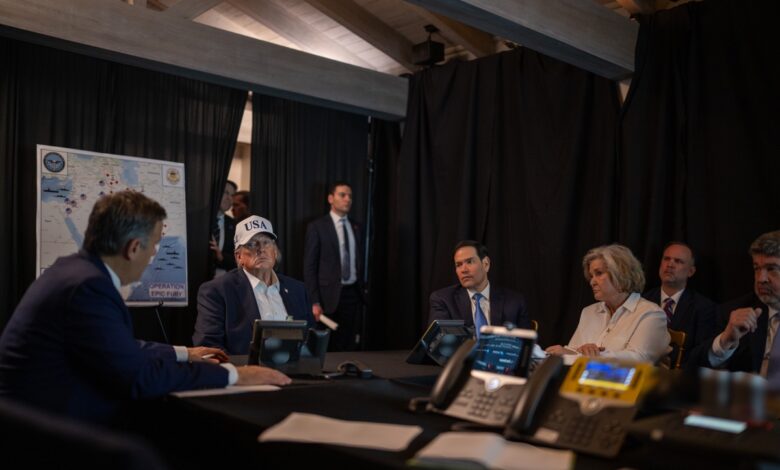
In January 2026, flushed with the swift, covert removal of Venezuelan President Nicolás Maduro, the Trump administration rolled the dice on a far more volatile and deeply rooted adversary. President Donald Trump operated under the seductive assumption that a high-tech, stealth excursion against the Islamic Republic of Iran would yield a parallel, cost-free triumph. Yet, months into the conflict sparked by the administration’s aggressive “Maximum Pressure 2.0” campaign and escalated via Operation Epic Fury, Washington finds itself trapped in a familiar, agonizing quagmire. Tactical brilliance has once again been mistaken for strategic victory. As Winston Churchill famously observed in the wake of early wartime triumphs, “Now this is not the end. It is not even the beginning of the end. But it is, perhaps, the end of the beginning.” By prioritizing spectacular kinetic displays over coherent political end states, the administration has committed critical strategic errors that echo America’s past blunders in the region, ultimately leaving the United States more vulnerable, its deterrence degraded, and the Middle East fundamentally destabilized.
The administration’s first and most glaring mistake was the illusion of the “quick win”—a fundamental misreading of Iranian resilience, nationalism, and asymmetric depth.
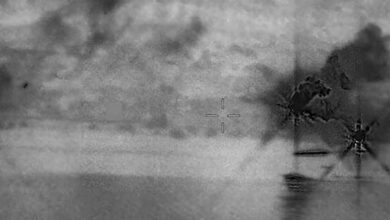
The opening salvos of the 2026 campaign achieved extraordinary tactical milestones, including the systematic destruction of Iran’s conventional naval assets and the stunning decapitation of Supreme Leader Ali Khamenei. Yet, as the Cato Institute observed shortly after the dust settled, “tactical successes cannot mask what has quickly become another strategic failure… the administration’s strategy is divorced from its ostensible aims.” Airpower and targeted assassinations did not trigger a domestic democratic uprising, nor did they erase decades of deeply entrenched institutional control. Instead, power quickly consolidated around an even harder-line, war-hardened faction of the Islamic Revolutionary Guard Corps (IRGC), proving General Omar Bradley’s timeless maxim that “amateurs talk about tactics, but professionals talk about logistics” and long-term sustainability.

Furthermore, the administration drastically underestimated Iran’s capacity for regional, asymmetric retaliation. For years, Washington’s defense establishment operated under the comfortable assumption that Tehran would limit its responses to localized attacks on U.S. assets or proxy skirmishes.
Instead, the conflict immediately metastasized into a multi-theatre conflagration. On day one, Iranian missiles and sophisticated loitering munitions struck across all six Gulf Arab states, completely shattering the regional security umbrella and exposing the fiction of impenetrable air defenses. Rather than dismantling Iran’s missile architecture, the war revealed that a staggering 70 percent of Iran’s ballistic missile stockpile and mobile launchers remained entirely intact, deeply buried in hardened underground “missile cities” and fully operational weeks into the fighting.
READ: Iran threatens to halt US negotiations if Israeli attacks continue in Lebanon
This massive miscalculation triggered the second strategic error: a failure to anticipate and mitigate crippling global economic blowback. The administration’s aggressive naval blockade was met with a brutal, symmetric counter-strategy in the maritime chokepoints. Tehran seized effective de facto control of the Strait of Hormuz—the vital artery through which 25 percent of the world’s oil transits—implementing a coercive toll and mining system that drove global crude prices past $100 a barrel. The economic ripples disrupted fragile global supply chains and sparked inflationary spikes across Western economies. In a supreme irony, the administration was forced to quietly ease certain oil sanctions and grant waivers to keep global energy markets afloat, giving Tehran unexpected economic leverage in the middle of a war meant to break its financial resolve.
This economic vulnerability recalls the warning of British Prime Minister Margaret Thatcher, who noted that defense cannot be sustained if it destroys the economic foundation upon which national power rests.
The deeper tragedy of this conflict lies in how it has perversely incentivized the very behavior Washington sought to deter. The administration’s stated rationale for military intervention was the total, permanent elimination of Iran’s nuclear program. However, by demanding what amounted to “unconditional surrender” while systematically dismantling the remaining diplomatic guardrails, the administration left Tehran with zero peaceful off-ramps. Before the outbreak of hostilities, regional intermediaries noted that Iran was willing to offer nuclear concessions that went well beyond the original international agreements. By replacing diplomacy with existential military threats, Washington has practically guaranteed that any post-war Iranian regime will view a functional nuclear deterrent not as a negotiable luxury, but as an absolute requirement for national survival. As the legendary strategist Carl von Clausewitz famously wrote, “War is the continuation of politics by other means.” When war loses its political objective and becomes merely punitive, it transforms into an engine of endless escalation.
READ: Trump agreed to release $24B in frozen Iranian assets without formal announcement: Report
Finally, the war has accelerated a structural shift toward an aggressively post-American global order, severely damaging U.S. credibility among allies and adversaries alike. Writing on the cascading geopolitical fallout of the conflict, foreign policy analyst Robert Kagan noted that the war has triggered an “accelerating global adjustment to a post-American world as a result of this massive miscalculation.” Far from isolating Iran, the conflict has bound Washington’s primary geopolitical rivals closer together. U.S. forces have faced an adversary heavily fortified by external collaboration, ranging from advanced Chinese semiconductor chips and real-time satellite imagery to shared tactical innovations in drone warfare.
The Trump administration entered this conflict under the hubristic assumption that it could unilaterally dictate the terms of a short, low-cost engagement. Instead, it has ignored the foundational rule of strategic statecraft: never launch a war without a clear, achievable definition of peace.
By chasing the mirage of an effortless regime collapse, the administration has degraded America’s conventional deterrence, exposed the global economy to severe energy shocks, and driven a resilient adversary deeper into the camp of our most formidable global competitors. If Washington does not pivot swiftly toward a realistic, diplomatically enforceable ceasefire, Operation Epic Fury will not be remembered as a historic triumph but as a textbook case of how tactical hubris breeds strategic disaster.
OPINION: The end of American forward presence in the Persian Gulf
The views expressed in this article belong to the author and do not necessarily reflect the editorial policy of Middle East Monitor.