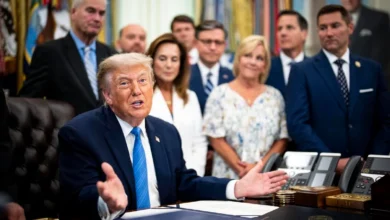
WASHINGTON — President Trump said Sunday that the United States and Iran have reached a framework agreement to end the war in the Middle East, a breakthrough in months of negotiations aimed at ending the conflict.
The deal, described by diplomats as a memorandum of understanding, commits Tehran to forgo the development or acquisition of nuclear weapons in exchange for helping reopen the Strait of Hormuz, and the paced release of its assets frozen overseas, upon the signing of the deal Friday in Switzerland.
Trump said he has also authorized “the immediate removal of the United States Naval blockade” on Iranian imports.
“Ships of the World, start your engines. Let the oil flow!” Trump wrote in a social media post Sunday evening. It was the president’s 80th birthday.


The full details of the agreement have not been released. Many details — including how Tehran would give up, destroy or dilute its fissile material, or whether Iran would continue treating the international strait as its sovereign waters — will continue to be negotiated in the coming days.
Pakistani Prime Minister Shehbaz Sharif said Sunday that mediators are planning to hold a series of meetings this week to “lay the foundation for the technical talks and the official signing ceremony.”
“We would like to thank the United States of America and the Islamic Republic of Iran for their commitment to finding a diplomatic solution to the conflict,” Sharif wrote in a post on X.
The Associated Press reported that negotiations on outstanding issues like Iran’s nuclear program would continue over the next 60 days, according to two senior Pakistani officials who spoke on condition of anonymity.
Vice President JD Vance told Fox News that the White House is “still figuring out the logistics” on whether he or Trump will attend the signing ceremony.
“What we know is that we have a lot of work to do, but a very big win for the American people tonight,” Vance said.”We are just going to keep on working at it, keep on driving energy prices down, keep on ensuring that region of the world is less than a basket case and finally, and most importantly, celebrate, that we can say with confidence Iran will never have a nuclear weapon.”
Iran’s deputy foreign minister, Kazem Gharibabadi, confirmed the agreement on state television but said Iran would not start implementing it until it was signed on Friday. He said the deal followed over 14 hours of talks in Tehran with a representative from Qatar, another mediator.
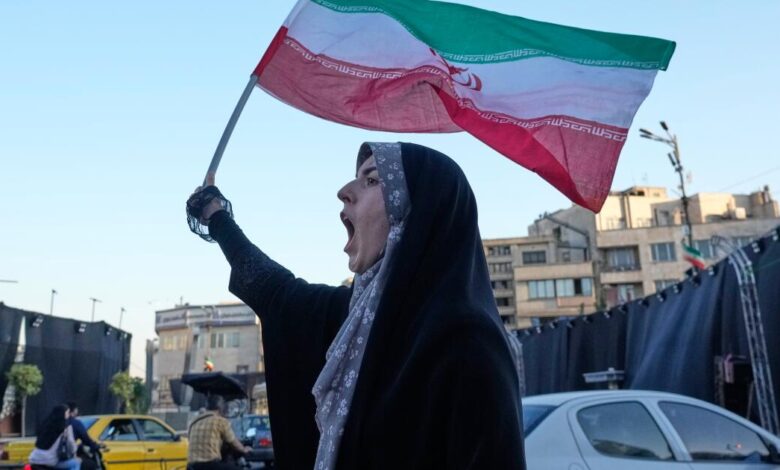
Iranian state TV showed a banner asserting: “US was forced to sign an agreement to end the war.”
Iran’s commitment to refrain from pursuing nuclear weapons would simply repeat a vow Iran has made several times before, including in its signing of the Nuclear Non-Proliferation Treaty and its nuclear deal brokered with international powers under the Obama administration over 10 years ago.
Iran has 972 pounds of uranium that is enriched up to 60% purity, a short, technical step from weapons-grade levels of 90%, according to the International Atomic Energy Agency. Under the 2015 international agreement with Iran abandoned by the first Trump administration, Iran’s uranium enrichment was capped at less than 4%, monitored by IAEA inspectors.
The vagueness of the new agreement, the demand for further negotiations to flesh out its details, and the pacing of sanctions relief for Iran are all likely to draw criticism of the president, who launched his political career in 2015 by attacking President Obama’s newly signed nuclear deal as a historically bad agreement.
That deal, known as the Joint Comprehensive Plan of Action, followed two years of painstaking negotiations that were predicated on a similar, yet more detailed framework, called the JCPOA.
Defense Secretary Pete Hegseth said in a Sunday morning interview on CBS’ “Face the Nation” that the the difference between the JCPOA and how the Trump administration is handling negotiations is the “threat of military force.”
“The huge difference is we did this from a position of strength,” Hegseth said. “That military might will stay as long as necessary.”
And, as in 2015, Israeli leadership across the political aisle remains deeply skeptical of the agreement, pronouncing they will not be bound by a deal to which they are not a party.
In a phone interview with the New York Times on Sunday afternoon, Trump called Benjamin Netanyahu, the prime minister of Israel, a “very difficult guy.”
“To be honest with you, he should be very thankful to us for doing this. Because if Iran had a nuclear weapon, Israel wouldn’t be around for two hours,” Trump said.
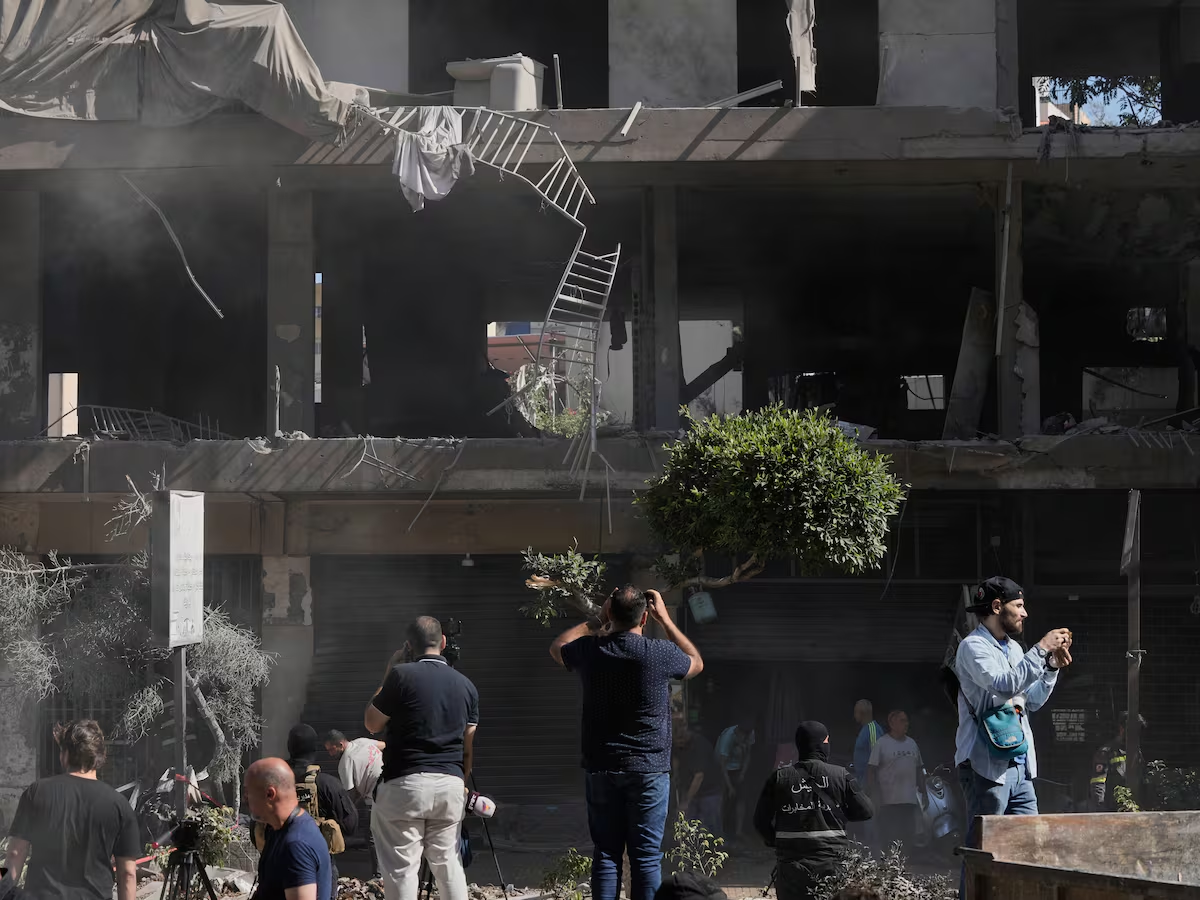
Since the U.S.-Israeli attacks on Iran that started the war Feb. 28, there have been 3,468 confirmed deaths in Iran, according to independent monitors. In addition, 13 U.S. service members have been killed, and the Israeli war with Hezbollah has killed 2,679 in Lebanon as well as 23 Israelis, including eight civilians.