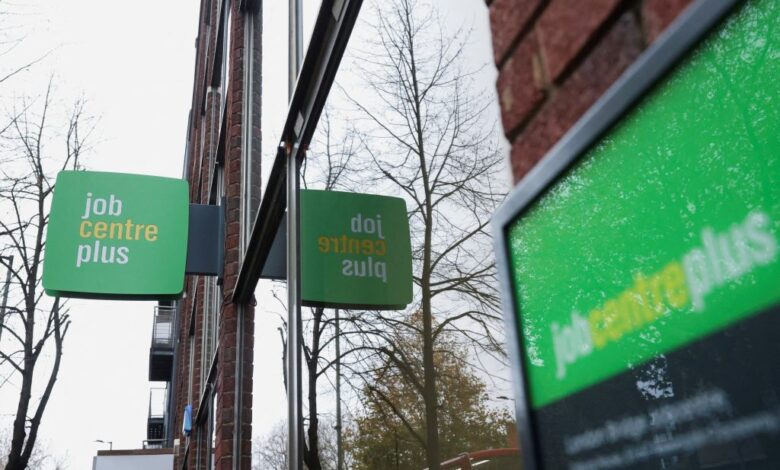
Youth unemployment and inactivity are costing the United Kingdom more than £125 billion a year, according to a major government-backed report that warns Britain risks creating a “lost generation” unless urgent action is taken.
The report, led by former Labour cabinet minister Alan Milburn, comes as official figures show that more than one million young people are now not in work or education for the first time in more than a decade.
The findings have placed fresh pressure on Prime Minister Keir Starmer’s government to overhaul welfare, improve job support and create clearer routes into work, training and apprenticeships for young people.
Milburn said the scale of the crisis showed that Britain needed a “whole system reset” involving schools, welfare, employers and government.


He warned that the number of young people not in education, employment or training, often referred to as Neets, could rise by 25 per cent to 1.25 million within five years if ministers fail to act.
“As I’ve spoken to cabinet ministers about it, my sense is that there is an appetite to go back into this, and to go back into it in the right way,” Milburn said.
The report found that a young person who is Neet between the ages of 18 and 24 costs the exchequer about £29,000 a year on average. It also warned that every year spent outside work or education in early adulthood could cost an individual about £52,000 over their working life.
Read related news:
Families in shock as home office tells five-year-olds to leave Britain
Britain Mortgage wars loom as lenders slash rates to woo buyers
Nigel Farage’s Reform UK becomes Britain’s largest party ahead general election
The warning comes at a difficult time for the government. UK unemployment has unexpectedly risen to five per cent, while wage growth has slowed. Separate tax data showed that the number of payrolled employees fell sharply in April, with 100,000 fewer workers on payrolls after a decline of 28,000 in March.
Vacancies also fell to their lowest level in five years, dropping by 28,000 to 705,000 between February and April.
Economists say the figures show growing pressure in the labour market, with businesses cutting recruitment and limiting pay rises amid rising costs and wider economic uncertainty.
The crisis is being felt most strongly by young people. Milburn’s review said six in 10 young Neets are not looking for work, while a similar number have never had a job.
He also pointed to rising mental ill health among young people, describing some as part of a “bedroom generation” spending long periods isolated and glued to smartphones.
Prime Minister Starmer described the findings as “sobering” and said the government was already taking action through its youth guarantee, which is expected to support more education, training and apprenticeship opportunities for 18- to 21-year-olds.
Speaking during a visit to a training facility for apprentices in west London, Starmer admitted that more needed to be done.
“Clearly we need to do more,” he said. “We will now work with Alan on what more needs to be done.”
The government has already announced funding for more work experience and job placements. Ministers say the aim is to stop young people drifting into long-term unemployment before their working lives have properly begun.
However, any renewed attempt to reform welfare will be politically sensitive.
Labour’s first attempt at welfare changes ended in a damaging retreat after strong opposition from backbench MPs. Many MPs are now watching closely to see whether the government’s next proposals will focus on support rather than cuts.
Milburn criticised the earlier approach, saying welfare reform should not be framed only as a way to take money away from sick and disabled people.
He argued that savings from welfare should be reinvested into employment support.
“For every £25 currently spent on welfare, the state spends £1 on job support,” he said, describing the balance as “shocking and shameful.”
According to the review, the government spends about £8.1 billion a year on benefits support for young people, with more than half going to young people not in education, employment or training. About £3.2 billion is spent on health and disability benefits.
Milburn said the sustainable way to reduce the benefits bill was not to set arbitrary cuts, but to help more young people move into work.
“The way to do it is to get more young people into work,” he said.
Work and Pensions Secretary Pat McFadden said the government had made a “major and important start” in tackling youth worklessness.
He said he had quickly realised after taking office that the problem carried both human and financial costs.
Charities and campaigners have urged the government to avoid using welfare changes to punish young people who are unable to work because of poor health.
Mark Rowland, chief executive of the Mental Health Foundation, warned that pushing young people who are too unwell to work into financial hardship would worsen mental health problems.
He said ministers must also ensure that young people who can return to work receive proper support.
The report comes as Labour faces wider political pressure over the cost of living, welfare policy and rising unemployment. Opposition leaders and business groups have accused the government of adding to pressure on employers through tax increases and a higher minimum wage.
The second phase of Milburn’s review is expected later this year, alongside a separate report into disability benefits by social security minister Stephen Timms.
For now, the message from the review is clear: Britain’s youth jobs crisis is no longer only a social problem. It is an economic threat.
If more than a million young people are left outside work, education or training, the cost will not be measured only in public spending. It will be measured in lost talent, lost earnings, weaker growth and a generation at risk of being left behind.