Just hours before the MOU was signed, Israel launched strikes on Beirut, pushing the agreement to the brink of collapse.
Following the signing, Prime Minister Netanyahu continued military attacks in Lebanon, actions critics argued were inconsistent with the spirit of the agreement and which cast uncertainty over the Geneva negotiations on June 19.
At the same time, pro-Israel groups in Washington voiced opposition to the deal.
AIPAC said the MOU offered sanctions relief to Iran in exchange for reopening the Strait of Hormuz and what it described as vague commitments regarding Tehran’s nuclear programme.
Zvika Klein, editor-in-chief of The Jerusalem Post, wrote that “Israel won the war and lost the romance with the US”.
Israel’s actions reportedly generated frustration within parts of the Trump administration, particularly among officials involved in negotiations with Tehran, including Vice President JD Vance.
Pro-Israeli group’s neo-conservatives have played a significant role in shaping US policy towards the Middle East since the 1990s, according to Dr Shireen Hunter, an honorary fellow at Georgetown University’s Center for Muslim-Christian Understanding and a former Iranian diplomat.
“Israel has used America’s power to undermine or eliminate any rivals: Iraq, Libya, Syria, and foremost in Israel’s view, Iran. Ironically, none of these changes has enhanced Israel’s security,” Hunter tells TRT World.
“Israel has constantly prevented a gradual process of reform in Iran and has sabotaged any agreement between Tehran and Washington, like the JCPOA. Netanyahu boasted that he convinced Trump to exit from the nuclear agreement.”
United States possesses substantial leverage over Israel because of its military, financial and technological support, but has been unwilling to use that leverage, Hunter says.
Israel and its supporters maintain considerable influence within American political and media institutions, limiting Washington’s willingness to pressure its ally when policy differences emerge, she added.
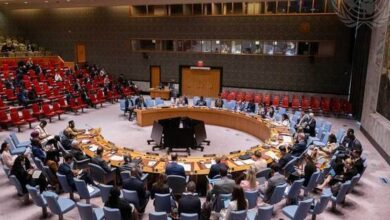
Beyond military and economic assistance, “the United States shields Israel at the UN Security Council, vetoing every international effort to hold it accountable.
Removing that shield would leave Israel isolated, a consequence of its actions in Gaza and Lebanon that have already set in motion internationally.
“From every perspective, all the wars America has fought in the Middle East and South-West Asia since 2001 have damaged US strategic interests,” Hunter tells TRT World.
“They have allowed Russia to increase its influence in Iran and the South Caucasus and opened new opportunities for China in Afghanistan and the Persian Gulf.”
Hunter argues that these policies have not only failed to advance American interests but have also created new opportunities for US competitors.
For Zandi, the question is no longer whether past interventions weakened Washington’s position, but whether the United States is prepared to risk further damage by allowing renewed regional escalation.
“The energy market has already structured a geoeconomic risk premium due to ongoing tensions. If Israel destabilises the fragile status quo between Iran and the US, it triggers a severe credibility shock for Washington, perceived as incapable of managing its regional ally,” Zandi tells TRT World.
“Furthermore, a localised conflict could spill over into the Persian Gulf and, more severely, into the Bab-al-Mandab. Iran’s capacity for geographic weaponisation poses a systemic risk.”