New posts
19:31
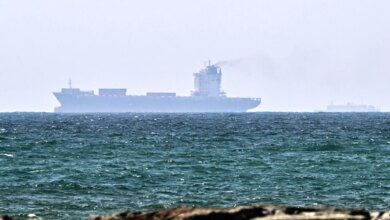
US Confirms End Of Naval Blockade Of Iran
US Central Command (CENTCOM) has confirmed that the naval blockade on Iranian vessels and ports has been lifted.
“All U.S. military blockade enforcement efforts have ceased,” CENTCOM said in apost on X. “Our great Naval Ships will remain in the general area to make sure that all aspects of the agreement are adhered to, obeyed and in full force and effect.”
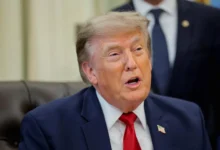

The United States imposed the naval blockade in mid-April with the aim of preventing Iran from exporting its oil, the lifeline of its economy.
Washington’s lifting of the naval blockade and Tehran’s reopening of the Strait of Hormuz, a key artery for global oil and gas supplies, are part of a framework deal signed on June 17.
Share
Copy link
Facebook
X (Twitter)
LinkedIn
Email
Share
19:17
60 Days Of Negotiations Begin ‘Today,’ Says Vance
US Vice President JD Vance takes questions from reporters during a press briefing at the White House on June 18.
US Vice President JD Vance said a 60-day window for the United States and Iran to reach a final settlement began on June 18.
“I would say the 60-day period officially started today,” Vance told reporters at a White House briefing, a day after US President Donald Trump and Iranian President Masud Pezeshkian signed a memorandum of understanding aimed at ending the nearly four-month-long conflict.
The interim deal gives Washington and Tehran two months to reach a full agreement, including over Iran’s nuclear program and US sanctions on the Islamic republic.
Asked what would stop Iran from acquiring a nuclear weapon in the future, Vance said Tehran would need “a lot of money” after the United States destroyed “billions” worth of nuclear infrastructure.
He said the United States has Iran in an “economic chokehold” that “we’re not going to release until they fundamentally change their behavior.”
“What would that look like? That would mean a real inspections regime. That would mean a real enforcement regime,” Vance said, adding that the change in behavior would also mean the destruction of the country’s enriched uranium stockpile.
The US vice president also said the framework deal was already “bearing real fruit for the American people,” adding that around 12.5 million barrels of oil has flowed through the Strait of Hormuz after the signing of the memorandum of understanding.
He said Iran has not fired on any vessels moving through the strait, a key artery for global oil and gas supplies that Tehran effectively closed after the war began on February 28. The United States, he added, has allowed about a dozen ships to pass through the US naval blockade.
On the possibility of Iran imposing tolls in the Strait of Hormuz, Vance said international waterways should be free of tolls and that Washington does not want the strait to be used as a “chokepoint” for the global economy again.
Vance said a final peace deal would set the terms for the strait.
He claimed the United States had “all the cards” in negotiations and Iran would have to “give us the things that are necessary” to get the benefits of the peace deal.
Vance claimed Tehran’s nuclear program and military are “still destroyed,” and Iran was unable to “threaten” its neighbors.
Vance also said part of the interim deal has been “misrepresented,” in apparent reference to the $300 billion reconstruction fund that Iran could access as part of the agreement.
He added that “not a single penny” will be sent by the United States to Iran. Tehran will only benefit from the deal “if they comply fully and change their behavior,” he said.
Vance was also asked about the conflict between Israel and Iran-backed Hezbollah in Lebanon. The framework deal calls for an end to all hostilities, including in Lebanon.
Hezbollah is both a militant group and political party that controls much of southern Lebanon. It is considered a terrorist organization by the United States, although the European Union has only blacklisted its armed wing.
“This is about regional peace,” Vance said. He added that Washington expects Hezbollah to stop firing at Israel, and that the Israelis “are not going to be going wild in Lebanon.”
He added that “sometimes these cease-fires are a little messy.” There has been “radical progress,” he said, in bringing that conflict to an end, but there will be “little flare-ups from time to time.”
Referring to Trump’s recent criticism of Israel’s actions in Lebanon, Vance said Washington does not want to withdraw Israel’s right to self-defense. But he said that Israel “just like everyone else, has to defend this peace process.”
“We seem to be right on the cusp of a major breakthrough in the agreement and then all of a sudden there’s a major explosion that goes off in a civilian population center in Beirut,” Vance said. “That’s not acceptable.”
Share
Copy link
Facebook
X (Twitter)
LinkedIn
Email
Share
18:24
Iran Deal Provides Economic Boost, But Hormuz Shipping Is Key
Vessels are seen anchored in Bandar Abbas along the Strait of Hormuz on June 18.
TheIran framework agreementgave an immediate boost to markets, with shares rising and oil prices dipping. But whether this translates into durable economic gains will largely depend on shipping in the Strait of Hormuz.
There were signs of traffic beginning to revive on June 18 in the hours immediately after the US and Iranian presidents signed a memorandum of understanding to end the war, according to Windward, a maritime intelligence company.
Speaking in an online briefing, Windward chief analyst Michelle Wiese Bockmann said 18 vessels had transited the strait between 6 p.m. on June 17 and 2 p.m. UTC on June 18, in what she described as “a sign of confidence in the agreement.”
Ben Cahill, a nonresident senior fellow at the Atlantic Council’s Global Energy Center, indicated that this trickle needs to grow if the hope of an economic peace dividend is to be realized.
“It’s all about tanker traffic. Agreements on paper don’t matter much unless they really get oil moving again through the Strait of Hormuz, because that’s what everyone will be monitoring — the number of tankers exiting the strait to carry oil, gas, and other products to market,” he told RFE/RL.
To read the full news analysis, clickhere.
Share
Copy link
Facebook
X (Twitter)
LinkedIn
Email
Share
15:08
Shipping Monitor Reports 18 Hormuz Transits Since Deal Signed
Vessels in the Strait of Hormuz as seen from Musandam, Oman, on June 16.
There have been signs of shipping beginning to revive in the Strait of Hormuz in the hours since the US and Iranian presidents signed a memorandum of understanding to end the war, according to Windward, a maritime intelligence company.
Speaking in an online briefing, Windward chief analyst Michelle Wiese Bockmann said 18 vessels had transited the strait between 6 p.m. on June 17 and 2 p.m. UTC on June 18, in what she described as “a sign of confidence in the agreement.”
Specifically, she said these were a French-flagged liquid natural gas (LNG) tanker, two Hong Kong-flagged tankers, an Italian-flagged vehicles carrier, a Japanese-controlled oil tanker, and several Saudi-flagged tankers.
Ten of the vessels were outbound, having been stuck in the Persian Gulf for 109 days owing to the war that began with US and Israeli air strikes on Iran on February 28.
“What’s important now is what’s going out. So, it’s going to start as a trickle, but certainly this is a very good sign, an early sign that there is confidence for outbound transits,” Wiese Bockmann said.
“Transits averaged about seven vessels a day in the first two weeks of June until we had word of this agreement coming on Sunday. And the total volume of transit so far in June already exceeds the 156 that we saw in May that we tracked. So, certainly we see everything gathering force,” she added.
Windward also tracked Iranian vessels moving through the strait, and also Iranian-controlled LNG and oil tankers heading west from southeast Asia through the Malacca Straits — apparently confident of being able to load up in Iranian ports now that the US naval blockade of Iranian ports and waters has been lifted.
Under the deal signed on June 17, Iran has agreed to toll-free transit through the Strait of Hormuz for 60 days, pending further talks with US negotiators.
Bockmann said the southern route through the strait is in Omani waters, and that once this was demined the question of a toll became unimportant. Tehran has spoken of imposing “maritime service fees” in cooperation with Oman, but Bockmann said, “I really don’t think that’s going to fly.”
Share
Copy link
Facebook
X (Twitter)
LinkedIn
Email
Share
14:57
Trump Defends Iran Deal, Calls Critics ‘Jealous Or Stupid’
US President Donald Trump
US President Donald Trump has defended the peace agreement with Iran ahead of talks in Switzerland on implementing the memorandum of understanding between Tehran and Washington, and attacked critics of the deal.
Writing on his Truth Social platform on June 18, a day after signing the agreement,Trump said: “These fools, who think I havent been tough enough on Iran, when the Stock Market Just Hit A RECORD HIGH, and Oil prices are tumbling down, are either jealous, bad people, or stupid.”
Since Iran and the United States announced that they had reached an agreement to end the war on June 17, oil prices have fallen sharply on global markets while stock prices have risen in many parts of the world, while US stock indexes have hit record levels.
Continuing that trend, crude oil prices fell by more than 3 percent on June 18, with West Texas Intermediate crude dropping below $75 per barrel.
At the same time, criticism of the agreement has intensified in the United States, with some Republican politicians questioning its terms. Reactions in Israel have also been largely negative.
Share
Copy link
Facebook
X (Twitter)
LinkedIn
Email
Share
14:24
Trump’s Iran Accord And The 2015 Nuclear Deal: What’s Different This Time?
The presidents of the United States and Iran sign a framework agreement on June 17 in a step toward talks on a full peace settlement.
TheUS-Iranian dealto end their war and reopen the Strait of Hormuz is inevitably being compared with the 2015 Joint Comprehensive Plan of Action (JCPOA) agreed with Tehran by then US PresidentBarrack Obama.
That deal was fiercely criticized by his successor, Donald Trump, who pulled the United States out of it in 2018 during his first term of office. Trump has repeatedly said his deal would be better, although the text he signed in Versailles is not the final one — it leaves many issues to be negotiated over the next 60 (or more) days.
If it were easy we would have resolved it, you know, two wars ago, Naysan Rafati, Iran Senior Analyst at the International Crisis Group, told RFE/RL, referring both to the12-Day Warin June last year and to this years hostilities, that reignited with US and Israeli air strikes on February 28.
The fundamentals of the Iranian nuclear program since last June have been different to what they were like under the JCPOA, he added.
Read morehere
Share
Copy link
Facebook
X (Twitter)
LinkedIn
Email
Share
11:55
International Energy Agency Says Hormuz Closure Has Altered Perceptions Of Energy Security
International Energy Agency Executive Director Fatih Birol (file photo)
International Energy Agency (IEA) Executive Director Fatih Birol has welcomed the interim agreement ending the Iran war and called for the Strait of Hormuz to be reopened “without conditions” to restore confidence in global energy markets.
Speaking at an event in Istanbul on June 18, Birol said several countries were reassessing their energy policies after Iran’s closure of the strategic waterway during the conflict highlighted its vulnerability to future disruptions.
The US-Iran agreement provides for the reopening of the strait, which usually accounts for around one-fifth of global oil and gas supplies, and the lifting of the US naval blockade of Iran, potentially ending a disruption that the IEA estimates blocked more than 14 million barrels per day of Middle East oil output.
Birol said the agency would discuss new energy-security strategies with governments, warning that the crisis had fundamentally altered perceptions of global supply routes.
“The vase is broken,” he said. “Now all actors know that the Strait of Hormuz was closed once and it can be shut down again.”
With reporting by ReutersShare
Copy link
Facebook
X (Twitter)
LinkedIn
Email
Share
10:58
UN Nuclear Watchdog Says It’s Ready To Work With US, Iran On Deal Implementation
International Atomic Energy Agency director Raffael Grossi (file photo)
The International Atomic Energy Agency (IAEA) has said that it is ready to begin work on implementing the US-Iran agreement signed on June 17, under which Tehran has agreed to dilute its enriched uranium stockpile in exchange for economic relief.
IAEA Director General Rafael Grossi said on June 18 that the agency would now work with US and Iranian officials to define the “concrete steps” needed to carry out the deal.
Under the agreement, Iran’s enriched uranium could be reduced through “down-blending on site under the supervision of the IAEA,” placing the UN nuclear watchdog at the center of the verification process.
Grossi described the operation as highly complex and said the IAEA’s role in the memorandum of understanding between Tehran and Washington underscored its credibility and expertise. He welcomed the agreement, saying: “I think it’s good that the memorandum is there.”
“Now the technical work starts,” he added.
The deal is intended as a temporary arrangement while broader negotiations continue over the future of Iran’s nuclear program.
Share
Copy link
Facebook
X (Twitter)
LinkedIn
Email
Share
10:44
Israel Seeking To Keep Troops in Southern Lebanon Despite US-Iran Deal, Say Officials
Smoke billows from southern Lebanon following Israeli strikes reported by local residents on June 17.
Israel is holding talks with the United States as it looks to maintain its military presence in southern Lebanon despite a new US-Iran agreement that calls for respect for Lebanon’s sovereignty, Reuters reported on June 18, citing two Israeli officials.
One senior official close to Prime Minister Benjamin Netanyahu said Israel was “conducting stubborn negotiations” with Washington and would not retreat from its position of keeping troops deployed south of Lebanon’s Litani River.
The discussions come a day after the United States and Iran signed an interim pact that commits parties to ensuring “the territorial integrity and sovereignty of Lebanon.”
The negotiations are taking place as violence in Lebanon has declined sharply following the announcement of the agreement.
However, an Israeli drone strike in southern Lebanon on June 18 killed one person and seriously wounded another, according to Lebanon’s state-run National News Agency.
Israel’s military also announced the death of a soldier during an incident in southern Lebanon the previous night that left seven other troops wounded.
Israel expanded its military operations in southern Lebanon after Hezbollah opened fire on March 2 in support of Iran. Israeli officials describe territory seized in Lebanon, Gaza and Syria as buffer zones intended to enhance security.
Since the US and Iran announced they had reached an agreement on June 16, Hezbollah has not claimed responsibility for any new attacks against Israel, although limited exchanges of fire have continued.
With reporting by ReutersShare
Copy link
Facebook
X (Twitter)
LinkedIn
Email
Share
08:22
Oil Prices Fall, Dollar Steady As US-Iran Deal Eases Supply Concerns
Oil prices fell on June 18 as investors weighed the interim peace agreement between the United States and Iran which could reduce risks to global energy supplies, while the dollar was little changed against major currencies.
US crude dropped 1.25 percent to $75.83 a barrel and Brent crude fell 1.4 percent to $78.41, continuing declines after US President Donald Trump and Iranian President Masud Pezeshkian signed a deal aimed at ending months of conflict in the Middle East.
Recent falls in oil prices have eased concerns about a global economic slowdown, particularly in energy-importing economies.
The International Energy Agency said the oil market could move into a significant supply surplus by 2027 following the reopening of the Strait of Hormuz.
Currency markets were steadier.
The dollar index, which measures the US currency against a basket of major peers, slipped 0.03 percent to 100.32. The euro rose 0.1 percent to $1.1511, while the dollar edged up against the Japanese yen to 160.65, near its highest level since July 2024.
With reporting by ReutersShare
Copy link
Facebook
X (Twitter)
LinkedIn
Email
Share
Load more