The world’s attention remains fixed on Gaza, southern Lebanon, and the exchange of fire between Israel and Iran’s network of regional allies. Yet another front is quietly emerging hundreds of kilometres away, on the African shore of the Bab el-Mandeb Strait. It is a development receiving far less scrutiny than it deserves, despite its potential to reshape one of the most consequential maritime corridors on earth.
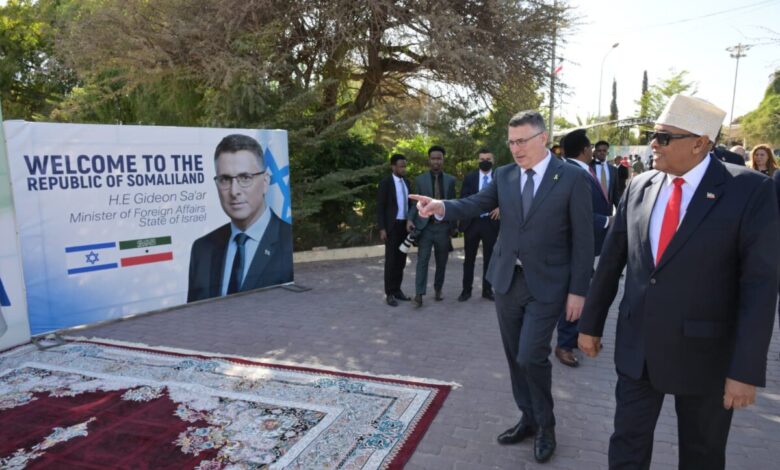
Israel’s reported military cooperation with Somaliland — including allegations that around 50 Somaliland Special Forces personnel received training in Tel Aviv and the symbolic presentation of an Iron Dome interceptor fragment to Somaliland President Muse Bihi Abdi — is not merely an unconventional diplomatic outreach. It reflects a broader geostrategic calculation centred on the Red Sea and the growing contest over the Bab el-Mandeb, the narrow maritime gateway connecting the Indian Ocean to the Suez Canal. The strait carries roughly 10–12 per cent of global seaborne trade and remains one of the world’s most critical energy and logistics chokepoints.
Viewed in isolation, Israel’s recognition of Somaliland in late 2025 appears extraordinary. No other UN member state has formally recognised Somaliland’s independence. But viewed through the prism of maritime security, the move begins to look less like diplomacy and more like strategic positioning.


The Houthis’ campaign against commercial shipping since late 2023 has transformed the Red Sea from a transit corridor into a contested battlespace. Insurance premiums have surged. Major shipping companies have repeatedly diverted vessels around the Cape of Good Hope, adding thousands of nautical miles to journeys between Asia and Europe. For Israel, whose confrontation with the Houthis has intensified alongside the Gaza war, securing influence near Bab el-Mandeb has become a national security imperative rather than a peripheral foreign-policy ambition.
Geography explains why Somaliland matters. Berbera sits along the Gulf of Aden, overlooking approaches to the Red Sea. For years, the United Arab Emirates has been investing heavily in the territory, committing hundreds of millions of dollars through DP World and associated infrastructure projects while developing military facilities with strategic utility. What once appeared to be a commercial port development increasingly resembles a node within a wider security architecture stretching from the Gulf to East Africa.
The UAE’s calculations are straightforward. Control over logistics networks translates into geopolitical influence. Ports are no longer simply commercial assets; they are instruments of statecraft. Berbera joins a growing constellation of Emirati-linked facilities extending across the western Indian Ocean, from the Horn of Africa to the Arabian Peninsula.
Israel’s interests overlap significantly. The distance between Israel and Houthi-controlled territory in Yemen creates operational challenges. Assessments suggest that a foothold closer to the southern Red Sea could dramatically improve intelligence gathering, surveillance operations, and logistical reach. Analysts have noted that Israeli forces otherwise face distances approaching 2,000 kilometres when projecting power towards Houthi positions. Somaliland therefore offers something increasingly valuable in modern geopolitics: proximity.
Yet this emerging alignment is about more than military convenience. It reflects a wider transformation occurring across the Middle East and the Horn of Africa, where traditional boundaries between regional conflicts are dissolving.
For decades, policymakers tended to treat the Levant, the Gulf, the Red Sea, and the Horn of Africa as distinct strategic theatres. That distinction is becoming obsolete. The same drone technologies deployed by the Houthis threaten maritime traffic in the Red Sea. The same Iranian network supporting armed groups in Lebanon influences developments in Yemen. The same Gulf powers investing in African ports are shaping political outcomes on both sides of the Red Sea.
The result is a single interconnected strategic arena stretching from Beirut to Berbera. This broader context helps explain why Israel’s escalating confrontation with Hezbollah in Lebanon cannot be separated from developments in Somaliland. As Israeli airstrikes deepen inside Lebanon and military operations expand along the northern border, pressure is mounting across multiple fronts simultaneously. Hezbollah remains Iran’s most capable regional proxy, while the Houthis increasingly function as Tehran’s maritime pressure mechanism.
From Jerusalem’s perspective, these fronts are linked. Weakening Houthi capabilities protects maritime commerce and reduces pressure on Israel’s southern flank. Strengthening strategic partnerships around Bab el-Mandeb serves the same objective through different means.
Yet strategic logic does not eliminate strategic risk. Somalia’s internationally recognised government has fiercely opposed foreign engagement with Somaliland, viewing such initiatives as direct challenges to Somali sovereignty. Mogadishu has already condemned Emirati activities in Berbera and moved against agreements it considers violations of its territorial integrity. Israel’s recognition of Somaliland therefore risks introducing a new diplomatic fault line into an already fragile region.
The consequences could extend well beyond Somalia itself. Egypt, Turkey, and Saudi Arabia have generally favoured preserving existing regional borders and maintaining Somali unity. Ethiopia, meanwhile, continues pursuing greater access to the sea. Rival visions of regional order are increasingly colliding around the Horn of Africa, transforming Somaliland into a geopolitical fault line where Middle Eastern and African strategic interests intersect.
Think tanks including the International Crisis Group, Chatham House, and the Carnegie Endowment have repeatedly highlighted how external military competition in fragile states often generates unintended consequences. Security partnerships intended to stabilise maritime routes can instead deepen local rivalries, internationalise domestic disputes, and create incentives for proxy escalation.
That danger is becoming increasingly visible. Every expansion of military infrastructure in the Horn invites counter-moves elsewhere. Every new partnership encourages adversaries to seek leverage of their own. Iran may perceive Israeli influence in Somaliland as further justification for expanding support to the Houthis.
Regional actors may respond by strengthening rival alliances. What begins as deterrence can quickly escalate.
Lost amid these calculations are the civilians living across the region. Yemen remains one of the world’s gravest humanitarian crises, with more than 21 million people requiring assistance. Lebanon continues to endure displacement, economic collapse, and renewed violence. Communities throughout the Horn of Africa face climate shocks, food insecurity, and political instability.
Yet geopolitical competition rarely pauses for humanitarian realities. The symbolism of an Iron Dome fragment gifted in Hargeisa may appear insignificant compared with the thunder of airstrikes in Lebanon or missile launches in the Red Sea. But symbols often reveal strategic intentions before formal policy does. They signal future alignments, emerging partnerships, and shifting balances of power.
What is unfolding around Somaliland is therefore not a peripheral story. It is an early indication of how the next phase of Middle Eastern geopolitics may evolve: less defined by traditional borders, more shaped by maritime chokepoints, logistics hubs, proxy networks, and strategic infrastructure.
The Bab el-Mandeb has always been a gateway between continents. Today it is becoming something else — the crossroads where Africa’s future, Middle Eastern rivalries, and global trade security increasingly converge.
The question is no longer whether the Red Sea has become a central theatre of geopolitical competition. That reality has already arrived. The question is whether the region’s leaders can prevent that competition from becoming another war without end.
The views expressed in this article belong to the author and do not necessarily reflect the editorial policy of Middle East Monitor.