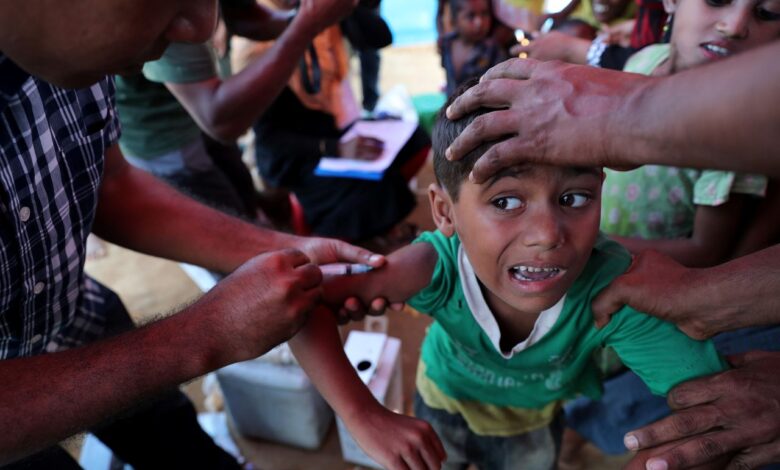
Bangladesh is facing a rapidly escalating measles outbreak as seven more deaths were reported on Wednesday, bringing the total number of confirmed and suspected fatalities to 601 since mid-March, according to health authorities.
Of the total deaths, 90 have been medically confirmed as caused by measles, according to the Directorate General of Health Services.
Health authorities also recorded more than 1,250 new suspected infections in the past 24 hours, bringing the total number of suspected cases to 83,763. Of those, 9,191 have been laboratory confirmed.
Health authorities say the outbreak is stretching the country’s surveillance and testing capacity.


Officials cited a shortage of testing kits, which has slowed confirmation of infections in a population of around 175 million.
Experts say the scale of the crisis reflects accumulated gaps in immunisation coverage, especially among young children.
UNICEF’s Dhaka office has linked the outbreak to years of inadequate vaccine coverage, child and maternal malnutrition, and low rates of exclusive breastfeeding, all of which have weakened immunity among children in vulnerable communities.
UNICEF Representative in Bangladesh Rana Flowers said in a statement reported in early April that vaccines are “foundational to child survival,” warning that the outbreak is placing “thousands of children, especially the youngest and most vulnerable, at serious risk.”
Related
Structural weaknesses
Health officials have also pointed to structural weaknesses in the vaccination system.
Shahriar Sajjad, deputy director of the Health Department, told BBC Bangla in early April that about one-third of those infected were under nine months old, underscoring the vulnerability of infants who cannot yet receive routine measles vaccines.
According to some media reports, Bangladesh has not conducted regular large-scale measles vaccination campaigns since 2020, first due to COVID-19 disruptions and later because of political instability.
Sajjad also noted that a planned campaign in April 2026 did not take place, while procurement issues contributed to vaccine shortages reported by local media.