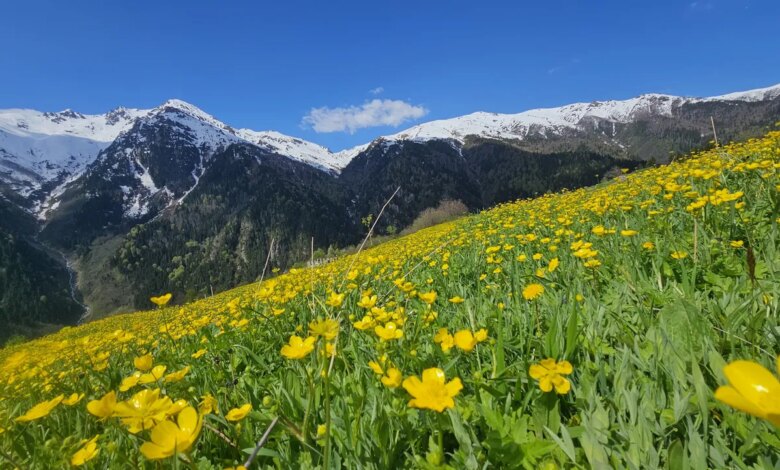
Rize, in the eastern Black Sea region of Türkiye, is a different kind of holiday.
It’s mountains and mist instead of beach clubs. It’s rivers and forests instead of wide boulevards. And the weather changes fast — sunshine, rain, fog, all in the same afternoon.
For the next few days, I want to explore what makes Rize so distinctive: its nature, its food, its mountain culture, and the one thing that defines daily life here more than anything else — tea.

I start tucked away in the hills, staying in a small bungalow surrounded by greenery, with the kind of quiet you rarely get in big cities. It’s fresh air, damp forest smell, and that constant background sound of running water that seems to be everywhere in this region.
And water really is the headline here — especially if you’re into rafting.
A rafting paradise
Rize is widely known inside Türkiye as a centre for whitewater rafting. The rivers here are used for training, competition, and coaching. Some routes are suitable for beginners, and others are serious — fast, technical, and not for anyone who doesn’t listen to instructions.
That’s why I’m meeting Aydin, a veteran rafting coach with decades of experience training national-level athletes. He’s been involved in the sport for more than 30 years, and he talks about it with the calm confidence of someone who has seen every type of river mood — calm stretches, sudden floods, changing currents after rain.
Before we get anywhere near the water, he runs through safety, commands, paddling technique — the basics that matter when you’re about to trust a river to carry you downstream.
It’s one thing to hear about rapids in theory. It’s another to sit in a raft and feel the current take control. The water here is cold, the river is loud, and once you’re moving, it’s very clear why this region produces such strong athletes.
After a morning like that, you don’t need a complicated plan for lunch. You need warmth and calories.
And in Rize, there’s a local breakfast dish that fits the weather perfectly: mihlama — sometimes also called kuymak.
If you’ve never had it, think of it as the Black Sea region’s answer to comfort food. Hot melted cheese mixed with corn flour and butter, cooked until it becomes stretchy, rich, and almost elastic. People eat it with cornbread, dipping and pulling it like it’s meant to fix your mood as well as your hunger.
On a rainy mountain day, it makes complete sense. It’s heavy, it’s warming, and it’s deeply local — the kind of dish you won’t easily find on menus outside this region, and definitely not prepared the same way.
From there, I push deeper into the mountains, toward Zilkale, a stone castle perched high above a valley.
Zilkale sits in the Kackar Mountains, and its history goes back centuries. Fortifications like this weren’t built as decoration — they protected valleys, controlled movement through mountain routes, and served as lookout points in a landscape where geography shaped security and trade.
Even today, you can feel why the location matters. The terrain is steep, the forests are dense, and clouds roll in quickly, changing the atmosphere minute by minute. It’s the kind of place where the castle doesn’t feel separate from the landscape. It feels like part of it.
While I’m there, I meet a family visiting from Istanbul. They tell me the reason people come to Rize is simple: nature, fresh air, food, and what they call “oxygen” — that feeling of breathing properly again after city life.
They also give me the most predictable but most important advice in this region: drink tea. And if you can, try the local dishes — including the classic combination of beans and rice that’s common across Türkiye, but with its own Black Sea character here.
As I move through the castle, I hear a sound that feels familiar in an unexpected way — a local wind instrument with a strong, piercing tone.
It was a traditional Turkish bagpipe. It reminds me of the bagpipes in Ireland and Scotland, but it belongs to this landscape.
It’s one of those moments where you realise musical traditions travel across regions in parallel, shaped by similar needs — outdoor sound, communal celebration, and the ability to cut through wind and open air.
From the castles, the road pulls me higher into the uplands, where summer pastures come alive.
In the Black Sea region, many families have a tradition of moving to higher elevations during the warmer months — living closer to grazing land, staying in simple homes, and maintaining ways of life deeply tied to the seasons.
I meet a local man named Hakan, who tells me he has been coming up here since childhood. He describes how the area has changed — more houses, more visitors, and far more cars than there used to be. What was once a quiet seasonal world is now increasingly connected to tourism.
It’s a familiar story across many rural parts of the world: as people discover the beauty, the place changes. Not always for the worse, but never without impact.