Analysts caution that this internal divergence — between those who feel threatened, those who feel obliged, and those who feel fiscally unable — suggests that Rutte’s visit may temporarily “press pause” on the most acute frictions, but Europe’s response to U.S. pressure will remain uneven and contested for years to come.
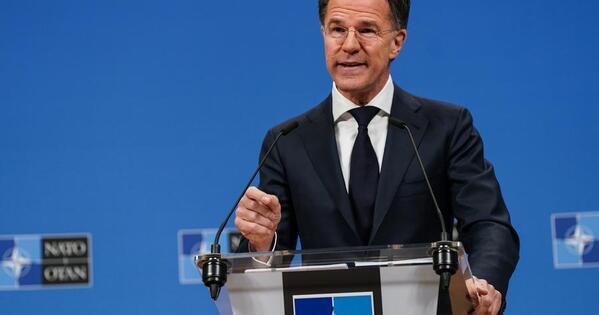
BRUSSELS, June 25 (Xinhua) — NATO Secretary General Mark Rutte is in Washington this week for talks with U.S. President Donald Trump and other senior officials, seeking to smooth over months of transatlantic friction before July’s NATO summit in Ankara.
Yet analysts warn that the underlying structural disagreements over defense spending, burden-sharing, and strategic priorities are unlikely to be resolved anytime soon.
SUMMIT PRELUDE AMID ESCALATING PRESSURE


Rutte’s visit comes at a particularly tense moment. Just before his departure, Trump publicly reprimanded NATO allies, singling out Britain, Germany and Italy for refusing to support the U.S.-Israeli military campaign against Iran.
“They weren’t too nice to us in our recent little military skirmish,” he said. “We don’t need their money — we don’t need anything. We have the most powerful military in the world by far. But I just want loyalty.”
His remarks followed U.S. Defense Secretary Pete Hegseth’s characterization of NATO as a “paper tiger” and his announcement of a six-month review of U.S. troop deployments in Europe, with a clear message that Europe must take “primary responsibility” for its own defense.
The Pentagon has already informed allies of concrete cuts to military assets available for NATO missions, including reducing F-16 and F-15E fighter jets from roughly 150 to 100, cutting maritime reconnaissance aircraft from 26 to 15, and withdrawing all eight aerial refueling tankers, and reallocating one of two groups of bombers previously assigned for Europe’s defense.
Against this backdrop, Rutte’s agenda includes meetings with Trump, congressional leaders, and members of the strategic community, with NATO officials hoping the recent U.S.-Iran peace deal will prevent the July summit from devolving into a public showdown.
“Now there’s a deal, it places us in a better position,” one NATO official told Euronews, adding that Trump “will be in a better place” after the peace deal with Iran is confirmed.
STRUCTURAL DIVERGENCES THAT DEFY QUICK FIXES
Despite Rutte’s efforts to contain the rupture, analysts argue that the current tensions reflect deeper, structural shifts in U.S. strategy rather than mere presidential temperament.
Rutte’s visit should be seen primarily as an effort “to prevent NATO’s internal tensions from spilling over ahead of the summit” rather than a genuine attempt to resolve all disagreements, said Ivan Cardillo, a member of the Center for International and Strategic Studies at Luiss University.
“NATO is unlikely to collapse in the short term, but the way it works is changing. The U.S. security commitment is becoming more conditional, more transactional and more closely linked to what allies are willing and able to contribute,” Cardillo said.
Trump expresses this tendency in a more direct and transactional way, but the tendency itself is structural — a reality that would persist under different U.S. administrations as Washington reassesses its investments in European security while pivoting toward the Middle East, the Indo-Pacific, and global strategic competition, he said.
Alexander Graef, lead of Russia and European Security Programme at the European Leadership Network, warned that Europeans must prepare for a future “in which U.S. leadership and the predictability that has traditionally accompanied it, becomes increasingly uncertain or may even be absent altogether.”
While European governments have expanded bilateral and regional cooperation frameworks, Graef noted that these mechanisms have yet to provide alliance-wide strategic planning and political direction.
“A larger European role within NATO requires a greater degree of convergence in how allies assess deterrence, escalation risks, and the use of military force,” he said. Otherwise, the growing number of military initiatives could “reinforce fragmentation rather than coherence across the alliance.”
Liana Fix, a senior fellow for Europe at the Council on Foreign Relations, noted that both sides are reinforcing narratives of betrayal.
Europe centered on the Greenland episode and the United States focused on Iran, risking the replacement of “shared strategic understanding” and making it harder for NATO to redefine its goals, with the current trajectory resembling a “messy divorce” conducted in blame, said Fix.
CAPABILITY GAP FEEDS EUROPEAN DIVISIONS
For European allies, the challenge is twofold: they cannot quickly replace U.S. capabilities from nuclear deterrence to command systems, and they remain divided on the way forward. Analysts warn that this gap between dependency and disunity undermines a coherent European response to U.S. pressure.
Europe may increase defense spending and expand industrial production, but it cannot quickly replace the United States in nuclear deterrence, strategic intelligence, space capabilities, long-range projection and high-level command systems, said Cardillo.
The challenge is compounded by a cacophony of European responses. Mark Montgomery, senior director at the Foundation for Defense of Democracies, noted that European countries are stepping up by geographic variation, with Eastern states such as Poland, the Baltic countries, Romania and Bulgaria “clearly” doing the most.
Poland has become one of NATO’s largest military spenders, while the continent’s largest economies lag behind, said Montgomery.
Germany, Britain and France are politically committed to higher defense spending, but their paths diverge. Berlin, under Chancellor Friedrich Merz, is positioning itself as a potential hub for Europe’s future defense industrial base.
Britain and France have deepened cooperation through the Lancaster House 2.0 framework, including unprecedented coordination on nuclear deterrence. Yet even these leading nations cannot quickly replace the U.S. capabilities on which they have long depended.
In 2025, NATO members agreed to invest 5 percent of GDP in defense by 2035, including 3.5 percent for core defense expenditure.
Meeting that target will be particularly challenging for southern and smaller economies facing tighter fiscal constraints. Italy, Spain and Belgium face high public debt, making sharp increases in defense spending politically and financially difficult.
Raising Italy’s defence budget to a target level of 5 percent of GDP would require more than 60 billion euros (68 billion U.S. dollars), a commitment that might be tough to meet for Italy, which sees its massive public debt rising to almost 138 percent of GDP in 2026, according to Reuters.
Spain has opted out of the timeline entirely, citing self-determination and fiscal limitations. For Spain, committing to a 5 percent target would “not only be unreasonable, but also counterproductive,” said Prime Minister Pedro Sanchez.
Analysts caution that this internal divergence — between those who feel threatened, those who feel obliged, and those who feel fiscally unable — suggests that Rutte’s visit may temporarily “press pause” on the most acute frictions, but Europe’s response to U.S. pressure will remain uneven and contested for years to come.
“Rutte’s task is essentially damage limitation: to ensure the summit is a managed event rather than a public rupture,” said Christoph Bluth, professor of International Relations and Security at the University of Bradford. “If the principles are not broadly aligned beforehand, the Ankara summit itself can go badly wrong.”