World Menstrual Hygiene Day: WaterAid, WODASS Empower Bauchi Schoolgirls To Sustain School Pad Banks

0
Suzan Edeh
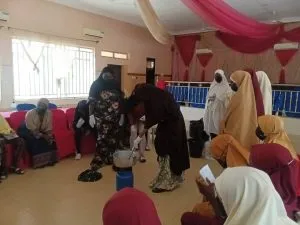
WaterAid Nigeria, in partnership with the Women Development Association for Self Sustainance (WODASS), Bauchi State Rural Water Supply and Sanitation Agency (RUWASSA) and other partners has conducted a specialized training program to empower adolescent schoolgirls in Misau Local Government Area of Bauchi State.
The initiative, funded by DP World, equips girls with the skills to produce reusable sanitary pads and liquid soap.

The program further aims to restock student-managed “Sanitary Pad Banks” and promote sustainable Water, Sanitation, and Hygiene (WASH) practices across local schools.
The training event which held at the Chartwell Hotel in Misau, formed part of the global activities marking the 2026 World Menstrual Hygiene Day, celebrated under the theme “Together For A Period Friendly World.”
As part of efforts to tackle absenteeism and stigma as well as drive behavioral change and improve hygiene, WaterAid Nigeria previously established Environmental Health Clubs across selected regional schools.
These clubs function as sustainability hubs where students advocate for clean water, proper toilet usage, and handwashing.
The targeted schools in Misau LGA include Government Girls Junior Secondary School, Fawari, Government Girls Junior Secondary School, Sabongari, Government Girls Secondary School and HardawaGovernment Day Secondary School, Tofu (Hardawa).
Speaking at the training, WaterAid Nigeria Representative Joy Owoicho emphasized the importance of breaking local taboos around menstruation.
She urged both male and female students to become menstrual hygiene champions to eradicate social stigmatization.
“I urge all of you to be menstrual hygiene champions, I am encouraging girls to utilize this training in order to know how to manage their periods effectively, transfer the skills to peers, and generate personal income” She said.
Also speaking at the training, Mr. Magaji Barde of WODASS stated that a three-year research study revealed a direct link between menstruation and school absenteeism, as many local families cannot afford commercial sanitary products.
He noted that while the introduction of school-based Pad Banks successfully improved attendance over the last two years, initial supplies have now been exhausted.
Bard said that because the three-year funding cycle from DP World is concluding, the training was organized to ensure the long-term survival of the project by teaching students to manufacture their own basic hygiene products,adding that the organizers aim to create a self-sustaining supply chain that keeps girls in the classroom.
“With this knowledge, you will also train other girls to know how to make these pads and also make money for yourself,” Barde told the participants, reinforcing the project’s focus on community independence.