PARIS – Ali Khamenei suppressed dissent, kept up confrontation with the US and steered a path between competing political factions in over 3½ decades as Iran’s supreme leader.
But his domination of the Islamic republic came to an abrupt and bloody end on the morning of Feb 28, when he was killed along with several close family members in an Israeli air strike based on US intelligence on the first day of a five-week war.
Yet, the Khamenei era is in many ways not over – power was swiftly passed to his son Mojtaba, although he has yet to be seen in public since taking over as the third supreme leader of the Islamic republic.
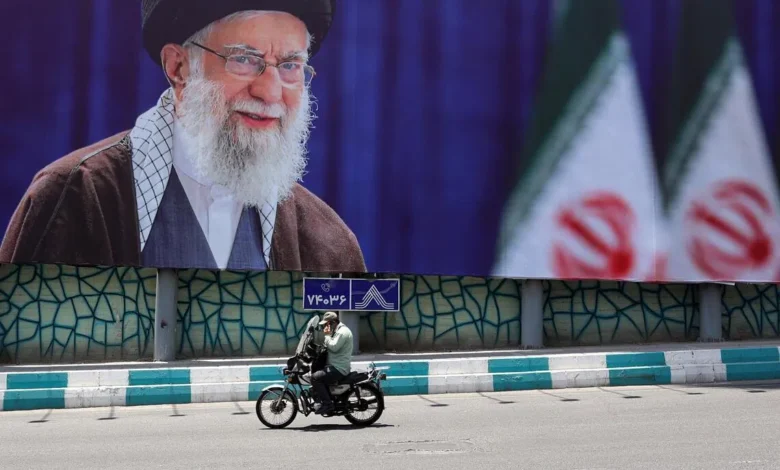
Meanwhile, even after Ali Khamenei’s death, his social media accounts on X and Telegram regularly churn out past statements, while his image stares down from billboards at Iranians, often in a triple portrait with his predecessor Ruhollah Khomeini and his son Mojtaba.

As his funeral begins on July 4, he is now referred in state media as the Martyr Imam Khamenei, enshrining the spiritual status of a man who had been a key figure in the Islamic republic since shortly after its inception.
Decades of experience as a political survivor could not protect him from the torrent of bombs that also killed his son-in-law, daughter, daughter-in-law and granddaughter.
Khamenei, 86, had seen off a succession of crises throughout his rule with a mixture of repression and political cunning since taking on the lifetime post of leader of the Islamic revolution following the death of Khomeini.
He overcame 1999 student demonstrations, 2009 mass protests sparked by a disputed presidential election, and 2019 demonstrations that were rapidly and brutally suppressed.
The 2022 to 2023 Woman, Life, Freedom movement sparked by the death in custody of Iranian Kurdish woman Mahsa Amini, who had been arrested for allegedly violating the strict dress code for women, was put down in a deadly crackdown.
Khamenei was forced to go into hiding during the 12-day war against Israel in June 2025, according to US media reports, which exposed deep Israeli intelligence penetration of the Islamic republic that led to the killing of key security officials in air strikes.
Before the latest war erupted in 2026, his rule was challenged by two nights of mass street protests which were put down in a new crackdown by security forces that, according to rights groups, left thousands dead.
Khamenei defiantly dismissed the protesters as “rioters” backed by Israel and the US.
There were also physical challenges, with his right arm partially paralysed following an assassination attempt in 1981 that the authorities have always blamed on the People’s Mujahedin of Iran (MEK) group, one-time allies of the revolution now outlawed in the country.
He made no attempt to hide the disability, with his inert right arm always prominent in pictures – an apparent proud display of the scars of the revolution.
Repeatedly arrested under the shah for his anti-imperialist activism, Khamenei became Tehran’s Friday prayer leader shortly after the Islamic revolution and also served on the front line during the Iran-Iraq war.
He was elected president in 1981 following the assassination of Mohammad Ali Rajai, another attack blamed on the MEK.
During the 1980s, Khomeini’s most likely successor was seen as the senior cleric, Ayatollah Hossein Montazeri, but the revolutionary leader changed his mind shortly before his death after Montazeri objected to the mass executions of MEK members and other dissidents.
When Khomeini died and the Islamic republic’s top clerical body, the Assembly of Experts, met, it was Khamenei whom they chose as leader.
Khamenei famously initially rejected the nomination, putting his head in his hands in a show of despair and declaring: “I am opposed”.
Over the course of his career, Khamenei worked with six elected presidents, a far less powerful position than supreme leader, including more moderate figures like Mohammad Khatami who were allowed to make stabs at cautious reform and rapprochement with the West.
A complex network of factions competed for his favour and influence, including the Revolutionary Guards, the ideological arm of the Iranian military.
But Khamenei always came down on the side of hardliners and confrontation with the “Great Satan”, the United States, and he refused to recognise the existence of Israel.
“Ali Khamenei was the most influential actor in Iran, but he still had to manage several competing power centres in the system,” said Thomas Juneau, professor at the University of Ottawa.
He is believed to have had six children, although only Mojtaba gained public prominence.
It remains to be seen how he will wield power but a statement where Mojtaba said he backed talks with the US, despite having a “different view”, appeared to conjure up Khamenei’s political ghost.
The statement was “eerily reminiscent of his father’s tradition” of staying above the fray in politics, said Arash Azizi, lecturer at Yale University. AFP