Alleged Coup: Fresh Document Reveals How Plotters Planned To Recruit Repentant Boko Haram

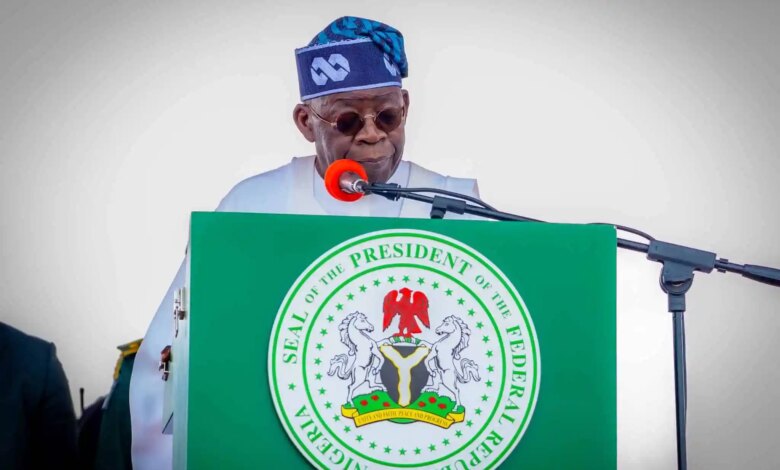
Senior military officers accused of plotting to overthrow the administration of President Bola Tinubu allegedly considered recruiting repentant Boko Haram fighters and members of the Civilian Joint Task Force (CJTF) to support the operation, documents obtained by Premium Times have indicated.
The documents, said to contain more than 7,400 pages, reportedly include statements attributed to serving and retired military officers, civilians linked to the alleged plot, bank records, encrypted chat exchanges, purchase receipts and details of hotels allegedly used for secret meetings.
The alleged plan was uncovered in September 2025 following the arrest of 16 serving military officers. About 40 people, including a police officer and civilians, were reportedly detained over the following four months.
The military initially said the officers were being investigated for indiscipline and breaches of service regulations. The Defence Headquarters later linked them to an alleged coup plot and announced that they would face prosecution.
The serving officers are currently facing trial before a General Court-Martial, while civilians and former military personnel accused of involvement are being prosecuted at the Federal High Court in Abuja.
The Federal Government, in April, filed 13 counts against six persons accused of participating in the alleged plot.
The defendants are a retired major-general, Mohammed Ibrahim Gana; a retired naval captain, Erasmus Ochegobia Victor; a police inspector, Ahmed Ibrahim; and an electrician attached to the Presidential Villa, Zekeri Umoru.
Others are Bukar Kashim Goni and a Zaria-based Islamic cleric, Abdulkadir Sani.
Statements attributed to the defendants form part of the prosecution’s evidence, but their admissibility is being challenged.
Several of the defendants told the court that their statements were not made voluntarily, prompting the judge to order a trial-within-trial to determine whether the statements could be admitted as evidence.
Officers Allegedly Discussed CJTF Recruitment
Details contained in the documents reportedly showed that a Nigerian Army colonel, Mohammed Ma’aji, who is accused of leading the plot, received a proposal to recruit repentant insurgents and CJTF members from a suspected accomplice, Major Jamilu Ilyasu.
The CJTF is a state-supported volunteer group that assists the military in counter-insurgency operations in the North-East. It reportedly has about 26,000 members in Borno State.
The group emerged as a community resistance movement against Boko Haram and was initially known as Yan Gora, meaning “people with sticks” in Hausa, because many of its early members carried sticks.
Ma’aji, however, reportedly told investigators that the proposal to bring the fighters to Abuja was never concluded.
Ma’aji was quoted as saying, “It was Maj. Iliyasu who brought up the discussion of using repentant Boko Haram who are already using their weapons.
“Before this, I did not know that repentant Boko Haram were involved in our military operations.”
Some former Boko Haram and Islamic State West Africa Province fighters who surrendered to the military have reportedly been deployed in limited support roles after undergoing screening and rehabilitation.
They are commonly described as hybrid forces and are part of the Borno Model, a disarmament, demobilisation, deradicalisation and reintegration programme established by the Borno State Government.
‘We Complained About Lack Of Manpower’
Ma’aji was also quoted as saying the suggestion to recruit CJTF members arose during a meeting with Ilyasu in the North-East.
He reportedly said, “The recruitment of CJTF was Iliyasu’s idea.
“When I went to the North-East for a wedding, Maj. Iliyasu met me and asked how far about the movement. I complained that there was no manpower. He then said he had CJTF working for 7 Division, and that we could use them.”
Responding to questions about an alleged plan to deploy improvised explosive devices, Ma’aji reportedly said the suggestion also came from Ilyasu.
“If there was any discussion of IED, it was Maj. Iliyasu who said he had some Boko Haram technicians working in the theatre to make IED, but I told him that would not be necessary,” he was quoted as saying.
In his own statement, Ilyasu reportedly did not address allegations concerning the recruitment of repentant Boko Haram fighters but admitted suggesting the involvement of CJTF members.
Ilyasu stated, “I was the one who hinted at the idea of the need to recruit members of CJTF to Col. Ma’aji when he came for the wedding in Maiduguri.
“Col. Ma’aji excused me outside his hotel room and was asking me about the possibility of recruiting CJTF, and I said yes, that I only knew Saminu, and he said I should get in touch with him.”
Major Allegedly Contacted CJTF Member
Ilyasu reportedly said a CJTF member identified as Ali had previously worked with him while he was serving with 212 Battalion in the North-East.
The statement read, “When I went to 7 Division, he, Ali, kept in touch that he needed to know where he and his boys would keep working, and I promised him I had a task for him.
“When Col. Ma’aji called me to inquire about getting the CJTFs, I forwarded my voice conversation with CJTF Ali to him to assure him that I was getting boys.”
The precise reason for allegedly seeking the involvement of repentant insurgents and CJTF members remains unclear.
However, the statements attributed to Ma’aji and Ilyasu suggested that they considered the fighters useful because some already possessed firearms issued for counter-insurgency operations and had combat experience.
There is no publicly available database containing the number of firearms held by civilian volunteers involved in counter-insurgency operations.
However, research supported by the United Nations Institute for Disarmament Research estimated that about 25,000 firearms were in the possession of approximately 55,000 civilian volunteers fighting insurgents in Borno State.
The researcher, Eric Berman, identified the CJTF, the Borno State Hunters Association, the Kesh Kesh vigilante group and the Vigilante Group of Nigeria as major volunteer security organisations operating in Borno and other parts of the North-East.
According to the research, weapons held by the groups included locally manufactured guns, hunting rifles, pump-action shotguns and, in some cases, assault rifles recovered from insurgents.
Berman raised concerns over the management and documentation of the weapons, including whether existing firearms laws were followed when arming civilian volunteers.
He estimated that about 10,000 recovered firearms, mostly assault rifles, were likely temporarily issued to some volunteer security personnel by state and federal authorities.
The researcher recommended that weapons issued to volunteer groups should be uniquely marked and entered into a centralised and secure database to prevent diversion and misuse.
Defendants Challenge Statements, Interrogation Videos
Meanwhile, the defendants facing trial before the General Court-Martial and the Federal High Court retain the right to challenge the statements attributed to them.
The six defendants being prosecuted at the Federal High Court have also objected to the admission of video recordings made during their interrogation.
They alleged that investigators failed to follow the proper procedure while obtaining the statements and recordings.
The prosecution, however, urged the court to dismiss the objections, insisting that due process was followed in gathering the evidence.