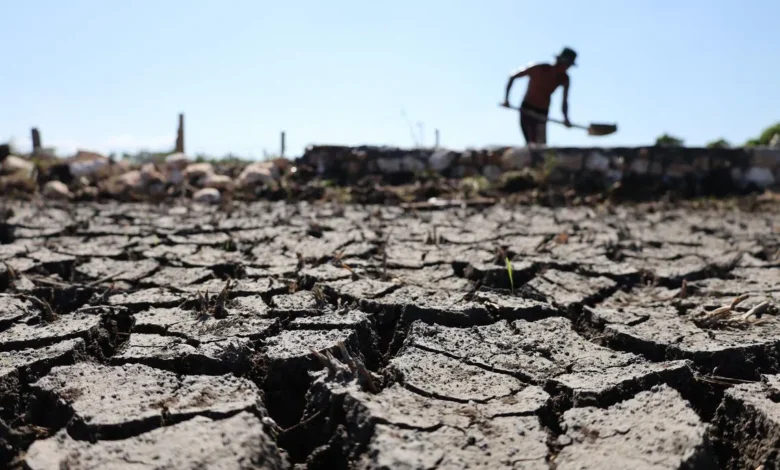
SINGAPORE – A global insurance firm warned on July 30 of the growing risks from a predicted strong El Nino, which forecasters fear will trigger extreme weather conditions in many regions of the world, including Asia.
Munich Re said the El Nino climate pattern that is already under way and strengthening in the Pacific Ocean will push up global temperatures, following record temperatures, heatwaves and wildfires across Europe and North America since May.
The extreme summer heat, which scientists say is being fuelled by climate change, comes as natural disasters caused worldwide losses estimated at nearly US$112 billion (S$144 billion) in the first half of 2026, Munich Re said in its half-yearly global update on natural catastrophes.
Among the costliest disasters were twin earthquakes in Venezuela and a series of storms in the US, with both sets of disasters causing estimated losses of US$30 billion each.


Looking ahead, it is El Nino that worries insurers.
“Asia-Pacific is likely to be the region which will suffer most from El Nino. We must brace ourselves for a higher typhoon risk in Japan and Korea as well as for heatwaves, drought and wildfires in other regions like South-East Asia, India and Australia,” said Achim Kassow, a member of Munich Re’s board of management responsible for the Asia-Pacific, Middle East and Africa division.
El Nino is part of a natural cycle. It is a periodic warming of surface temperatures in the central and eastern equatorial Pacific Ocean, triggering worldwide changes in winds, atmospheric pressure and rainfall patterns.
It occurs every two to seven years and typically increases global temperatures by releasing heat stored in the ocean. But stronger, or “super”, events that lead to very warm surface waters occur once every one to two decades and can trigger deadly and costly extreme weather.
El Nino is the flip side of La Nina, a periodic cooling of the central and eastern Pacific Ocean. La Nina events typically cause cooler and wetter weather in South-east Asia and eastern Australia.
The US government’s Climate Prediction Center said on July 9 that the current El Nino has continued to build and is likely to be one of the strongest in more than 75 years.
Malaysia could experience temperatures of up to 40 deg C in early 2027 as El Nino intensifies, said the Malaysian Meteorological Department on July 7.
Deputy director-general of operations Ambun Dindang said El Nino was expected to peak between November 2026 and January 2027, with rainfall expected to decrease across most parts of Malaysia.
Tobias Grimm, Munich Re’s chief climate scientist, said El Nino intensifies many weather extremes and shifts the global risk profile.
“While some regions may experience fewer extreme weather events, others, like parts of Asia-Pacific, face a higher likelihood of severe weather. At the same time, climate change is increasing the intensity, duration and loss potential of many weather-related hazards,” he told The Straits Times.
For instance, in East Asia, the risk of typhoons is generally higher, with potential changes in storm tracks and intensity. Southern and eastern China typically receive above-average rainfall, increasing the risk of flooding, he said.
Other regions, including parts of India, often experience below-average rainfall, raising the likelihood of drought and water stress.
“The key takeaway is that El Nino shifts the distribution of weather-related risks across Asia. Many parts of Asia-Pacific are subject to elevated natural catastrophe risks in the second half of 2026,” he said.
Munich Re is a reinsurer – a firm that spreads the risks of the insurance industry, acting essentially as “insurance for insurance companies”. For instance, such firms may help to cover large catastrophic losses.
Munich Re said that of the worldwide losses from natural disasters, estimated at nearly US$112 billion from January to June, only US$44 billion in losses was insured.
In the Asia-Pacific, total losses amounted to about US$8.7 billion, significantly lower than in previous years, with the 10-year average losses for the same period, adjusted for inflation, at US$32 billion. Just over US$1 billion was insured.
Severe flooding in central and southern China in May and a large bush fire in Australia triggered major financial losses.
In Europe, severe winter storms caused extensive damage. In just over a month, nine storms affected Portugal and Spain at the start of 2026, Munich Re said.
The most destructive was Storm Kristin in late January, which caused losses of about US$7.7 billion, of which around US$1.8 billion was insured.
In the US, tornado outbreaks and winter storms killed scores of people and caused damage totalling US$47 billion, of which US$34 billion was insured.
Munich Re also pointed to growing risks from severe heat, noting that record-breaking heatwaves dominated the first half of the year in North America and Europe.
“Studies show a clear link between heatwaves and climate change,” it said. “Heatwaves are the natural hazard that claims the most lives.
“It is difficult to quantify the financial impact of heatwaves, as they do not usually result in any direct damage to property.”
Pointing to the risks of increasing temperatures globally, it added: “Instead, the damage is chiefly caused by falling productivity and production standstills, but also by damage to infrastructure, transportation breakdowns and crop failures.”


