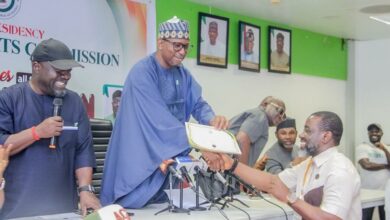
Political parties often proclaim unity after every primary election, but the period following the exercise usually presents the greatest test of their internal strength. While party primaries are meant to deepen democracy by allowing members to choose their preferred candidates, they also produce winners and losers, leaving behind bruised ambitions, fractured alliances and lingering grievances.

In Ondo State, the aftermath of the All Progressives Congress (APC) primaries ahead of the 2027 general elections has once again brought these realities into sharp focus. Rather than ending political contestation, the exercise has sparked fresh debates over internal democracy, party supremacy, reconciliation and the capacity of the ruling party to close ranks before the next general election.
The question confronting the APC is no longer simply about who emerged as candidates. It is whether the party can reconcile competing interests quickly enough to preserve its electoral advantage in one of the South-West’s strategic states.
Across Nigeria’s political landscape, history offers a familiar lesson. Parties rarely lose elections solely because of the popularity of their opponents. More often, internal disagreements, unresolved grievances and weakened grassroots structures create openings that opposition parties are quick to exploit.
The APC is not unaware of this reality. Following the conclusion of the primaries, several successful candidates immediately shifted attention from celebration to reconciliation, urging disappointed aspirants and their supporters to embrace the party’s decisions in the interest of future electoral success.
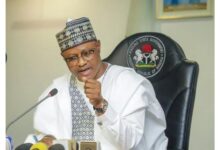
The APC candidate for Ondo East/Ondo West Federal Constituency, Michael Akintomide, is among those advocating calm. While acknowledging that emotions naturally run high after every primary election, he appealed to party faithful to respect the authority of the National Working Committee (NWC).
According to him, members should “remain calm” because “the National Working Committee has spoken,” insisting that the principle of party supremacy must prevail over individual interests. He also urged supporters to ignore divisive narratives on social media and avoid participating in protests capable of deepening internal divisions.
Akintomide expressed confidence that the current disagreements would not ultimately affect the APC’s electoral fortunes.
”This is the aftermath of an election,” he observed, adding that although people have the right to express dissatisfaction, “the party is superior to any personal interest.”
His optimism reflects a long-held tradition within Nigerian politics, where leaders often expect post-primary tensions to subside once campaigns gather momentum.