China lost more than 50% of its mangrove forests by the 2000s, now it has restored 22,500 hectares of the trees

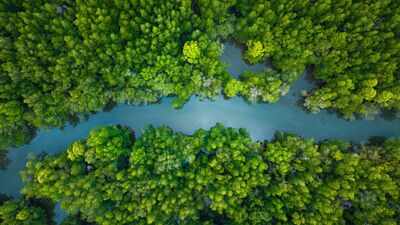
Mangroves naturally occur along the southeast Chinese coast and traverse the provinces of Hainan, Guangdong, Guangxi, Fujian and Taiwan. Thirty-seven mangrove tree species, representing 20 families and 25 genera have been documented in the country. Yet a remarkable decrease of species richness has taken place over the past 40 years in China, with the nation losing nearly two-thirds of its mangroves. This has been largely due to factors including conversion of land for rice farming, embankment for aquaculture ponds and rapid coastal urban development.Now, China is among the handful of countries in the world where mangrove coverage is increasing, said the Ministry of Natural Resources and the National Forestry and Grassland Administration on Sunday. It has planted and restored around 22,500 hectares of mangroves since 2020, including 11,600 hectares of newly planted forests. The announcement coincided with International Day for the Conservation of the Mangrove Ecosystem, observed annually on July 26, under a UNESCO designation. According to a report by China Daily, Lin Cunyan, an official with the ministry’s department of ecological restoration of land and space, said the newly planted area exceeded the 9,050-hectare target set under a special action plan for mangrove protection and restoration. “The 2025 national land use change survey revealed that China’s mangrove area has reached 31,700 hectares, marking an increase of about 44 per cent since the early 2000s. Alongside this expansion, the quality, stability and carbon sequestration capacity of mangrove ecosystems have significantly improved,” Lin said.
Mangrove plantation and improved biodiversity


The country’s mangrove protection policies have effectively enhanced bird diversity by improving marine habitat conditions.
Mangroves are globally important coastal wetland ecosystems. Often dubbed “coastal guardians”, they help buffer shorelines against waves and storms, filter seawater, and provide critical habitats for marine life and migratory birds, making them vital for maintaining marine ecological balance and biodiversity.According to a study published in The Innovation, China’s mangrove areas have increased by 166% over the past three decades. The country’s mangrove protection policies have effectively enhanced bird diversity by improving marine habitat conditions. As coastal wetlands, mangroves provide diverse microhabitats for foraging, nesting and resting for waterbirds, shorebirds and forest-dwelling birds. They also enhance coastal landscape connectivity to facilitate bird dispersal and migration.In China, mangroves have improved avian diversity by one, providing high-quality bird habitats and two, improving seawater quality and enhancing availability of biological resources like shrimp and fish which serve as bird food sources.
A protected ecosystem

More than 90 per cent of China’s mangroves are now protected under the country’s ecological protection red line,
According to Lin, more than 90 per cent of China’s mangroves are now protected under the country’s ecological protection red line, a zoning mechanism that restricts development in ecologically sensitive areas.He added that the legal framework was also strengthened by the Wetland Protection Law, which came into effect in 2022, as well as the revision to regulations on nature reserves enacted this year, further improving the standardisation and science-based management of mangrove conservation and restoration.Beyond ecological protection, coastal regions are exploring methods to convert mangrove conservation into economic value.“Whether in Zhanjiang, Guangdong province, or Xiapu, Fujian province, many coastal areas have been advancing mechanisms to realise the value of mangrove carbon credits,” Lin said.At the same time, China’s legal and standards framework for mangrove protection continues to improve. The Ministry of Natural Resources and the National Forestry and Grassland Administration plan to issue a special action plan for mangrove protection (2026-2030), providing guidance for local governments on mangrove protection and restoration while promoting both the high-level protection and high-quality development of mangroves.Relevant regions are adapting their approaches to local conditions and continuously reinforcing their mangrove protection efforts. In south China’s Guangxi Zhuang Autonomous Region, mangrove conservation has combined restoration efforts with scientific research and improved management. By the end of the 14th Five-Year Plan period (2021-2025), Guangxi’s mangrove area had reached 10,800 hectares, exceeding its target of surpassing 10,000 hectares by 8 per cent and increasing 47.95 per cent from the end of the 12th Five-Year Plan period (2011-2015).Since 2019, Guangxi’s forestry research teams have worked to establish a mangrove germplasm resource bank. The facility now preserves 17 mangrove species, including 124 provenances and 617 germplasm samples, providing support for future restoration and conservation efforts.The region has also strengthened protection through a comprehensive management system. It has appointed “mangrove forest chiefs,” established mangrove resource protection stations at the township level, deployed dedicated patrol officers, and created a coordination mechanism involving forest chiefs, police chiefs and procuratorate officials. Using satellite remote sensing, drone patrols and ground-based video monitoring, Guangxi has built a network for regular inspections, dynamic monitoring and early warning.Moreover, on July 26, China opened the International Mangrove Center (IMC) under an initiative that was first proposed by the country at the 14th Conference of the Parties to the Ramsar Convention in November 2022. In September 2023, the convention’s Standing Committee recognised it as a regional initiative.In November 2024, representatives of 18 prospective member states gathered in Shenzhen to sign the Agreement on the Establishment of the IMC, which entered into force in June 2026. To date, the IMC comprises eight member states and 13 signatory countries, covering major mangrove regions across Asia, Africa and the Americas. As the first intergovernmental organisation dedicated to mangrove conservation, the IMC aims to foster global collaboration in protection, restoration and sustainable use


