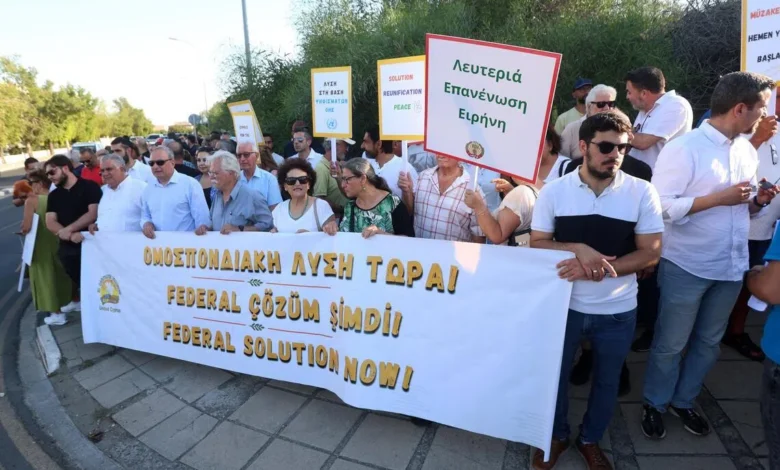
Famagusta, Cyprus – With talks to resolve the long-running Cyprus conflict frozen for eight years, an unexpected peace push by the UN chief has left some on this divided island smiling and others scowling.
“That’s good news, that’s very good news,” beamed Niyazi “Niko” Sefi, a Turkish Cypriot taxi driver from Famagusta on learning UN Secretary General Antonio Guterres had personally flown in to encourage rival leaders a return to negotiations.
“In this country, there’s no real problem between the people, this is a political problem,” explained the 54-year-old as his black Mercedes taxi glided through the sun-bleached countryside of the northern Turkish Cypriot-controlled side of the island.
Cyprus has been divided since 1974, when Turkey occupied its northern third following an Athens-engineered Greek Cypriot coup seeking union with Greece.


Today it comprises the Turkish Republic of Northern Cyprus (TRNC), which is only recognised by Ankara, and the internationally recognised Republic of Cyprus, an European Union member that controls the Greek Cypriot majority south.
Sefi says his best friend is a Greek Cypriot taxi driver from the south. They met in London nearly 20 years ago and have remained close, despite the bitter legacy of the conflict that has often kept the rival communities apart.
Both moved back and live on opposite sides of the island but regularly meet up.
“This island as two countries is not good, there must be one country for all of us,” said Sefi, who has faith in the TRNC’s new president, Tufan Erhurman, who pushed for new talks.
But decades of failed UN-backed efforts to reunify the island have left many Cypriots jaded, sceptical or just indifferent, barely aware of Guterres’ top-level visit.
At nightfall, several hundred people gathered in a floodlit park in the village of Yeni Bogazici to play bingo, families and friends eating and drinking at picnic tables as they marked up their bingo cards for a cash-prize of 75,000 Turkish lira (S$2,000).
“There have been negotiations for years and there’s been no agreement. They always talk about one state but it never happened – the Greek side doesn’t want it,” said Volcan Sahansiz, 42, as he checked off another line.
“The Cyprus problem is a big problem. It won’t be solved. The best thing is separation: us on this side, them over there.”
Generational divisions
Many are still bitter over the years of violence that led to the 1974 invasion or the 2004 referendum on a UN-backed reunification plan, when Turkish Cypriots voted yes but the Greek Cypriots overwhelmingly said no.
“There will never be peace, my dear,” said an older Turkish Cypriot woman who did not give her name, saying only those who had not experienced war were naive enough to want peace.
“Those who have seen war, because they lived through it, don’t want peace. The new generation, who haven’t seen war and didn’t live through ’74, they do want it.”
As if they had overheard, a group of nearby teenagers cheered the news that someone had come to push for peace in their divided homeland.
“So many older people have got such bad memories because they’ve watched their own family die. But I really want to have hope,” explained 18-year-old Shayla Surer, whose parents fled the fighting for London, where she was born.
“You have to let go of all that past. But it’s not been long enough yet,” said the musical theatre student.
“It could happen in my lifetime but it won’t be any time soon. Once the older generations go, it’ll be easier for people to reunite the country.”
‘What do we do now?’
Not everyone whose life was irrevocably changed by the conflict is against peace.
“The history of Cyprus made me who I am today,” said Marangou, a Greek Cypriot archaeologist and historian.
Along with thousands of other Greek Cypriots, during the invasion she fled the once-glamorous beach resort of Varosha, which has been a ghost town frozen in time ever since.
“Nobody explained why it happened, what the causes were, and nobody has prepared the people for an eventual solution,” said Marangou, who has spent decades campaigning to return, working alongside fellow activists from the north.
It was only in 2003 when the first north-south checkpoints opened that she got her first glimpse in three decades of the north – and began to connect with Turkish Cypriots who have since become friends.
“I have lived in a united Cyprus, I know what it’s all about. But we all have to accept reality and see how we can make a better future,” she said.
“The problem on my side is we look at the past to see who’s to blame, but that’s not the issue. The issue is: what do we do now?” AFP


